(FR) Monetary policy and the Moroccan economy

April 29, 2026

Cet épisode revient sur la politique monétaire au Maroc, en soulignant sa capacité à maintenir une inflation faible et stable sur le long terme grâce à un cadre macroéconomique solide. Il met en avant le rôle central des réformes institutionnelles et de la Banque centrale dans le renforcement de la crédibilité et de l’efficacité des décisions monétaires. La discussion aborde également les mécanismes de transmission, dominés par le canal du crédit, ainsi que les limites de la politique monétaire dans la transformation structurelle de l’économie. Enfin, l’épisode analyse les enjeux liés à la transition vers un régime de change plus flexible, notamment en termes de résilience économique et de maîtrise de l’inflation.

Speakers
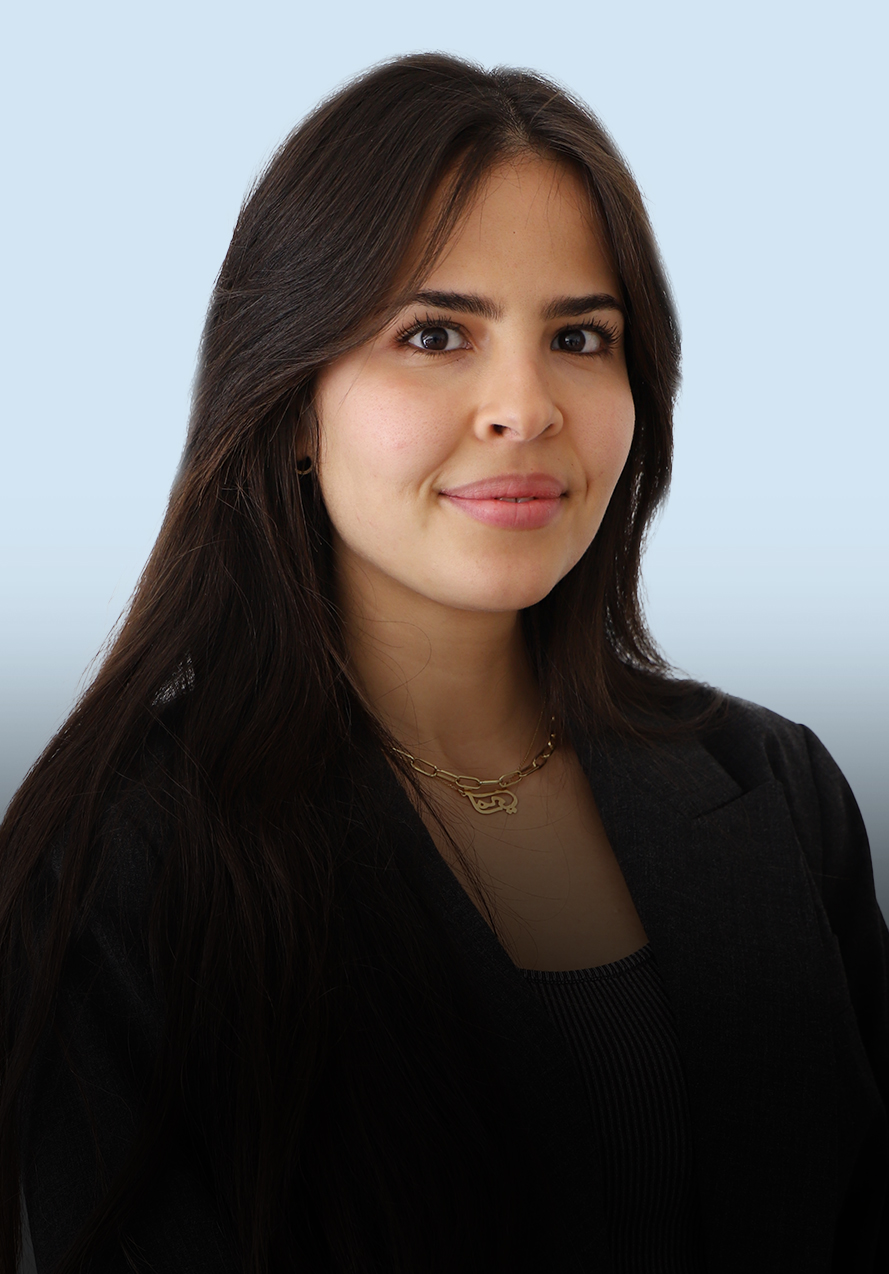
Oumayma Bourhriba
Senior Economist
Oumayma Bourhriba is a Senior Economist at the Policy Center for the New South (PCNS).At the PCNS, which she joined in 2019, Oumayma Bourhriba conducts research focusing on macroeconomic policies and international trade, with a particular emphasis on services.She has contributed to major publications on the Moroccan economy, such as the IMF’s Morocco's Quest for Stronger and Inclusive Growth (2023) and the World Bank’s Trade Policy in Morocco: Taking Stock and Looking Ahead (2023). Beyond her research, she has coordinated the Africa Economic Symposium, one of the flagship convenings organized by the PCNS.Oumayma Bourhriba holds a master’s degree in applied economics from University Mohammed V (UM5), where she is currently a PhD candidate.She is fluent in Arabic, English, ...
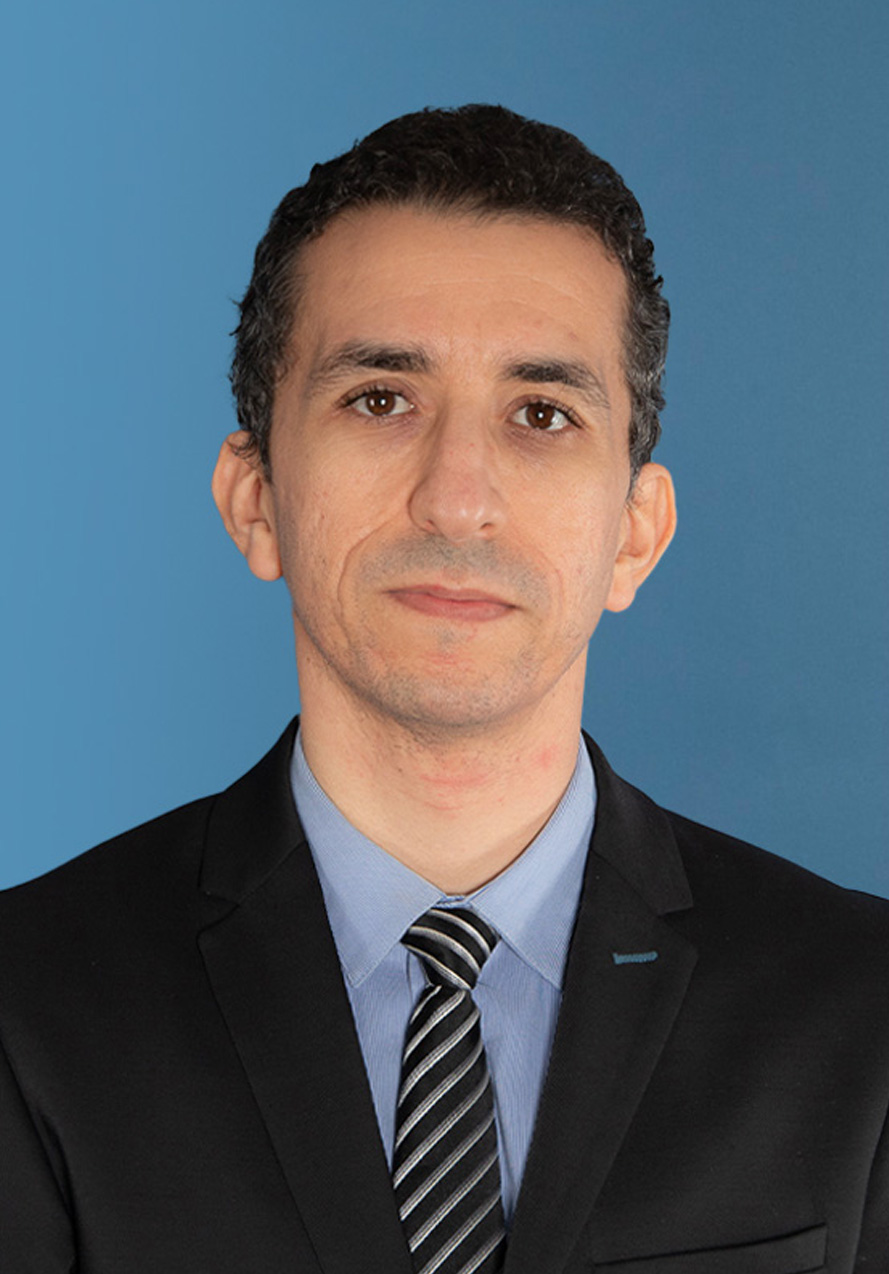
Abdelaaziz Ait Ali
Head - Research in Economics
Abdelaaziz Ait Ali is a principal Economist and head of the Research Department at the Policy Center for the New South. He joined the Center in 2014 after five years of experience at the Central Bank of Morocco. He worked as an economist in the International Studies and Relations Department and was analyzing the real estate price index and financial asset prices for monetary policy and financial stability purposes. Since then, Abdelaaziz has focused on cyclical and structural issues of the Moroccan economy, including macroeconomic management and industrial policy design. He has published articles on the reform of the exchange rate regime in the Moroccan economy and its implications for macroeconomic regulation, as well as on the evolution of the macroeconomic framework over th ...
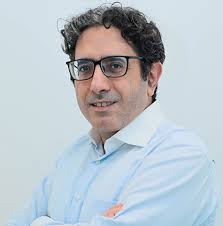
Faiçal Hossaini
Academic Associate, Mohammed VI Polytechnic University, Rabat
Faiçal Hossaini teaches economics at the Faculty of Governance, Economics and Social Sciences (FGSES) of Mohammed VI Polytechnic University (UM6P) in Benguerir. He holds a Doctorate in Macroeconomics from Mohammed V University, along with a Master’s degree in Economics and a Master’s degree in Finance, both from the University of Quebec in Montreal (UQAM). Prior to joining FGSES, he spent over 10 years as an economist at the Economic Studies Department of the Moroccan Central Bank, where he gained extensive experience in economic policy. He has also taught economics and econometricsin Morocco and abroad. ...

RELATED CONTENT

  • Authors
    Mohamed Hamza Sallouhi
    March 23, 2016
     Partie 1. Le ralentissement économique de la Chine : une transition inquiétante  L’incertitude sur les marchés financiers, la transition de l’économie chinoise vers un modèle de croissance moins extraverti et le ralentissement du rythme de la croissance des pays émergents, sont autant de facteurs qui fragilisent considérablement une croissance mondiale durable et synchronisée. Dans ce contexte, l’OCP Policy Center a tenu une table ronde animée par Patrick Artus ...
  • Authors
    Zouhair Aït Benhamou
    March 2, 2016
    Discrepancies in output fluctuations between emerging and developed economies are well documented in the literature. Differences however within developing economies have not been sufficiently scrutinised. This paper argues that global and regional shocks primarily drive the business cycle in emerging economies, and provides estimated results for cycle variance decomposition. The paper also offers a theoretical framework to check on the set of stylized facts common and specific to em ...
  • Authors
    December 23, 2015
    Global economic growth is likely to be a little better in 2016 than this year’s lackluster outcome. The ongoing slow recovery in the United States and Europe is likely to continue. However, weakness in China as well as several large emerging markets, and sluggishness of world trade, mean that risks are weighted on the downside of this forecast. Morocco, which is reliant on European markets, is a heavy importer of oil, and whose currency has devalued in effective terms, should find t ...
  • Authors
    Karim El Mokri
    Aziz Ragbi
    Said Tounsi
    November 23, 2015
    The issue of a powerful fiscal policy comeback is not only being debated in Europe. It is also interesting for Morocco, in many respects. If in Europe there is controversy between the proponents of the structural budgetary balance rule and critics of restrictive policies in the context of major financial and recessive shocks, in the South of the Mediterranean fiscal policy is caught between the multiple social and economic requirements and the constraint of sustainability. ...
  • Authors
    Edité par:
    Karim El Mokri
    Aziz Ragbi
    Said Tounsi
    November 23, 2015
    Depuis le déclenchement de la crise économique et financière internationale, la politique budgétaire a connu un vif regain d’intérêt dans les arènes académiques et dans les débats des policy-makers, aussi bien dans les pays avancés que ceux en voie de développement. Pour un pays en voie de développement comme le Maroc, l’importance de la politique budgétaire réside dans le potentiel qu’elle offre en matière de stabilisation du cycle économique et de relance de l’activité en période ...
  • Authors
    Clémence Vergne
    November 19, 2015
    Au cours de la dernière décennie, le Ghana a enregistré des taux de croissance moyens supérieurs à 7 % par an, ce qui lui a permis d’accéder au statut de pays à revenu intermédiaire de la tranche inférieure. Toutefois, la croissance a récemment marqué le pas pour s’établir à 4,2 % en 2014, ce qui soulève la question de la pérennité du modèle de développement du pays. Le Ghana se trouve désormais à un stade critique de son processus de développement. Une transformation structurelle ...