Fighting for Africa: External Power competition in the Red Sea

December 14, 2020

Foreign powers are grappling for influence across the African continent, but competition has been particularly fierce in the Red Sea. With Ethiopia, long viewed as a bulwark against instability in the Horn of Africa, emerging from conflict, there is a new opportunity to cement the peace with Eritrea. Increased access to the sea could provide an immense peace dividend to the region—and especially to the people of Tigray. How will key external actors, especially the UAE and China, react to this moment of transition? And will the United States and Europe attempt to repair relations with the region, or risk being left out in the cold? Chair: Bronwyn Bruton, Director of Programs and Studies, Africa Center, Atlantic Council Speakers: . Maha Skah, International Relations Specialist, Policy Center for the New South . Gabriel Negatu, Former Director General, African Development Bank; Senior Fellow, Africa Center, Atlantic Council . Khalid Chegraoui, Senior Fellow, Policy Center for the New South

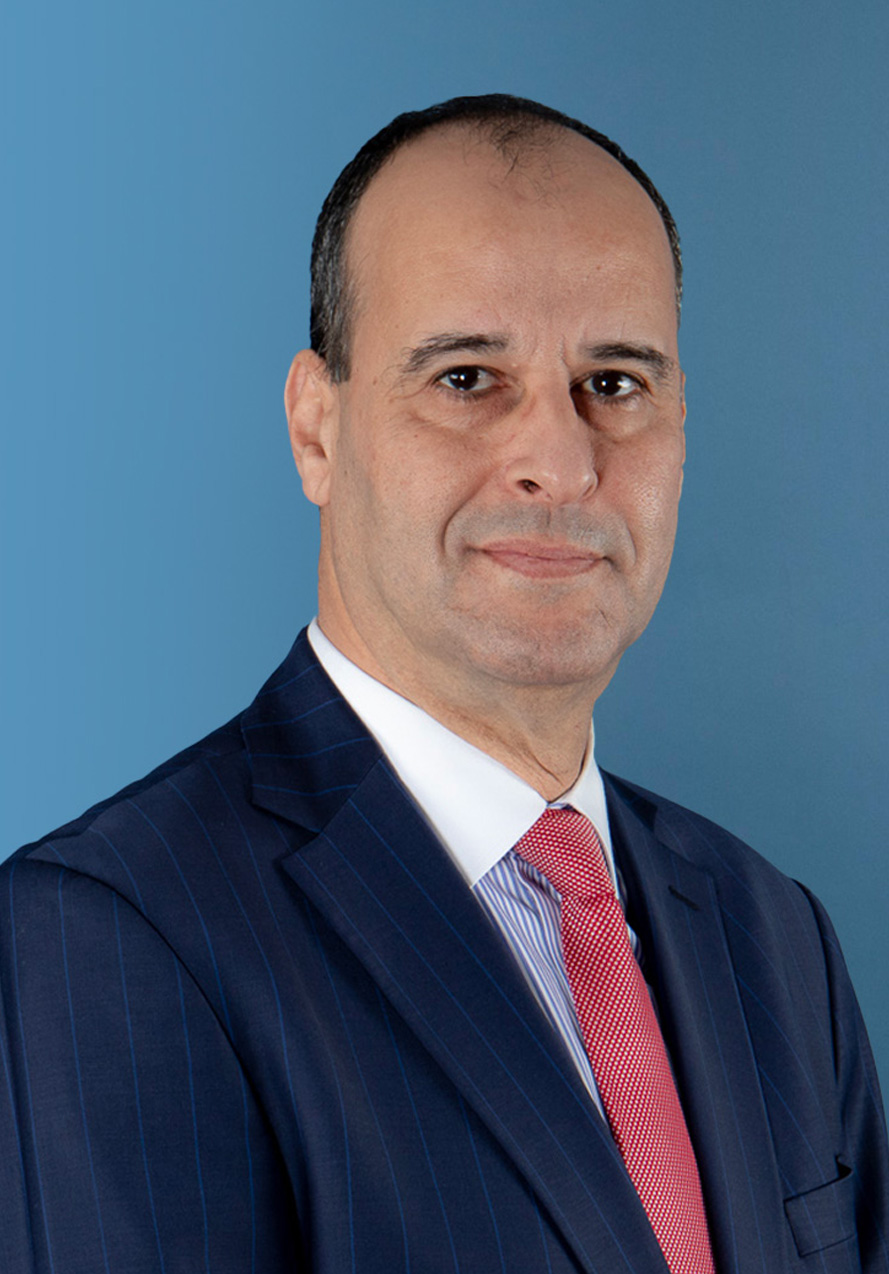
Speakers
Maha Skah
Political Affairs Officer, United Nations
Maha Skah is a Political Affairs Officer at the Policy and Mediation Division of the United Nations Department of the Political and Peacebuilding Affairs (DPPA) in New York, where her role centers around providing technical and political advice on how to assess and analyze climate-related peace and security risks and how to integrate climate considerations into the Department of the Political and Peacebuilding Affairs (DPPA) conflict prevention, peacebuilding, and peacemaking work. Maha Skah previously worked at the Policy Center for the New South as an International Relations Specialist, where her research activities focused on geopolitics in Africa and climate change policies, and at the Organisation for Economic Co-operation (OECD) on issues relating to development cooperat ...
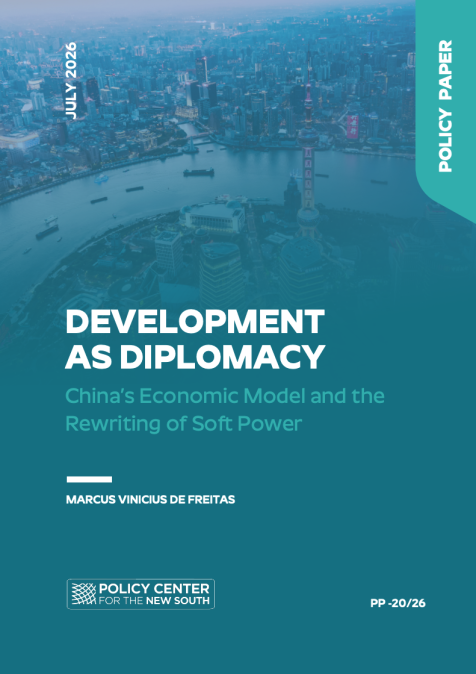
Khalid Chegraoui
Senior Fellow
Khalid Chegraoui is Senior Fellow at the Policy Center for the New South and Vice Dean of Political Sciences and International Relations at the Faculty of Governance, Economic and Social Sciences of the Mohammed VI University.  He began his teaching and research career in 1992 as a Research Assistant Professor at Sidi Mohammed Ben Abdallah University in Fez after earning his first doctorate in African Studies from the Mohammed V University in Rabat focusing on West Sub-Saharan Africa. He also earned a Doctorate of State in African Studies from the same University in 2002, where he focused on Contemporary West Africa, in 2003 he became Professor of History and Political Anthropology at the Institute of African Studies, Mohammed V University, consultant on African and Midd ...
Bronwyn Bruton
Director of Programs and Studies, Africa Center, Atlantic Council
...
Gabriel Negatu
Former Director General, African Development Bank; Senior Fellow, Africa Center, Atlantic Council
...

RELATED CONTENT

  • Authors
    Meryam Amarir
    August 13, 2026
    Recent crises in the Middle East, particularly attacks targeting commercial vessels in the Red Sea and tensions surrounding the Strait of Hormuz, have highlighted the vulnerability of the main strategic corridors of global trade. Rather than fundamentally disrupting the organization of trade flows, these crises are accelerating an ongoing transformation driven by the search for more resilient connectivity chains, the diversification of trade routes, and the development of logistics ...
  • Authors
    Meryam Amarir
    August 13, 2026
    Les crises récentes au Moyen-Orient, notamment les attaques ciblant les navires commerciaux en mer Rouge et les tensions autour du détroit d'Ormuz, ont mis en évidence la vulnérabilité des principaux corridors stratégiques du commerce mondial. Plus qu'un bouleversement de l'organisation des échanges, elles accélèrent une transformation déjà engagée, fondée sur la recherche de chaînes de connectivité plus résilientes, la diversification des itinéraires commerciaux et le développement ...
  • August 4, 2026
     Cet article a initialement été publié sur la plateforme confrontations.org Février 2022 : face à un nouveau contexte international, les Européens se rallient aux idées de souveraineté européenne et d’autonomie stratégique, brisant ainsi un tabou. Octobre 2025 : après cinquante ans de contentieux, le Conseil de sécurité ouvre la porte à une reconnaissance officielle de la souveraineté marocaine au Sahara occidental.Apparemment sans rapport, ces deux évènements sont reliés ...
  • August 3, 2026
    This policy paper explores how China’s economic development model—rooted in pragmatism, long-term planning, and civilizational renewal—has become its most compelling soft power asset, particularly in the eyes of the Global South. While critically engaging with Joseph Nye’s original conception of soft power as a primarily cultural and normative force, the paper argues that China’s ability to transform itself from an impoverished postimperial state into the world’s largest trading nat ...
  • Authors
    Fadoua Ammari
    July 27, 2026
    Cet article évalue la pertinence du paradigme de la réconciliation pour analyser la rivalité maroco-algérienne. À partir d’une démarche qualitative, historico-interprétative et interdisciplinaire fondée sur un corpus raisonné de travaux académiques et de sources institutionnelles, il montre que cette conflictualité ne se réduit ni au différend du Sahara ni à un simple antagonisme bilatéral. Elle se construit à l’intersection de mémoires concurrentes, de mécanismes de sécuritisation, ...
  • Authors
    July 14, 2026
    Avec la capitale Pékin comme acteur principal de la politique étrangère chinoise, l’engagement de la Chine en Afrique ne peut plus être appréhendé à travers le seul prisme de l’État central. Suite aux réformes de décentralisation engagées en 1978, les gouvernements provinciaux de l’Empire du Milieu jouent un rôle de plus en plus visible et structurant, en s’affirmant en tant qu’acteurs à part entière de la coopération internationale. Ils interviennent, entre autres domaines, dans le ...
  • Authors
    July 7, 2026
    The Green March is one of those seminal moments that have never ceased to influence the course of political events in Morocco, because of its long-term significance from the outset, the context in which it unfolded, the logic of interactions in which it was embedded through its causes and effects, and as one of the striking figures in the national narrative. ...