Economic Growth and Natural Capital: Rethinking the Foundations of Prosperity

February 20, 2026

This episode explores the limits of traditional economic growth metrics, which often overlook the depletion of natural capital such as forests, water, soils, minerals, and biodiversity. It highlights the need to treat these resources as essential assets for achieving sustainable and resilient prosperity. The discussion focuses on how Morocco and other emerging economies can rethink their development models to align economic growth with climate adaptation and intergenerational equity.

Speakers
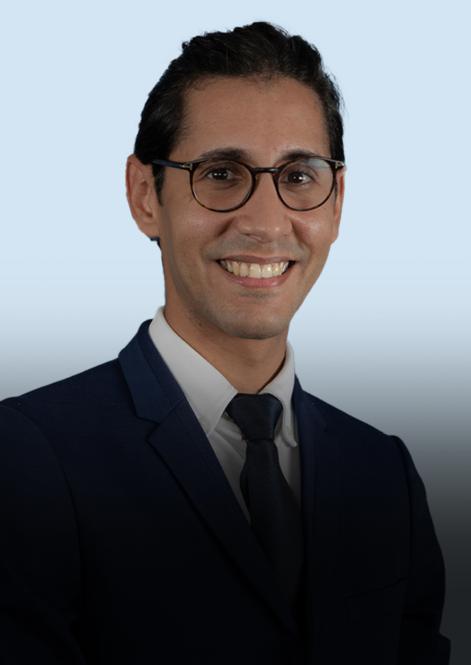
Izzy Fenwick
Executive Director, Climate Foundation
document.location='https://www.policycenter.ma/adelcommunity/izzy-fenwick' ...
RELATED CONTENT

  • May 26, 2023
    The energy and ecological transition (EET) is inevitable, desirable, and now accepted worldwide. But how this transition will be financed remains highly uncertain. This Policy Paper analyzes the financing needs and reviews the different possible financial channels. Some avenues have already been launched, and procedures and instruments are being put in place, but all of this remains insufficient. Many solutions will have to be combined, and these will require financial innovations, ...
  • May 9, 2023
    La transition énergétique et écologique (TEE) est inéluctable, souhaitable et désormais acceptée au plan mondial. Mais le financement de cette transition demeure fort incertain. L’objet de ce Policy Paper est d’analyser les besoins de financement à considérer, et de passer en revue les différents canaux financiers possibles. Des pistes ont déjà été lancées, des procédures et des instruments sont mis en place, mais tout cela reste insuffisant. Il va falloir combiner un grand nombre d ...
  • Authors
    March 7, 2023
    In April 2007, on my first day as vice president at the Inter-American Development Bank (IDB) in Washington D.C., I received an informal visit from Thomas E. Lovejoy, a celebrated American environmental scientist who died last year. He spoke to me of a “turning point” in deforestation in the Amazon, beyond which the consequences would be irreversible. He was interested in knowing how the IDB could help in the fight against deforestation. Thomas and the Brazilian environmental scien ...
  • Authors
    Chami Abdelilah
    Derj Atar
    Hammi Ibtissem
    Morazzo Mariano
    Naciri Yassine
    with the technical support of AFRY
    July 29, 2021
    As decarbonization is a long-term process and requires significant investments, specific financial and non- financial measures will need to be implemented, both in the short and long term, to facilitate this transition. In Part II of Morocco’s decarbonization pathway Policy Brief series, an update of the decarbonization scenarios was presented. It revealed that the Increased Ambition and Green Development scenarios achieve higher decarbonization targets than current policy. It showe ...
  • Authors
    Chami Abdelilah
    Derj Atar
    Hammi Ibtissem
    Morazzo Mariano
    Naciri Yassine
    with the technical support of AFRY
    July 23, 2021
    La décarbonisation est un processus à long terme qui nécessite des investissements importants. Ainsi, des mesures financières et non financières spécifiques devront être mises en œuvre, à la fois à court et à long termes, pour faciliter cette transition. Dans la deuxième partie de la série de Policy Briefs sur la trajectoire de décarbonisation du Maroc, une mise à jour des scénarios de décarbonisation a été présentée. Elle révèle que les scénarios « Ambition accélérée » et « Dévelop ...
  • Authors
    Chami Abdelilah
    Derj Atar
    Hammi Ibtissem
    Morazzo Mariano
    Naciri Yassine
    with the technical support of AFRY
    July 19, 2021
    Morocco's significant renewable energy resources offer an unprecedented opportunity to anchor the country’s economic and political choices in the energy transition, and to turn the transition into an essential lever for economic development. This is all the more relevant as the costs of renewable energies have dropped over the past 10 years2, and now offer strong potential, not only for creating green jobs but for ensuring a dynamic and resilient economic growth as well. In 2020, ne ...
  • Authors
    Chami Abdelilah
    Derj Atar
    Hammi Ibtissem
    Morazzo Mariano
    Naciri Yassine
    with the technical support of AFRY
    July 9, 2021
    The consequences of climate change are becoming progressively more visible in Morocco. Changes in rainfall patterns and drought, increases in average temperatures and heatwaves, flooding, and rising sea levels are increasingly affecting several regions. Yet, Morocco has a relatively low greenhouse gas (GHG) emission rate, compared to other countries. In 20162, Morocco’s total GHG emissions reached 86127.7 gigagram of carbon dioxide equivalent (Gg CO2-eq), totaling around 0.2% of glo ...
  • Authors
    Chami Abdelilah
    Derj Atar
    Hammi Ibtissem
    Morazzo Mariano
    Naciri Yassine
    with the technical support of AFRY
    July 9, 2021
    Les importantes ressources en énergies renouvelables du Maroc offrent une opportunité sans précédent d’ancrer les choix économiques et politiques du pays dans la transition énergétique, et de faire de cette transition un levier essentiel du développement économique. Ceci est d’autant plus important que le coût des énergies renouvelables a baissé au cours des 10 dernières années2 et présente désormais un fort potentiel, non seulement de création d’emplois verts mais aussi de croissan ...