Climate change, environmental sustainability, and Moroccan green transition

June 30, 2026

This episode explores Morocco’s green transition, examining the country’s progress in renewable energy alongside the challenges of reducing dependence on fossil fuels. It discusses the economic and social impacts of climate change, particularly on water, agriculture, and health, while highlighting the policies and reforms driving the transition. The conversation also emphasizes the importance of effective implementation, investment, and international competitiveness in building a more sustainable and resilient Moroccan economy

Speakers

Rim Berahab
Senior Economist
Rim Berahab is Senior Economist at the Policy Center for the New South, which she joined in 2014. She is currently working on themes related to energy issues and their impacts on economic growth and long-term development. Her research areas also cover trade and regional integration challenges in Africa. Previously, she has also worked on questions related to gender inequalities in the labor market of North African countries. Rim spent three months at the International Monetary Fund (IMF), in 2016, in the Commodities Unit of the Research Department. She holds a State Engineering degree from the National Institute of Statistics and Applied Economics (INSEA). ...

Sabrine Emran
Senior Economist
Sabrine Emran is a Senior Economist at the Policy Center for the New South (PCNS).At the PCNS, Sabrine Emran conducts research on the Energy Transition, Climate Finance, and Critical Minerals, focusing on the energy priorities of developing countries in the context of sustainable development, just energy transition, and global climate commitments.Before joining the PCNS in 2022, Sabrine Emran worked as a Commodities Analyst and Risk Management Consultant, specializing in agricultural and energy commodities as well as foreign exchange risk. She also held a position at Lyxor Asset Management as Request for Proposal and Product Specialist, where she focused on alternative investment asset classes and collaborated closely with institutional investors.Sabrine Emran holds a master’s ...
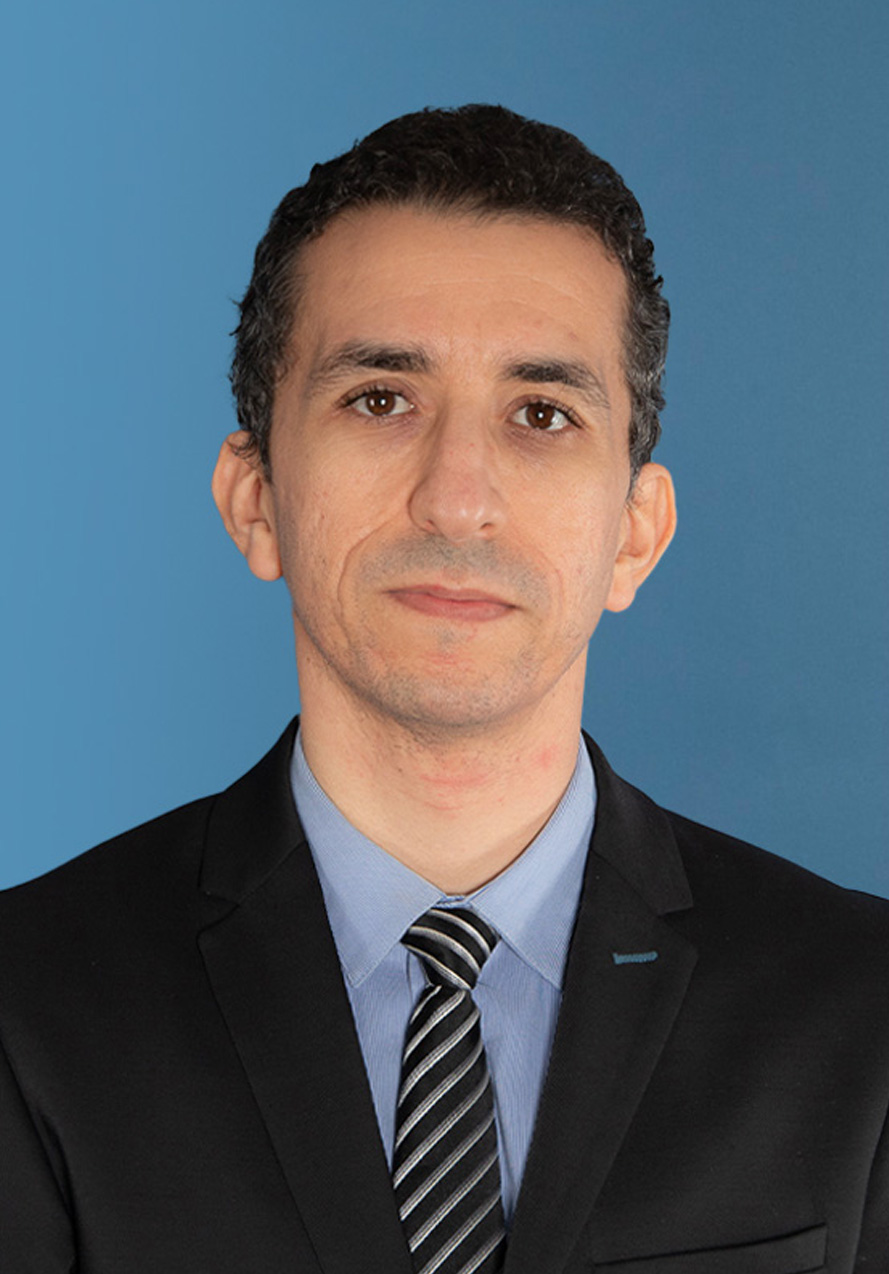
Abdelaaziz Ait Ali
Head - Research in Economics
Abdelaaziz Ait Ali is a principal Economist and head of the Research Department at the Policy Center for the New South. He joined the Center in 2014 after five years of experience at the Central Bank of Morocco. He worked as an economist in the International Studies and Relations Department and was analyzing the real estate price index and financial asset prices for monetary policy and financial stability purposes. Since then, Abdelaaziz has focused on cyclical and structural issues of the Moroccan economy, including macroeconomic management and industrial policy design. He has published articles on the reform of the exchange rate regime in the Moroccan economy and its implications for macroeconomic regulation, as well as on the evolution of the macroeconomic framework over th ...

RELATED CONTENT

  • Authors
    Malancha Chakrabarty
    Manish K Shrivastava
    September 25, 2024
    This paper was originally published on t20brasil.org   In a global context marked by unprecedented economic and environmental challenges, Africa stands at a crossroads. The rapid rise in public debt, coupled with the climate emergency, imposes a dual constraint on the continent's countries, severely limiting their ability to pursue sustainable development and mitigate the effects of climate change. This critical situation calls for innovative and effective solutions capa ...
  • July 25, 2024
    This event is organized by the Green Investment Principles (GIP) Africa Chapter, co-chaired by Bank of Africa and Ninety One, in partnership with the Policy Center for the New South (PCNS). The GIP Africa Chapter, established during COP27 in Egypt, is one of the regional chapters of the...
  • Authors
    May 6, 2024
    The issue of environmental degradation represents a significant global challenge. It manifests in various forms, including physical alterations such as air pollution, ozone depletion, climate change, marine pollution and biodiversity loss. These changes are proven to be linked to human activities, such as energy production and consumption, tourism and agriculture. Additionally, factors like population growth and health and safety concerns contribute to environmental decline. Is Gro ...
  • May 26, 2023
    The energy and ecological transition (EET) is inevitable, desirable, and now accepted worldwide. But how this transition will be financed remains highly uncertain. This Policy Paper analyzes the financing needs and reviews the different possible financial channels. Some avenues have already been launched, and procedures and instruments are being put in place, but all of this remains insufficient. Many solutions will have to be combined, and these will require financial innovations, ...
  • May 9, 2023
    La transition énergétique et écologique (TEE) est inéluctable, souhaitable et désormais acceptée au plan mondial. Mais le financement de cette transition demeure fort incertain. L’objet de ce Policy Paper est d’analyser les besoins de financement à considérer, et de passer en revue les différents canaux financiers possibles. Des pistes ont déjà été lancées, des procédures et des instruments sont mis en place, mais tout cela reste insuffisant. Il va falloir combiner un grand nombre d ...
  • July 6, 2022
    Le Policy Center for the New South et Enel Green Power Maroc co-organisent un webinaire sur "la tarification du carbone et le développement économique". Cette rencontre permettra de débattre des défis, des avantages et des limites des mécanismes de tarification du carbone et de leur imp...
  • Authors
    Niranjali Amerasinghe 
    Chiara Colesanti Senni 
    Simon Dikau 
    Yaroslav Lissovolik 
    Claude Lopez 
    Serafín Martínez-Jaramillo 
    Andrew McConnell 
    Christina Parajon Skinner 
    Jon Sward 
    Viviane Helena Torinelli 
    Boyan Yanovski 
    March 28, 2022
    Climate change has quickly become one of the most pressing challenges of our society. Financial actors could play a key role in supporting and fostering a shift towards a low-carbon economy. In this context, central banks could have a primary function in both tackling climate-related risks and the ones related to the transition and, potentially, proactively redirecting resources towards green initiatives. Central banks are indeed exploring how different types of climate-related risk ...
  • Authors
    March 16, 2022
    The 2021 German federal election brought about a historic reshuffle of the political parties’ hierarchy in Europe’s biggest economy. The Social Democratic Party are back in control of the Chancellery for the first time since 2005, as part of a three-party coalition at the federal level with the Greens and the Liberals, a first in Germany’s post-war history. Now, the federal government has turned its gaze towards its founding mission: more progress. The first 100 days of the three-pa ...
  • Authors
    February 9, 2022
    Energy markets have experienced significant disruptions since the outbreak of COVID-19. In late 2021, soaring natural gas prices triggered a new crisis, leading to risks of energy supply shortages worldwide and propelling the issue of energy security to the forefront. Africa will not be spared the repercussions of this crisis, which could further increase energy inequality, which is in turn linked to other forms of inequality. Indeed, in a context of persistent inflation, the lack o ...