Arab Geopolitics 2020: The Middle East, what kind of future?

July 27, 2020
Speakers
Karim El Aynaoui
Executive President
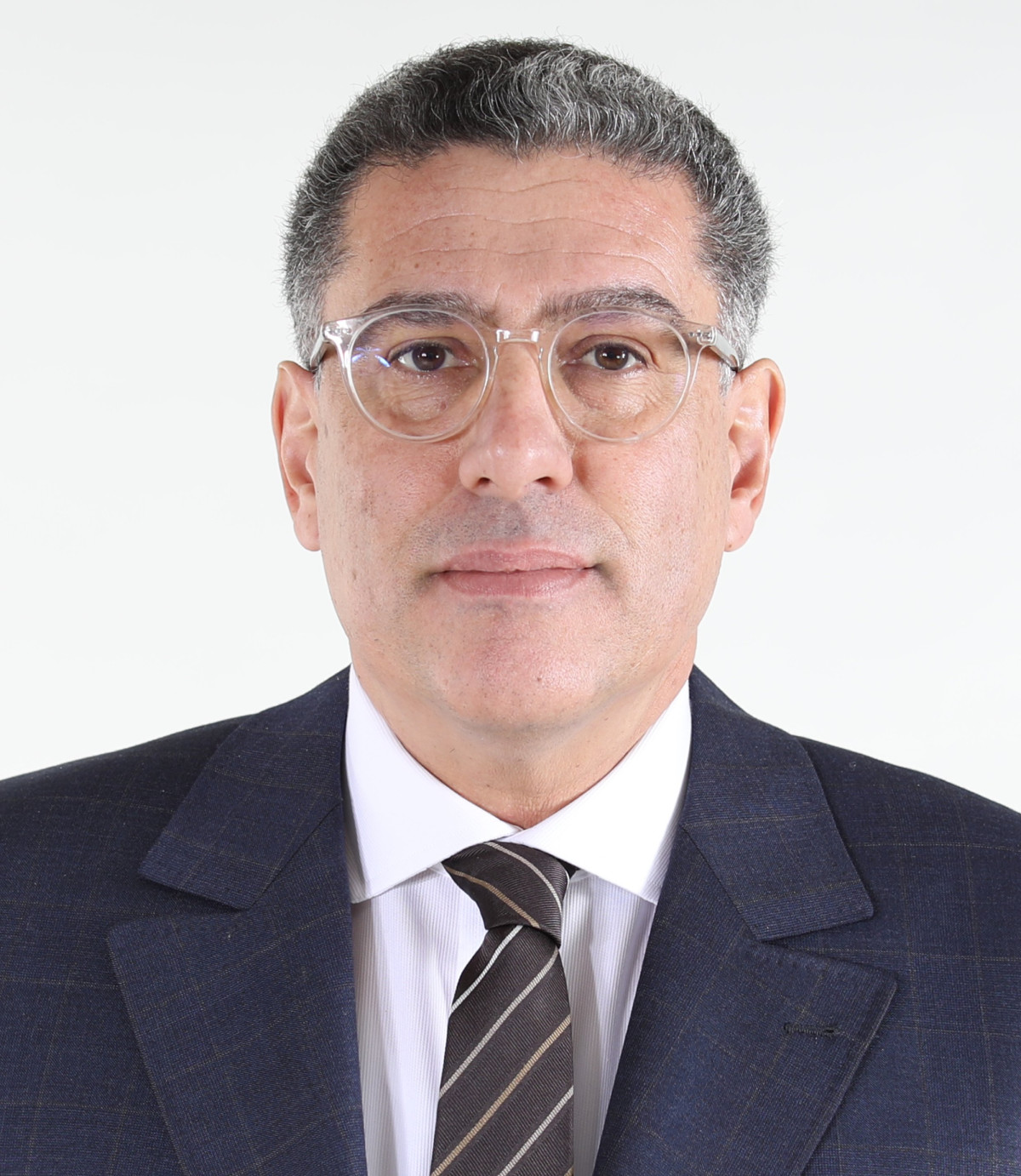
Karim El Aynaoui is Executive President of the Policy Center for the New South. He is also Executive Vice-President of Mohammed VI Polytechnic University and Dean of its Humanities, Economics and Social Sciences Cluster.  Karim El Aynaoui is an economist. From 2005 to 2012, he worked at the Central Bank of Morocco where he held the position of Director of Economics, Statistics, and International Relations. At the Central Bank of Morocco, he was in charge of the Research Department and equally a member of the Governor’s Cabinet. Previously, he worked for eight years at the World Bank as an Economist for its regional units of the Middle East and North Africa and Africa. Karim El Aynaoui has published books and journal articles on macroeconomic issues in developing ...
James Huber
Military Assistant to the Dean, NATO Defense College, Rome
...
Gilles Kepel
Scientific Director, Middle East Mediterranean Freethinking Platform, Università della Svizzera italiana, Lugano
...
Claire Spencer
Visiting Senior Research Fellow, King’s College, London
...
Giovanni Romani
Head, Middle East and North Africa Section, Political Affairs and Security Policy Division, NATO HQ, Brussels (Virtual)
...
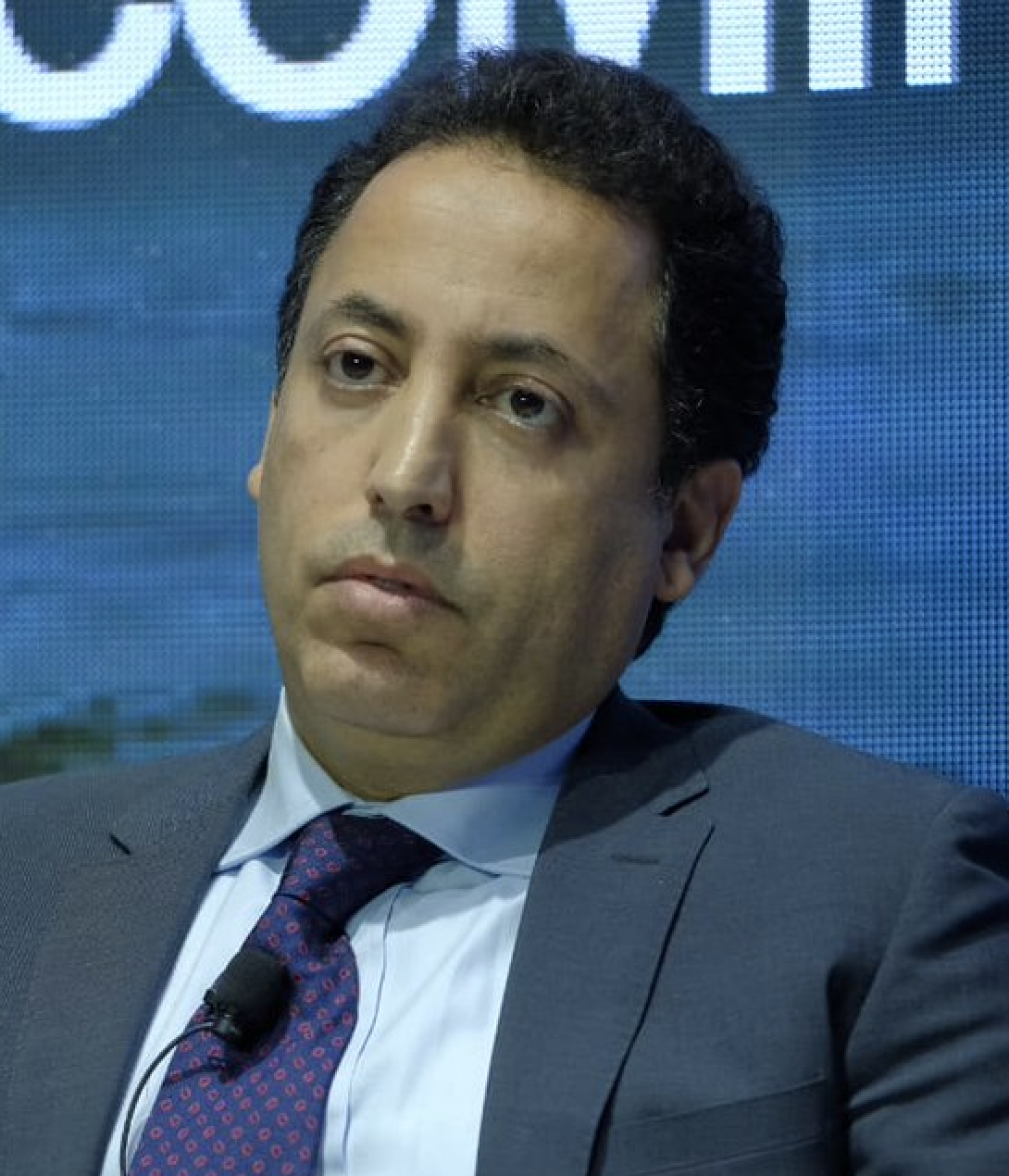
Youness Abouyoub
Director, Governance and State-Building Division for the MENA Region, United Nations; Former Senior Political Advisor to the Special Representative of the UN Secretary General to Libya
Former head of the political office of the UN Under-Secretary General for Conflict Prevention and senior political advisor to the UN Secretary General Special Envoy to Burundi. He directed the political office of the UN Secretary General Special Envoy to Yemen and acted as his senior special advisor. He also was the senior political officer in charge of the regional affairs in the UN political mission to Libya (UNSMIL) and head of office of the special representative of the UN Secretary General in Libya. He also served as Senior Regional Expert in the UN Security Council Panel of Experts on Sudan (Darfur) and worked for the United Nations Department of Political Affairs (New York) and the United Nations Environment Program in Nairobi. Mr. Youness Abouyoub holds a PhD in politi ...
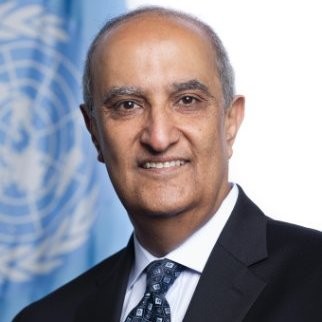
Brahim Oumansour
Associate Fellow, Center for Studies and Research on the Arab and Mediterranean World, Geneva; and Associate Research Fellow, Institute for International and Strategic Affairs, Paris
...
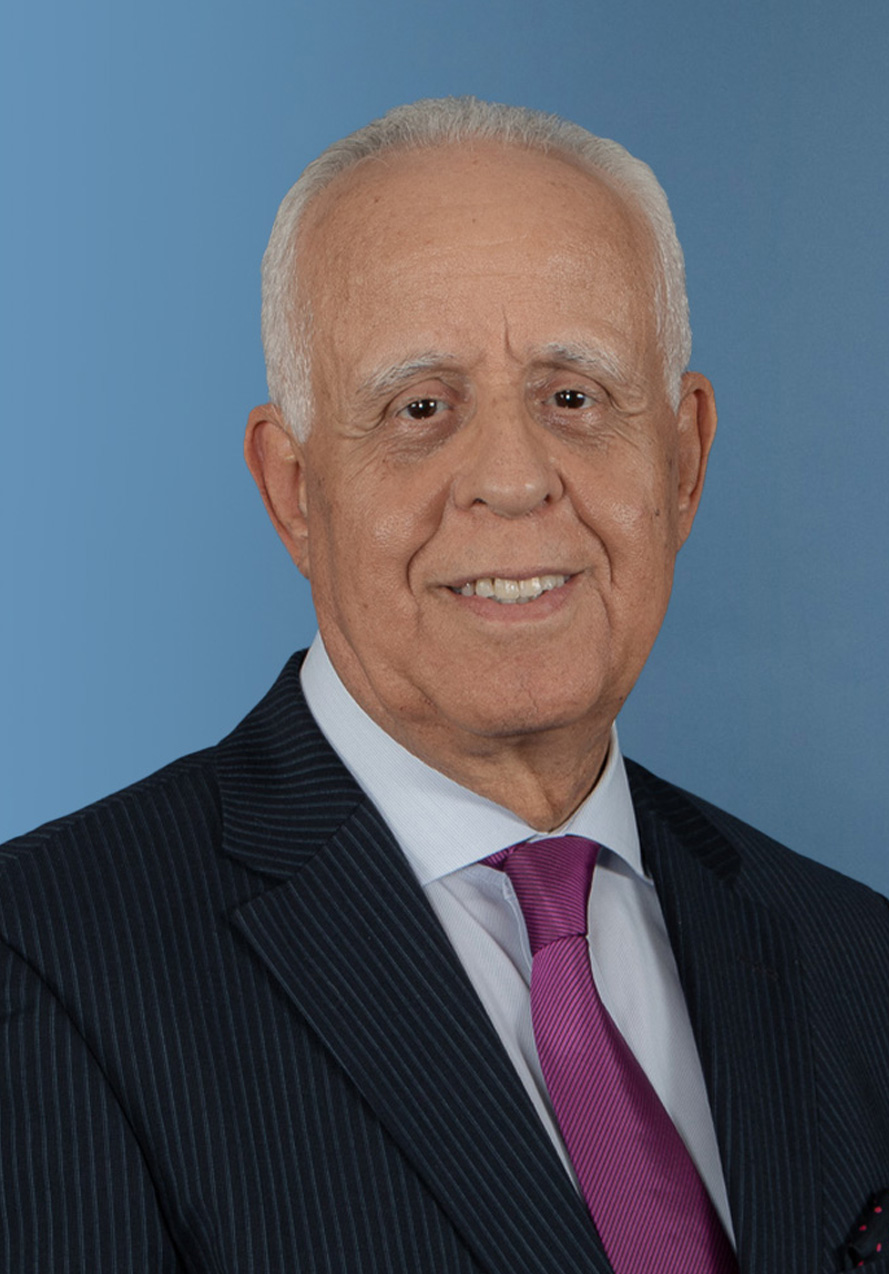
Mohammed Loulichki
Senior Fellow
Mohammed Loulichki is a Senior Fellow at the Policy Center for the New South and an Affiliate Professor at Mohammed VI Polytechnic University. He brings over 40 years of comprehensive experience in diplomacy, conflict resolution, and human rights. He has served in various roles including as a member and Deputy Head of the Moroccan delegation to the 3rd Conference on the Law of the Sea (1982-1990), Head of the Department of Legal Affairs and Treaties at the Ministry of Foreign Affairs (1988-1991), and General Director for Multilateral Affairs in the same ministry (2003-2006).   He also acted as Morocco's Ambassador to Hungary, Bosnia-Herzegovina, and Croatia (1995-1999), and was the Moroccan Government's Ambassador Coordinator with MINURSO (1999-2001). Furthermore, he se ...

RELATED CONTENT

  • Authors
    February 11, 2026
    The U.S.–China technological rivalry has become a central axis of global economic and geopolitical competition. While the United States continues to lead in frontier innovation—most notably in advanced semiconductors and artificial intelligence (AI)—China has consolidated strengths in large-scale implementation, manufacturing capacity, and control over critical segments of global supply chains. These advantages are especially visible in clean energy technologies and in the processin ...
  • Authors
    Amine Ghoulidi
    February 5, 2026
    This Paper was originally published on orient-online.com  The Western Mediterranean’s exposure to the Sahel is usually framed in terms of security spillovers and crisis management. This paper argues that this framing misreads how Sahelian access conditions now shape Mediterranean integration. Morocco’s Atlantic Initiative is a state-led corridor strategy combining Atlantic port infrastructure, inland transit routes, and energy systems to connect landlocked Sahelian economi ...
  • February 4, 2026
    This article examines the quiet but profound implications of the erosion of U.S.-led hegemony for small and vulnerable states of the New South. While the post-1945 international order was never egalitarian, it offered predictability: power was organized through law, and sovereignty for weaker states rested less on justice than on procedural stability. Davos 2026 marked a turning point in the public acknowledgment of that system’s unraveling. Statements by leading Western figures rev ...
  • Authors
    February 3, 2026
    From the use of tariffs as a foreign policy instrument, to the weaponization of critical resources, and from targeted sanctions to attacks on critical infrastructure, economic security is at the forefront of international debates. The aggressive use of economic instruments for strategic purposes has become an explicit feature of international affairs, in a way not seen since the interwar period[1]. Beyond the weaponization of resources of all kinds, an increasing ‘monetization’ is u ...
  • Authors
    Stephan Klingebiel
    Andy Sumner
    January 9, 2026
    Global cooperation is under stress. It hardly requires detailed analysis: the international system is in a profound crisis, when seen from many Northern vantage points. What if we see the same turbulence but from a different vantage point? For many in the Global South the current period signals risk, but also opportunity. That the same events could spark a sense of crisis in one group but opportunity in another is nothing new. However, the sheer scale, speed, and scope of recen ...
  • Authors
    December 18, 2025
    The return of President Donald Trump to the White House at the start of 2025 was expected to signal an American retreat from international engagement, especially in regions of traditional security interest, such as southern Europe, North Africa, and the Middle East. To the surprise of many observers around the Mediterranean, and perhaps to the dismay of some in the Trump administration’s ideological orbit, this has not happened. If anything, the second half of 2025 has seen a high d ...
  • October 23, 2025
    The UN’s funding crisis, fueled by unpaid contributions and expanding mandates, is worsening as U.S. disengagement strains peacekeeping and development efforts, particularly in Africa. This shift also strengthens rivals like China and Russia and raises deeper questions about the legitim...
  • October 23, 2025
    Depuis plus de trente ans, les relations entre le Maroc et l’Union européenne (UE) se caractérisent par un équilibre entre pragmatisme politique, ouverture économique et convergence stratégique. Le processus de Barcelone de 1995 a marqué le début d’une coopération euro-méditerranéenne renforcée, consolidée par l’Accord du Statut avancé en 2008 et le Partenariat euro-marocain de prospérité partagée, faisant de l’UE le principal partenaire économique du Royaume. Dans un contexte régio ...
  • Authors
    Khadija Mamouni
    September 30, 2025
    This article analyzes the role played by Türkiye as an emerging “middle power”[1], in Africa over the last two decades. It argues that a certain discontinuity can be identified in Türkiye’s foreign policy approach in Africa. The approach has shifted from short-term involvement with African nations to more focused, constructive, vision-oriented partnerships. In addition, Türkiye’s gradual rapprochement with Africa began with a soft-power approach through a humanitarian, cultural, and ...