Publications /
Book / Report

Back
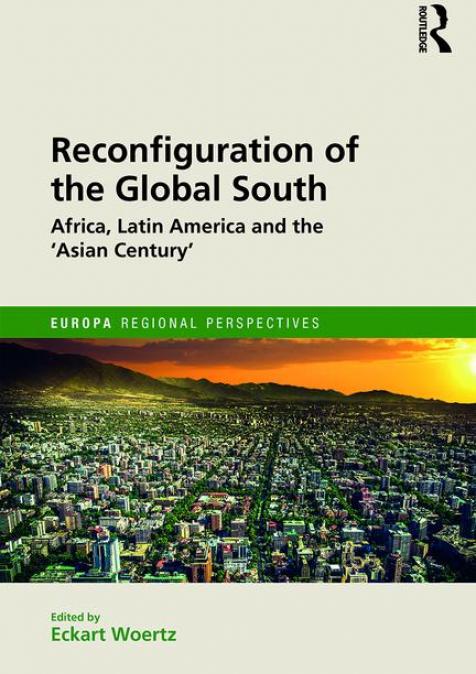
Reconfiguration of the Global South: Africa and Latin America and the 'Asian Century'
Authors
Eckart Woertz
November 24, 2016

Face aux bouleversements à ses frontières orientales et méridionales, l'Union européenne a cherché à trouver des réponses en révisant sa Politique européenne de voisinage et en publiant une nouvelle stratégie globale de politique étrangère et de sécurité. Au-delà des documents, quelles réalités de l'impact européen dans son voisinage ?

La Politique européenne de voisinage (PEV) a été initiée en 2003 avec des déclinaisons régionales au Sud avec l’Union pour la Méditerranée depuis 2008 et, à l’Est, avec le Partenariat oriental depuis 2009. L’ambition de réunir dans un même chapitre des pays aussi différents que l’Égypte et l’Arménie paraît audacieuse. L’intérêt bureaucratique d’avoir un cadre unique est certes compréhensible, mais la pertinence politique l’est moins. En outre, les troubles géopolitiques à l’Est et au Sud ont généré de nombreuses incertitudes, tant sur le plan sécuritaire que sur la capacité de l’Union européenne à être un acteur influent et de premier plan. D’où la révision de la PEV en novembre 2015 et la publication de la stratégie globale de l’UE en juin 2016 pour tenter de recentrer les priorités européennes.

Elles s’articulent autour de trois principes : la sélectivité, la stabilité et la résilience. La sélectivité, tout d’abord, prévoit une plus grande différentiation dans le traitement des partenaires, en fonction notamment de l’envie de ces pays de coopérer avec l’Union. La stabilité, ensuite, reprend toute sa centralité face au soutien à la démocratie ; les préoccupations sécuritaires européennes sont devenues prioritaires. La résilience, enfin, renforce l’idée que stabilité et sécurité sont des principes fondamentaux de la PEV, bien que ce concept reste assez flou et difficilement exportable.

Progressivement, la PEV devient une boîte à outils. L’Union sait, à juste titre, qu’elle ne peut pas espérer transformer tout son voisinage ni à la même vitesse, ni vers les mêmes horizons. C’est pour cette raison que la PEV a besoin d’être ancrée dans un cadre politique clair afin que ses outils et ses relations soient gouvernés par des principes directeurs. La stratégie globale peut fournir un tel cadre. Aux institutions européennes et aux États membres de s’assurer qu’il y a une cohérence d’action. C’est d’autant plus important que la PEV a longtemps pâti de son caractère technocratique, qui la rendait déconnectée d’objectifs plus larges de politique étrangère. Il existe aujourd’hui une opportunité de corriger ce défaut de conception et de mettre la PEV au service de la politique extérieure de l’Union et de la rendre plus pertinente aux yeux des États membres, qui peuvent alors davantage l’investir.

RELATED CONTENT

  • August 24, 2021
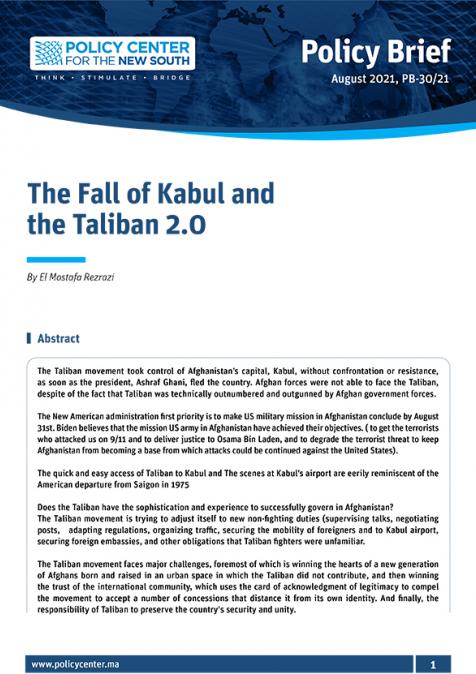
    The Taliban movement took control of Afghanistan’s capital, Kabul, without confrontation or resistance, as soon as the president, Ashraf Ghani, fled the country. Afghan forces were not able to face the Taliban, despite of the fact that Taliban was technically outnumbered and outgunned by Afghan government forces. The New American administration first priority is to make US military mission in Afghanistan conclude by August 31st. Biden believes that the mission US army in Afghanistan ...
  • August 02, 2021
    This podcast with Mr Marcus de Freitas, a Senior Fellow at Policy Center for the New South, discusses elements revolving around Brazil’s current strategy in Africa. It engages with histor ...
  • Authors
    July 16, 2021
    The BDA Currents: Where Diplomacy Meets Business, is the Brussels Diplomatic Academy’s annual report covering the wider geopolitical and other factors influencing and affecting the world of diplomacy, international relations and global business. The journal focuses on issues of topical interest around the centers of global power, influence and importance, including the continents of Europe and Africa, the Middle East, China, India & Asia, Russia and the Commonwealth of Independe ...
  • Authors
    April 20, 2021
    The briefing document by Ambassador Dr. Len Ishmael created in collaboration with MDPD KAS reviews the process of the EU-OACPS negotiations, reviews the process of the EU-OACPS negotiations, with a view to providing insights on the following issues: - The challenges and bottlenecks in the process and those issues that have created tension. - The future roles of the African Union (AU) and #OACPS Secretariats in the EU-OACPS relationship, and in Africa’s relationship with the #EU. ...
  • Authors
    Salma Daoudi
    December 25, 2020
    The maxim that in adversity we find unity has never truly materialized following the outbreak of the novel coronavirus (COVID-19). Despite fighting a common enemy, individual societies have turned inwards, moved by a self-preservation instinct that prioritizes individual over collective well-being. Outbursts and demonstrations of solidarity have punctuated national and international responses to COVID-19, but the virus has also often exacerbated structural inequalities, reopening ol ...
  • Authors
    December 22, 2020
    “When I got home late that night, the house was dark and Michelle was already asleep. After taking a shower and going through a stack of mail, I slipped under the covers and began drifting off. In that luminal space between wakefulness and sleep, I imagined myself stepping toward a portal of some sort, a bright and cold and airless place, uninhabited and severed from the world. And behind me, out of the darkness, I heard a voice, sharp and clear, as if someone were right next to me, ...
  • Authors
    December 7, 2020
    The pandemic is accelerating history, in the sense that it is leading to the speeding up of some recent trends. In the case of globalization, the pandemic will not reverse it, but it will reshape it. Here we take a bird’s eye view of global trade during the pandemic, relate it to previous trends, and guess how global value chain managers and government trade policymakers are likely to react. A Bird’s Eye View of Global Trade during the Pandemic World trade took a deep dive during ...
  • Authors
    November 27, 2020
    As President elect Biden prepares for the enormous responsibility of becoming President of the United States (US), there is one question I want to ask him, writes Stephen Young, Washington Representative and Senior Analyst of the ”Union of Concerned Scientists” on November 7th, 2020: “Sir ,are you a fan of nuclear arms race? Because you are being handed one, a burgeoning nuclear and technology arms race waged by Russia, China and the United States.” Two weeks after Joe Biden will be ...
  • Authors
    Souha Majidi
    November 26, 2020
    The Trump Administration “America First” policy changed U.S. foreign policy towards the African continent. Trump opposed trade agreements with several countries, considering them to be unfavorable to the U.S., given the nature of the African market. He shifted the U.S. concern in Africa from fighting against violent extremism and terrorism to a direct competition with other great powers—China and Russia—which had already extensively implemented African strategies. He endeavored to r ...
  • Authors
    November 19, 2020
    Le mandat du président Trump qui, sauf miracle, s’achève en janvier 2021, avait soumis à rude épreuve les alliances des Etats-Unis d’Amérique avec plusieurs pays et entités européens et asiatiques. Plusieurs de ces alliés stratégiques des Etats-Unis avaient, alors, perdu confiance en l’esprit de solidarité qui a toujours empreint l’action étasunienne à leur égard, et amorcé des réflexions sur la construction de leurs propres systèmes de défense. L’arrivée à la Maison Blanche d’un no ...