Moroccan-Turkish Relations: Current Issues and Future Prospects

January 14, 2021

The Policy Center for the New South (PCNS), in partnership with the Center for Middle Eastern Studies (ORSAM) will hold a joint panel entitled “Moroccan-Turkish Relations: Current Issues and Future Prospects” scheduled to take place on Thursday, January 14th, 2021 starting 3pm (GMT+1/Morocco time) and 5pm (GMT+3/Turkish time). Moroccan-Turkish economic ties are not new; the first partnership framework facilitating trade and economic relations dates back to 1982. Since then, the two economies have embarked on a series of cooperation agreements ranging from scientific, economic and technical cooperation to reciprocal investment promotion and protection. In particular, the Free Trade Agreement (FTA) between Turkey and Morocco, which entered into force in 2006, aimed to eliminate tariffs and other barriers to exports, expand trade between the two countries, and to promote economic growth for both. The FTA marked a new era in the bilateral economic ties and confirmed both countries’ commitment to trade openness principles and the need to foster economic integration among southern Mediterranean economies. In addition to strengthening bilateral relations, the opportunities for both countries to consolidate their efforts in expanding their presence on the African continent calls for proactive and a joint strategy. Indeed, Africa’s economic development requires increased contribution from emerging powers for technology transfer and bring new alternatives for the continent, aside from traditional economic powers. Based on this background, this webinar will contribute to a better understanding and development of bilateral economic relations between Morocco and Turkey, in light of current international economic challenges and opportunities. 15:00-15:10 Opening speech Bouchra Rahmouni, Director, Research, Partnerships & Events, Policy Center for the New South Ahmed Uysal, Director, Center for Middle Eastern Studies 15:10-15:15 Introduction to the panel Moderator : Rim Berahab, Economist, Policy Center for the New South 15:15-15:45 Debate Speakers Uri Dadush, Senior Fellow, Policy Center for the New South Burhan Koroğlu, Associate Professor, Ibn Haldun University Recep Yorulmaz, Director of Economics Studies, Middle Eastern Studies Center 15:45-16:15 Q&A

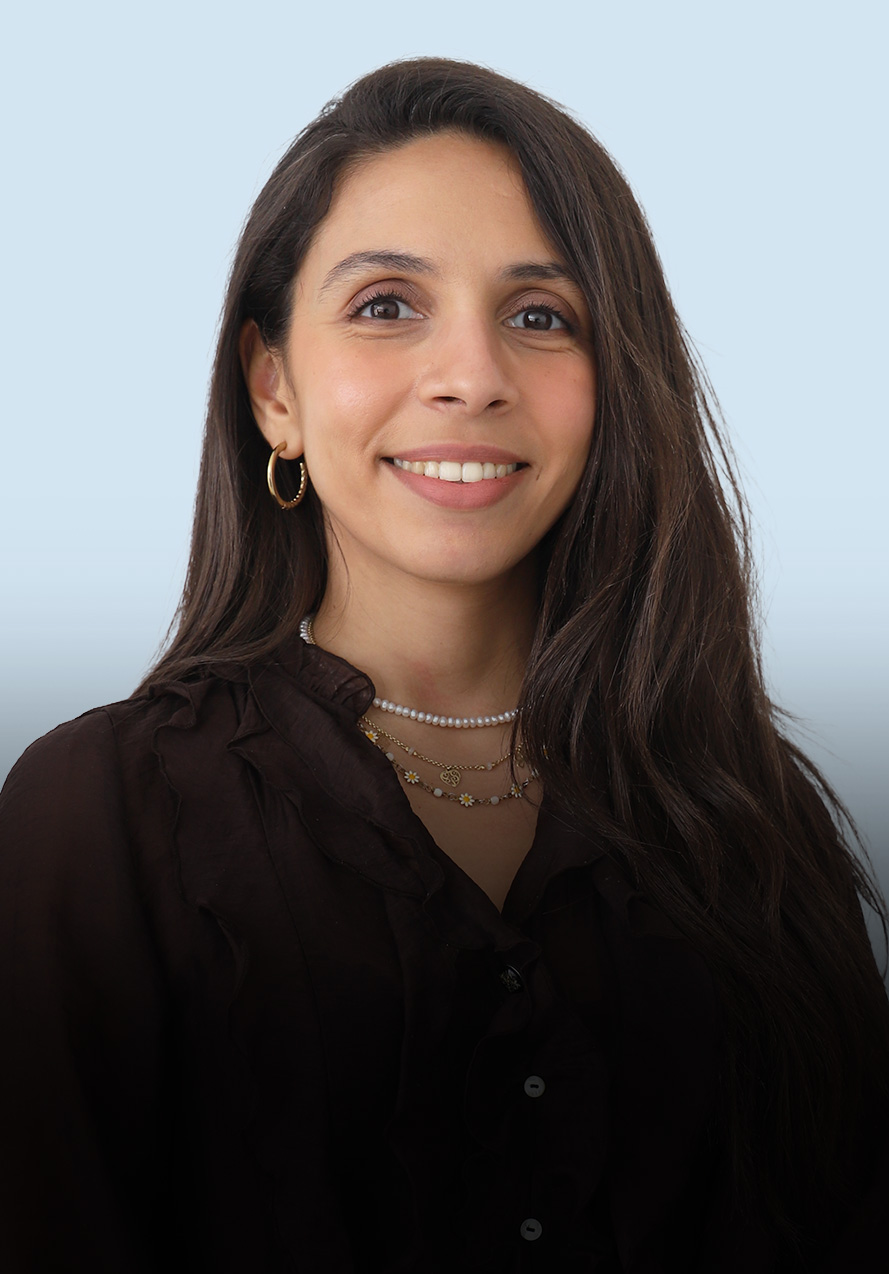
Speakers
Ahmed Uysal
Director, Center for Middle Eastern Studies
...
Rim Berahab
Senior Economist
Rim Berahab is Senior Economist at the Policy Center for the New South, which she joined in 2014. She is currently working on themes related to energy issues and their impacts on economic growth and long-term development. Her research areas also cover trade and regional integration challenges in Africa. Previously, she has also worked on questions related to gender inequalities in the labor market of North African countries. Rim spent three months at the International Monetary Fund (IMF), in 2016, in the Commodities Unit of the Research Department. She holds a State Engineering degree from the National Institute of Statistics and Applied Economics (INSEA). ...
Uri Dadush
Non-Resident Senior Fellow
Uri Dadush was a Senior Fellow at the Policy Center for the New South, where he served as Senior Fellow from its founding in 2014 until 2022. He is Research Professor at the School of Public Policy, University of Maryland and a non-resident scholar at Bruegel. He is based in Washington, DC, and is Principal of Economic Policy International, LLC, providing consulting services to the World Bank and to other international organizations as well as corporations. Previously, he served as Director of the International Economics Program at the Carnegie Endowment for International Peace and, at the World Bank, was Director of the International Trade, Economic Policy, and Development Prospects Departments. In the private sector before that he was President of the Economist Intelligence ...
Recep Yorulmaz
Director of Economics Studies, Middle Eastern Studies Center
...

RELATED CONTENT

  • October 15, 2026
    The Policy Center for the New South, in partnership with The Asian Network, is organizing a webinar titled “Emerging Powers and the Remaking of Global Order” to examine the growing role of emerging powers and the Global South at a time of profound transformation in the international sys...
  • October 14, 2026
    في ظل التوترات الجيوسياسية المتصاعدة، تتغير طرق التجارة العالمية وتتبدل معها موازين الممرات الاستراتيجية. تفتح هذه الحلقة من «حديث الثلاثاء» النقاش حول التقاء المسارات البحرية والبرية داخل هذه الممرات، والعوامل التي تتحكم في طبيعة السلع التي تعبرها. وتبحث كذلك في ما يمكن للمغرب أن يجنيه...
  • Authors
    October 13, 2026
    “Every gun that is made, every warship launched, every rocket fired signifies in the final sense, a theft from those who hunger and are not fed, those who are cold and are not clothed.”President Dwight Eisenhower, April 16, 1953 This paper examines the economic and human impacts of the first six months of the Iran war—from February to the end of August 2026—on Iran’s Arab neighbors and compares these impacts with those on the three countries directly involved—Iran, Israel and t ...
  • Authors
    Florent Parmentier
    October 12, 2026
    Cet article soutient que le Chief Geopolitical Officer (CGO) doit être repensé à partir de l’expérience des entreprises africaines. Dans un environnement multipolaire et fragmenté, leur principal défi n’est pas seulement la gestion des risques, mais la préservation de plusieurs options stratégiques simultanément selon une logique de hedging. Trois modèles de CGO sont à distinguer : l’intermédiation (Office chérifien des Phosphates (OCP), Tanger Med), l’intégration régionale (Ethiopi ...
  • Authors
    Paul Isbell
    October 9, 2026
    In the first seven Policy Briefs of this ongoing series of analysis on Pan-Atlanticism: The Atlantic Basin in a Multipolar-Transnational World, we developed the argument that the strategic significance of the Atlantic Basin is on the rise for a range of international actors (states, regions and non-state agents) and from distinct political or ideological perspectives. In addition, in the most recently published Policy Brief -- “The U.S. and the Current International Reconfiguration: ...
  • Authors
    Marie-Noelle Nwokolo
    October 6, 2026
    The author of this opinion, Marie-Noelle Nwokolo, is a 2024 alumna of the Atlantic Dialogues Emerging Leaders Program.In September 1978, delegations from 138 countries gathered in Buenos Aires, Argentina, around a powerful idea: developing countries had knowledge, experience and capabilities worth sharing with one another. The Buenos Aires Plan of Action gave institutional form to what we now call South-South Cooperation, part of a wider post-colonial effort by developing ...
  • October 02, 2026
    Building on his Policy Brief "Latin America, World Politics and the Great Powers", Nizar Messari examines how recent developments are reshaping U.S. influence in the region and affecting ...
  • Authors
    September 30, 2026
    You can imagine how often I've been asked to comment on where the Brazilian economy is headed after the election. With polls pointing to a runoff on October 25 and currently showing a statistical tie between Luiz Inácio Lula da Silva and Flávio Bolsonaro in vote simulations, I'm naturally asked about their economic programs and about the country's relations with the United States. ...
  • September 28, 2026
    This paper was initially published in French on the website of the Fondation Jean-Jaurès. There was a historic decline in Official Development Assistance (ODA) in 2025. Foreign aid to developing countries from members of the OECD-DAC fell by some 23%, the largest decline on record and the second consecutive annual decline. Aid to Africa fell by more than 25%. The International Monetary Fund (IMF) described this decline in ODA to Africa as “a shock like no other.” It differ ...
  • Authors
    September 23, 2026
    Depuis 2010, environ, on sait que la Méditerranée orientale est une nouvelle province gazière. Des ressources gazières ont en effet été découvertes au large de quatre pays ou territoires, l’Égypte, Israël, Chypre et Gaza. Deux d’entre eux sont devenus producteurs et exportateurs de gaz naturel, l’Égypte et Israël. Au large de Gaza, le champ gazier de Gaza Marine n’a jamais été développé et il est très peu probable qu’il le soit prochainement en raison des très fortes tensions entre ...