حديث الثلاثاء : مجموعة بركس - من أجل إعادة توازن النظام العالمي؟

June 27, 2023

تعتبر مجموعة "بريكس" تكتلا اقتصاديا عالميا بدأت فكرة تأسيسه في شتنبر 2006، حينما عُقد أول اجتماع وزاري لوزراء خارجية البرازيل وروسيا والهند والصين على هامش أشغال الجمعية العامة للأمم المتحدة إضافة إلى انضمام جنوب أفريقيا رسميا سنة 2011. حيث أصبحت مجموعة بريكس أحد أهم التكتلات الاقتصادية في العالم، نظرا لأرقام النمو التي باتت تحققها دول هذا التكتل مع توالي السنوات، مما جعلها محط اهتمام عديد من الدول الأخرى، التي ما فتئت ترغب في الانضمام إلى التكتل. وفي سياق الحرب الأوكرانية وما رافقها من إعادة تشكيل نظام عالمي جديد، ازداد الاهتمام بمجموعة بريكس من طرف العديد من الدول، خاصة في ظل الاتجاه نحو تكتلات جيوسياسية واقتصادية جديدة، وأيضا بحث روسيا عن شركاء داعمين لها في وجه العقوبات الاقتصادية الغربية وهو ما من شأنه أن يسهم في خلق نظام اقتصادي عالمي ثنائي القطبية، عبر كسر هيمنة الغرب بزعامة أميركا بحلول عام 2050. هل فعلا دول البريكس قادرة على اتخاذ المبادرات؟ كيف يمكن تفسير مشروع توسيع البريكس؟ أين تتجلى جاذبية هذا التكتل؟ وما هي مواقف مختلف الدول الأعضاء الحالية في البريكس بشأن هذا التوسيع؟ أسئلة وأخرى نناقشها في حلقة هذا الأسبوع من برنامج حديث الثلاثاء
Speakers
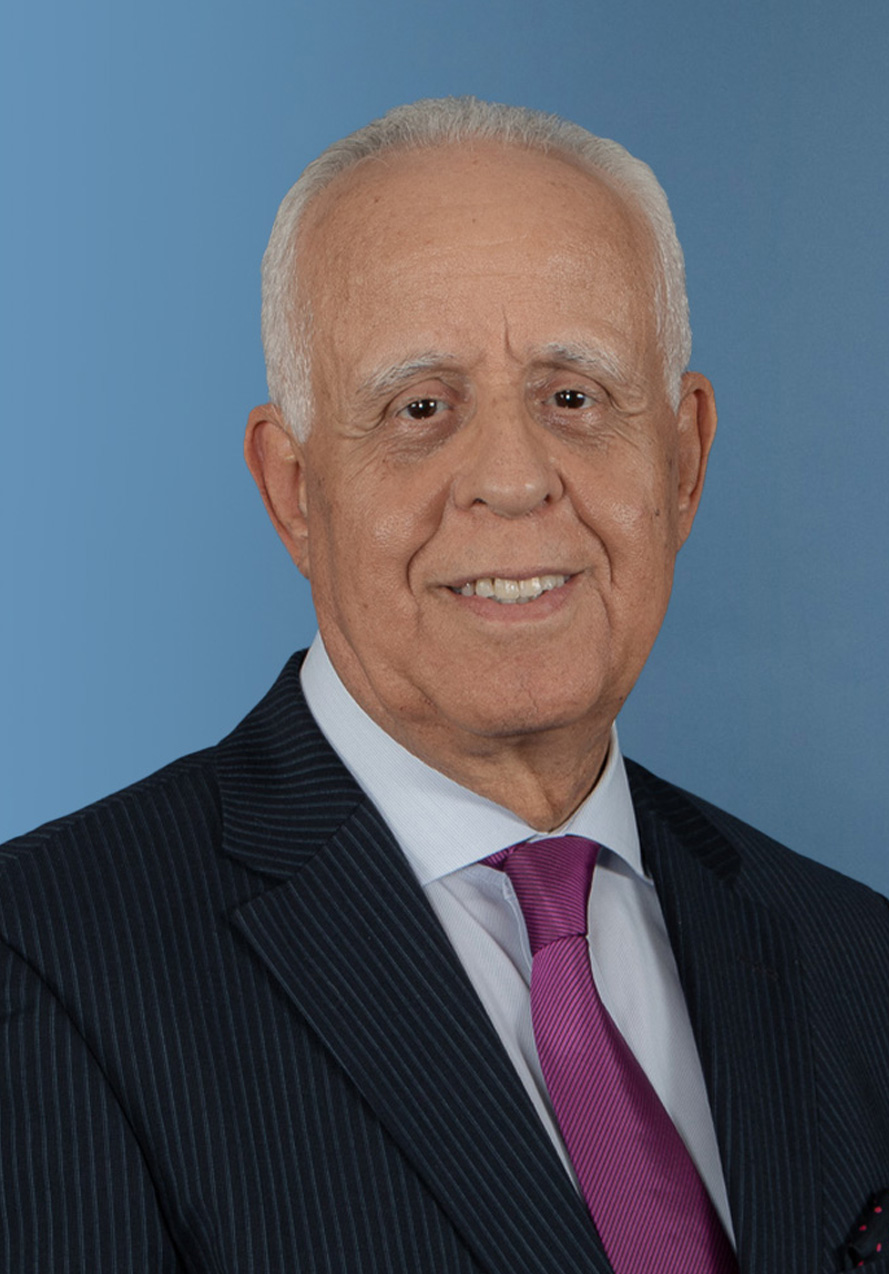
Mohammed Loulichki
Senior Fellow
Mohammed Loulichki is a Senior Fellow at the Policy Center for the New South and an Affiliate Professor at Mohammed VI Polytechnic University. He brings over 40 years of comprehensive experience in diplomacy, conflict resolution, and human rights. He has served in various roles including as a member and Deputy Head of the Moroccan delegation to the 3rd Conference on the Law of the Sea (1982-1990), Head of the Department of Legal Affairs and Treaties at the Ministry of Foreign Affairs (1988-1991), and General Director for Multilateral Affairs in the same ministry (2003-2006).   He also acted as Morocco's Ambassador to Hungary, Bosnia-Herzegovina, and Croatia (1995-1999), and was the Moroccan Government's Ambassador Coordinator with MINURSO (1999-2001). Furthermore, he se ...
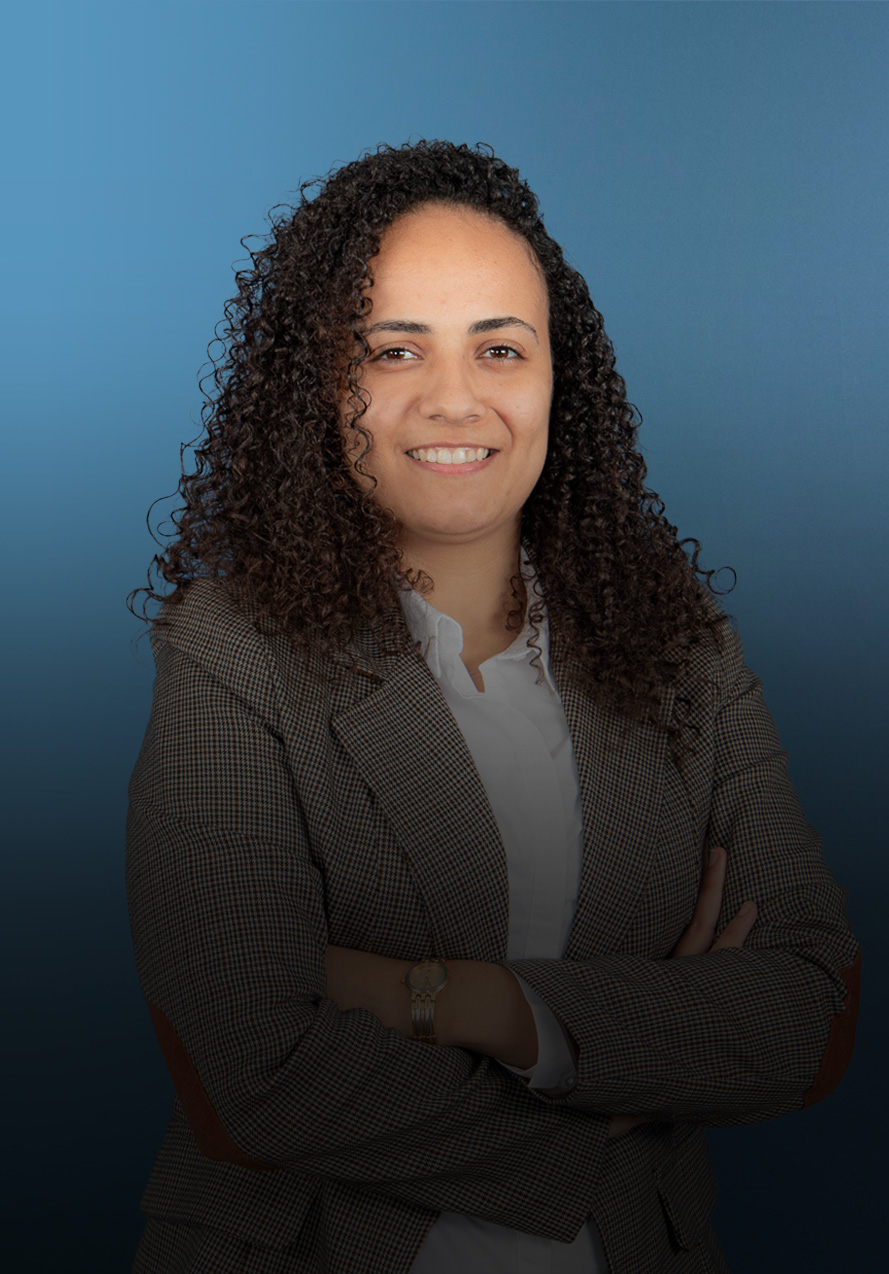
Imane Lahrich
Head – Research Valorization
Imane Lahrich is the Head of Research Valorization Department, having previously served as a Partnerships & Research Support Officer at the Policy Center for the New South since 2019. She mainly worked on security-development related projects. She has experience as a Project Manager in a Strategic Intelligence firm (2017-2019) and as a research consultant in the MENA region, focusing on international development and the Rule of Law. Imane Lahrich holds a Master's in Political Studies and a Bachelor's in Political Science from Mohammed V University of Rabat. She also participated in a one-year exchange program at Masaryk University in the Czech Republic under the EMMAG MUNDUS Excellence scholarship.     ...

RELATED CONTENT

  • December 13, 2017
    As a significant complement to the Atlantic Dialogues conference, the Atlantic Currents publication allows a deeper and further extension of the analytic contribution provided by the “Dialogues”.The goal being to enlarge the discussion pertaining to economic, political and security dimensions of a wider Atlantic area, favoring a new geopolitical construction of this strategic region. OCP Policy Center is proud of the role it has played in extending the transatlantic debate to embrac ...
  • June 21, 2017
    Ce podcast est présenté par Moubarack Lo. Il y analyse l’apport de l’adhésion marocaine à la CEDEAO suite à l’accord de principe donné par ses membres au 51e sommet de Monrovia le 4 juin ...
  • Authors
    February 1, 2017
    L’analyse des relations commerciales entre le Maroc et l’Afrique subsaharienne fait ressortir un volume des échanges croissants, reflétant ainsi une dynamisation continue des leurs relations commerciales. Une tendance similaire est observée au niveau des investissements directs étrangers, qui ne cessent de croître au cours des dernières années, traduisant la volonté du Maroc à devenir un acteur majeur dans le développement du continent africain. Ce Policy Brief présente dans un prem ...
  • Authors
    August 31, 2016
    Following the adoption of the Sustainable Development Goals in 2015, we published part 1 of this policy series, presenting a comprehensive analytical and predictive model explaining the key factors leading to failure or success of DRM strategies in Africa. In part 2, we provide concrete illustrations of actionable solutions in order to help policy leaders implement DRM successfully for effective delivery of the SDGs. ...
  • Authors
    December 7, 2015
    The Euro-Mediterranean Partnership was initiated with the aim to build a space of shared prosperity and security among all the countries in the region. The achievement of this objective, however, continues to be challenged by several geopolitical, economic and social factors. In such a context, there is now a greater urgency to adapt the approach and the instruments, thus allowing Euro-Mediterranean partners to seize opportunities towards an effective area of shared stability and pr ...
  • Authors
    January 30, 2015
    “In my view, China’s very high rates of saving and of investment in infrastructure, plant and equipment, Rand D, and human capital should be seen more as a source of strength, than of weakness. There has, of course, been overinvestment in some sectors, such as heavy industry and housing in some regions, but China’s GDP and infrastructure stock per capita is still just a fraction of that of the most advanced countries, and the country’s potential to catch-up remains largely unexploit ...
  • Authors
    Mohamed Mouline
    January 1, 2014
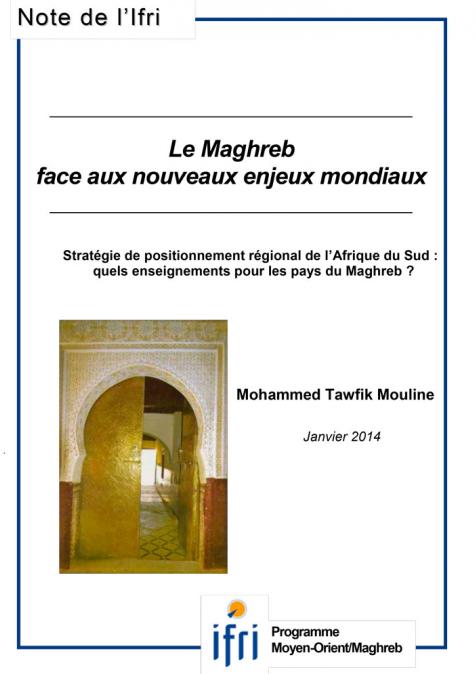
    L’Afrique du Sud est une république fédérale, fondée sur une démocratie parlementaire. Avec une superficie de 1,2 million de km² et une population de 50 millions d’habitants, elle est la première puissance économique du continent africain, représentant, à elle seule, 30 % du PIB de l’Afrique Subsaharienne et 66 % de celui de l’Afrique Australe. Son PIB est de 420 milliards de dollars et son PIB par habitant est de 5 860 dollars. Ce pays est parvenu à réinsérer son économie dans les ...
  • Authors
    Ian Lesser
    November 18, 2013
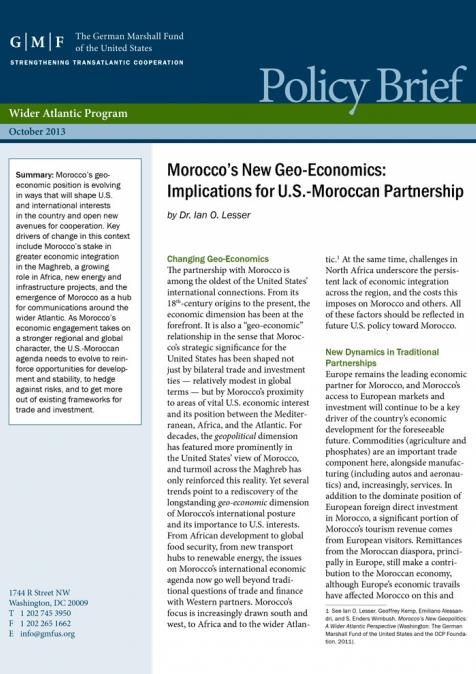
    This policy brief argues for a closer relationship between Morocco and the United States. Morocco’s geo-economic position is evolving in ways that will shape U.S. and international interests in the country and open new avenues for cooperation. Key drivers of change in this context include Morocco’s stake in greater economic integration in the Maghreb, a growing role in Africa, new energy and infrastructure projects, and the emergence of Morocco as a hub for communications around th ...