Building the Afri-LAC Agenda: Green Industrial Policy in a Changing World

June 24, 2026

Africa, Latin America, and the Caribbean have both the potential and the desire to transform their people's lives through Green Industrial Policy. Yet they have long been constrained by structural obstacles embedded in the international system. The current rupture in that system, which has eroded the legitimacy and functionality of international institutions, has further weakened collective responses to shared crises: climate instability, conflict, and economic insecurity.

Compounding this, policy volatility has surged. Swings in industrial subsidies, the rise of green protectionism, sanctions, and the securitisation of trade have deepened uncertainty, falling hardest on countries in the Global South. These dynamics further compress the policy space available to governments at precisely the moment when bold economic transformation is most needed. Yet the same crisis that narrows room for manoeuvre also creates openings. Disruption to existing international arrangements brings with it the possibility, and the necessity, of building something better.

In this context, there is huge potential in the fact that Africa and Latin America and the Caribbean, which have long shared values and interests, are now increasingly strengthening their collaboration. In doing so they have started to lay a pathway to build collective agency in a fragmented global system. The growing strengthening of Afri–LAC ties represent an opportunity not only to deepen South–South cooperation, but to reshape global narratives, shift global policies and reorient global systems. 

The question is no longer whether green industrial transformation is possible. It is how Africa and LAC can shape it together.

Speakers
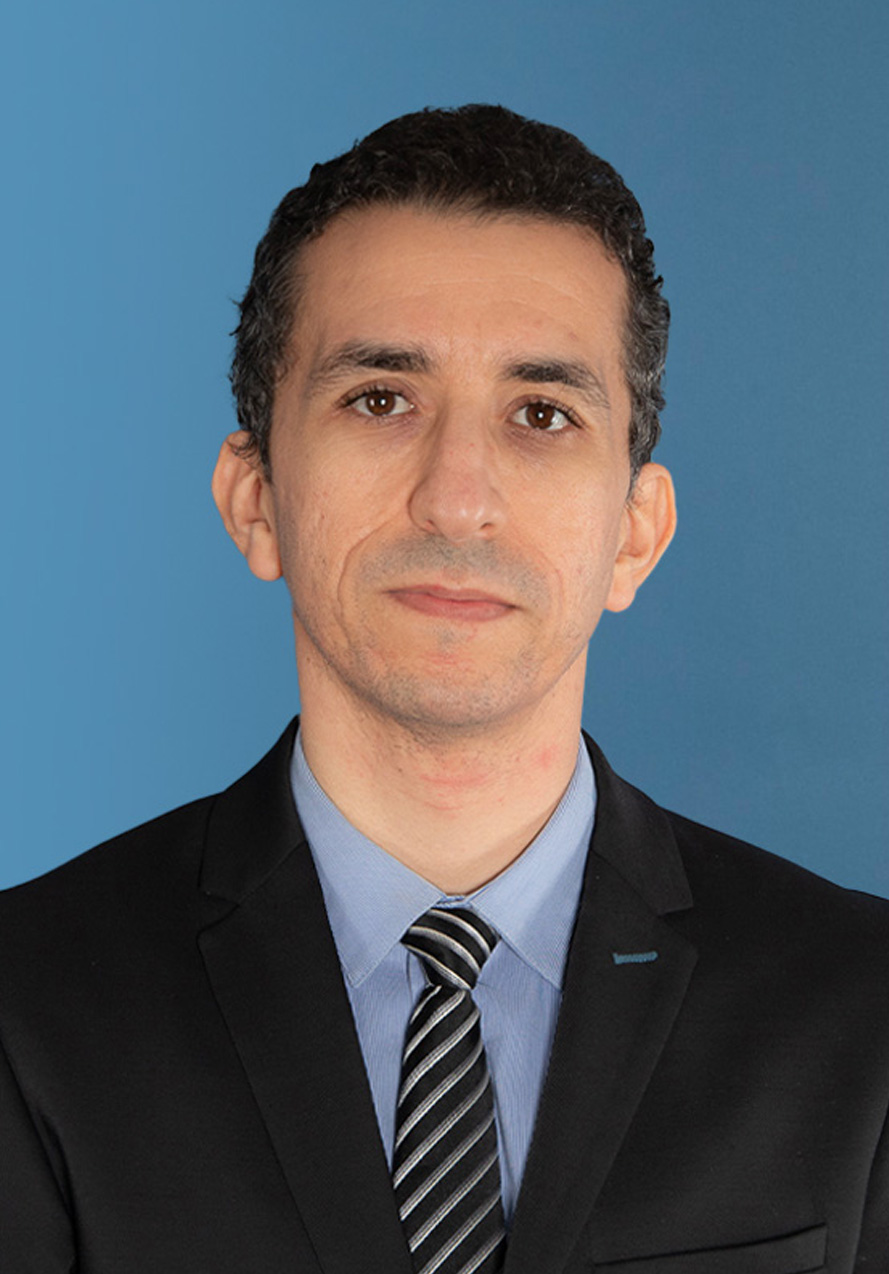
Abdelaaziz Ait Ali
Head - Research in Economics
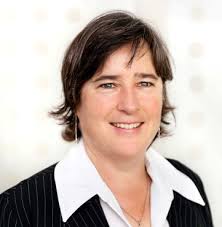
Abdelaaziz Ait Ali is a principal Economist and head of the Research Department at the Policy Center for the New South. He joined the Center in 2014 after five years of experience at the Central Bank of Morocco. He worked as an economist in the International Studies and Relations Department and was analyzing the real estate price index and financial asset prices for monetary policy and financial stability purposes. Since then, Abdelaaziz has focused on cyclical and structural issues of the Moroccan economy, including macroeconomic management and industrial policy design. He has published articles on the reform of the exchange rate regime in the Moroccan economy and its implications for macroeconomic regulation, as well as on the evolution of the macroeconomic framework over th ...

RELATED CONTENT

  • Authors
    July 28, 2026
    The term “K-shaped recovery” was introduced to describe the economic recovery from the recession triggered by the Covid-19 pandemic. It refers to the uneven and divergent growth pattern between leading industries or sectors (the upper arm of the letter K—mainly the high-technology sector) and laggards, or the rest of the economy (the lower arm—the traditional industries). Since then the term has become popular in portraying divergent growth patterns within and between countries, esp ...
  • July 28, 2026
    تتناول هذه الحلقة اندماج المغرب في سلاسل القيمة العالمية، من خلال توضيح مفهومها واستعراض كيفية انخراط المغرب فيها عبر تطوير عدد من القطاعات الصناعية وجذب الاستثمارات الأجنبية. كما تسلط الضوء على أبرز المكاسب الاقتصادية والصناعية التي حققها هذا الاندماج، مقابل التحديات التي ما تزال تحدّ ...
  • Authors
    July 16, 2026
    Thanks to the AI investment boom, the U.S. economy has performed well at the macroeconomic level. However, it is on an unsustainable fiscal and debt path. Mr. Trump’s fiscal policy in his second term has aggravated this trajectory. In turn, Mr. Trump’s tariff-based trade policy has failed to address what he sees as U.S. economic problems associated with the trade balance. Besides explaining why this has been the case, and what its implications are for the U.S. economy and the r ...
  • July 6, 2026
    Cette interview explore les grands enjeux de l’urbanisation au Maroc, en mettant l’accent sur les défis de gouvernance, de planification et de politiques publiques. Elle revient sur l’évolution des modèles de développement urbain, les effets du changement climatique sur les villes, ains...
  • July 3, 2026
    Este Policy Paper también ha sido publicado en inglés y francés por Le Grand Continent La economía marroquí constituye un caso ilustrativo entre las economías de renta media, en un contexto marcado por una creciente fragmentación del entorno internacional, un crecimiento mundial anémico y una desaceleración de la convergencia. Desde 2022, su trayectoria se caracteriza por una relativa solidez, con un crecimiento superior a la media de las economías de la misma categoría. Superi ...
  • July 3, 2026
    Ce Policy Paper a également été publiée en anglais et en espagnol par Le Grand Continent Le Maroc offre un exemple éclairant parmi les pays à revenu intermédiaire, dans un contexte marqué par une fragmentation croissante de l’environnement international, une croissance mondiale atone et un ralentissement de la convergence. Depuis 2022, sa trajectoire se distingue par une certaine robustesse, avec un rythme d’expansion supérieur à celui des autres économies de même catégorie. Dé ...
  • July 3, 2026
    This Policy Paper has also been published in French and Spanish by Le Grand Continent Morocco offers a compelling example of how a middle-income economy can navigate a more fragmented global environment, characterized by weak growth and slower convergence. Since 2022, economic activity has remained relatively strong, with growth exceeding that of many comparable economies. Non-agricultural growth has averaged 4.4% since 2022, around 1.3 percentage points above its historical av ...
  • June 24, 2026
    Africa, Latin America, and the Caribbean have both the potential and the desire to transform their people's lives through Green Industrial Policy. Yet they have long been constrained by structural obstacles embedded in the international system. The current rupture in that system, which ...