Publications /
Opinion

Back
Robert E .Hall et Michael Woodford, Prix Nobel d’Économie 2026
October 26, 2026

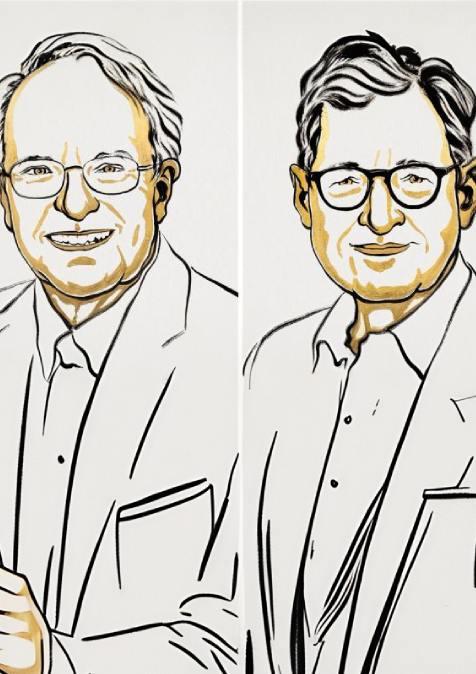
Depuis que l’économie a été reconnue par les Nobel en 1969, il revient à cette discipline de clore les cérémonies annuelles d’attribution des Prix aux lauréats. C’est le 12 octobre 2026 que le jury du prix de la Banque de Suède, en sciences économiques en mémoire d’Alfred Nobel, a consacré deux Américains Prix Nobel de l’économie : Robert E. Hall et MichaelWoodford, pour leur contribution aux « fondements microéconomiques de la stabilisation macroéconomique de la stabilisation ».

Le choc pétrolier de 1973, aboutissant à la stagflation, va mettre à mal les recettes keynésiennes de l’après-guerre. Mais, à la différence de nombreux   Keynésiens qui désiraient tourner la page du Maitre de Cambridge, nos deux lauréats vont chercher à donner une nouvelle dimension à son analyse, à partir d’une approche micro économique comportementale des individus et des entreprises. Et ils vont agir en complémentarité, Robert E .Hall, en privilégiant la demande, Michael Wood, l’offre.

Robert E .Hall enseigne toujours à l’université de Stanford (Californie), aux États-Unis, après avoir soutenu sa thèse de doctorat, sous la direction de Robert Solow, Prix   Nobel d’Économie en 1987. Ses travaux vont porter principalement sur la prise en compte des anticipations dans la décision   de consommer ou de ne pas consommer. Avant sa contribution, on considérait que la consommation dépendait du revenu disponible et de lui seul. Hall va montrer qu’on ne peut comprendre l’évolution de la consommation sans prendre en compte les anticipations individuelles du consommateur, par exemple celle qui concerne son salaire ou son pouvoir d’achat. Dans un article fondateur de 1978, il montre que le changement de consommation est imprévisible, ce qui le conduit à conclure que la meilleure prédiction de la consommation ne peut se fonder que sur la consommation du moment, à une variation imprévisible près. (Son ouvrage de   référence : ‘’The 

Rational Consumer :Theory  and Evidence ‘’, MIT Press /Cambridge, Massachusetts 1990)

Michael Woodford enseigne à l’université de Columbia (New York). Ses travaux concernent la version offre de la problématique. Et ce, en analysant la fixation des prix par les entreprises, et plus particulièrement les raisons pour lesquelles , en cas de choc, les prix ne s’ajustaient pas rapidement. Il va montrer que si ces prix pouvaient baisser, cela ne pouvait être que très lentement, leur adaptation au choc nécessitant de multiples, et parfois couteuses, micro-décisions. À partir de ce constat, il va développer, en y intégrant, les travaux de Hall sur la consommation, un modèle macroéconomique beaucoup plus efficace, montrant, par exemple, que l’inflation globale est fonction des anticipations et du niveau actuel de la production, qu’il va intégrer à celui de Hall. Woodford va ainsi influencer les politiques économiques et monétaires du monde entier. Ce qui lui vaudra d’être qualifié par certains du « plus grand économiste monétaire de son temps ». ( Son ouvrage de référence : ‘’ Interest   and Prices :Foundations  of a Theory of Monetary Policy ‘’ Princeton University Press   2003 )

En distinguant un champ de recherche, celui de la nouvelle économie keynésienne, le jury ne pouvait en ignorer le pionner :Robert E .Hall , et celui qui va le plus contribuer à la faire progresser, allant jusqu’à la modéliser avec des applications concrètes : Michael Woodford.


RELATED CONTENT

  • Authors
    Luis de la Calle
    August 1, 2016
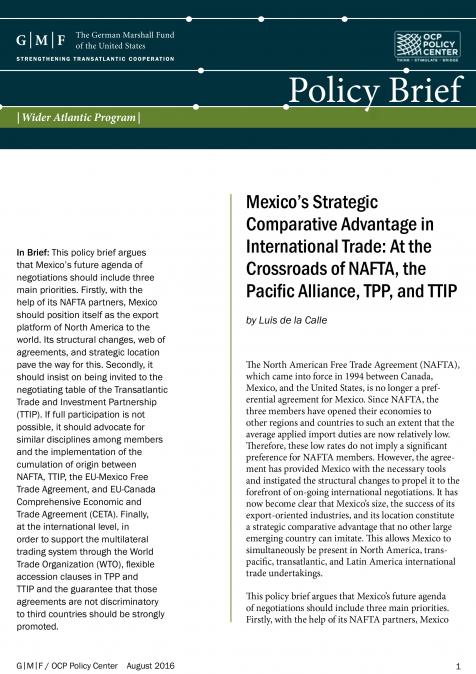
    This policy brief argues that Mexico’s future agenda of negotiations should include three main priorities. Firstly, with the help of its NAFTA partners, Mexico should position itself as the export platform of North America to the world. Its structural changes, web of agreements, and strategic location pave the way for this. Secondly, it should insist on being invited to the negotiating table of the Transatlantic Trade and Investment Partnership (TTIP). If full participation is not p ...
  • Authors
    July 21, 2016
    The pace of global growth has tapered off since the crisis and the ensuing rebound. The concept of ‘secular stagnation’ was first used in 1938 by Alvin Hanson in reference to the American economy during the Great Depression. It refers to a situation where growth is slow over a protracted period, underemployment prevails and inflation is low. In such situations, the propensity to save tends to increase as a result of uncertainty and pessimism, and liquidity – which depends on interba ...
  • Authors
    Volume 69, Issue 3
    Introduction by Rabah Arezki
    Yaw Nyarko
    July 14, 2016
    OCP Policy Center and its partners, the International Monetary Fund (IMF), and the Center for Technology and Economic Development (CTED) at the New York University are pleased to announce the publication of a Special Issue on "Food Price Volatility and its Consequences" in Oxford Economic Papers. The papers selected in this special issue were first presented in February 2014 at an international conference organized in Rabat in collaboration with the IMF's Research Department and &n ...
  • July 13, 2016
    Housing is part of the United Nations 11th Sustainable Development Goal, which is to “make cities inclusive, safe, resilient and sustainable”. One of the most important targets of such a goal is to “ensure access for all to adequate, safe and affordable housing1 and basic services and upgrade slums”. Since 2007, the world has faced rising inequality, insecurity and climate change impact. According to UN Habitat, 54% of the world´s population currently live in cities. By 2050, this n ...
  • Authors
    July 11, 2016
    The Chinese economy is rebalancing while softening its growth pace. China’s spillovers on the global economy have operated through trade, commodity prices, and financial channels. The global reach of the effects from China’s transition have recently been illustrated in risk scenarios simulated for Latin American and the Caribbean economies.  The Chinese economy is rebalancing while softening its growth pace… The weight of the Chinese economy in the global economy rose on its ...
  • Authors
    Under the Supervision of
    Philippe Chalmin
    July 4, 2016
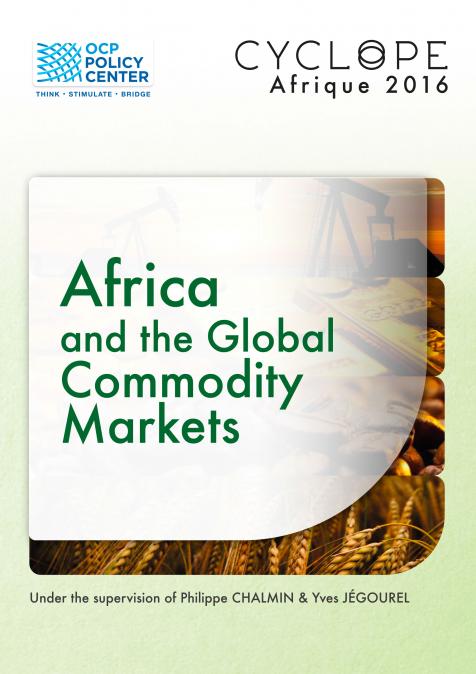
    Guinea’s bauxite, Moroccan phosphates, Nigerian Bonny Light, Zambian copper, Côte d'Ivoire’s cocoa, Ethiopian coffee or Madagascar’s vanilla: all are examples demonstrating that raw materials have a dimension that is as global as it is local. Global by the markets on which they are traded, local by their quality, a key element of their price, and their macroeconomic impact, particularly for Africa. In line with the 2016 CyclOpe report, which celebrates three decades of existence thi ...
  • June 30, 2016
    Latin American economies are facing two historically defining challenges. First, how to cope with the end of the commodities “super-cycle” and the prospect of a long period of low prices for basic natural resources. After all, raw materials production and semi-industrialized goods encompass most of their comparative advantages. Second, and even more exacting, how to adjust to the present disruptive transition from an old to a new global economic and social model. The 20th century in ...
  • Authors
    June 27, 2016
    The referendum in favor of the exit of Britain from the European Union (“Brexit”) marks a sad day for Britain and for Europe. It represents a victory of nationalism over the liberal economic order, in the country that inspired the ideas that lie at its foundations. The referendum probably signals the end of an experiment widely supported by the young, the elites and most economists, but which has failed in the eyes of the majority of British people. For Britain, the economic risks a ...