Publications /
Opinion

Back
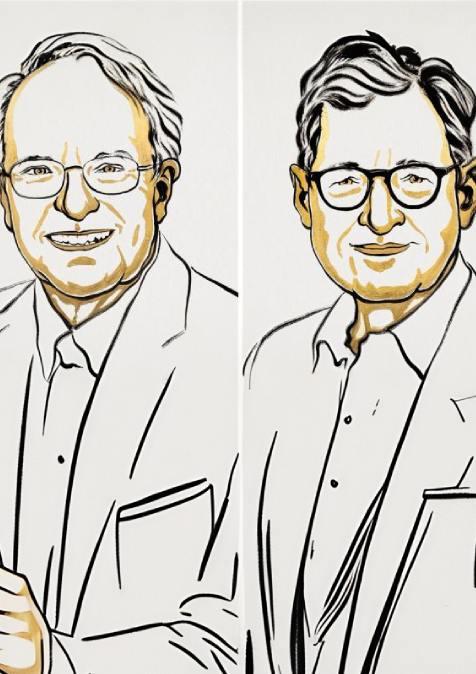
Robert E .Hall et Michael Woodford, Prix Nobel d’Économie 2026
October 26, 2026

Depuis que l’économie a été reconnue par les Nobel en 1969, il revient à cette discipline de clore les cérémonies annuelles d’attribution des Prix aux lauréats. C’est le 12 octobre 2026 que le jury du prix de la Banque de Suède, en sciences économiques en mémoire d’Alfred Nobel, a consacré deux Américains Prix Nobel de l’économie : Robert E. Hall et MichaelWoodford, pour leur contribution aux « fondements microéconomiques de la stabilisation macroéconomique de la stabilisation ».

Le choc pétrolier de 1973, aboutissant à la stagflation, va mettre à mal les recettes keynésiennes de l’après-guerre. Mais, à la différence de nombreux   Keynésiens qui désiraient tourner la page du Maitre de Cambridge, nos deux lauréats vont chercher à donner une nouvelle dimension à son analyse, à partir d’une approche micro économique comportementale des individus et des entreprises. Et ils vont agir en complémentarité, Robert E .Hall, en privilégiant la demande, Michael Wood, l’offre.

Robert E .Hall enseigne toujours à l’université de Stanford (Californie), aux États-Unis, après avoir soutenu sa thèse de doctorat, sous la direction de Robert Solow, Prix   Nobel d’Économie en 1987. Ses travaux vont porter principalement sur la prise en compte des anticipations dans la décision   de consommer ou de ne pas consommer. Avant sa contribution, on considérait que la consommation dépendait du revenu disponible et de lui seul. Hall va montrer qu’on ne peut comprendre l’évolution de la consommation sans prendre en compte les anticipations individuelles du consommateur, par exemple celle qui concerne son salaire ou son pouvoir d’achat. Dans un article fondateur de 1978, il montre que le changement de consommation est imprévisible, ce qui le conduit à conclure que la meilleure prédiction de la consommation ne peut se fonder que sur la consommation du moment, à une variation imprévisible près. (Son ouvrage de   référence : ‘’The 

Rational Consumer :Theory  and Evidence ‘’, MIT Press /Cambridge, Massachusetts 1990)

Michael Woodford enseigne à l’université de Columbia (New York). Ses travaux concernent la version offre de la problématique. Et ce, en analysant la fixation des prix par les entreprises, et plus particulièrement les raisons pour lesquelles , en cas de choc, les prix ne s’ajustaient pas rapidement. Il va montrer que si ces prix pouvaient baisser, cela ne pouvait être que très lentement, leur adaptation au choc nécessitant de multiples, et parfois couteuses, micro-décisions. À partir de ce constat, il va développer, en y intégrant, les travaux de Hall sur la consommation, un modèle macroéconomique beaucoup plus efficace, montrant, par exemple, que l’inflation globale est fonction des anticipations et du niveau actuel de la production, qu’il va intégrer à celui de Hall. Woodford va ainsi influencer les politiques économiques et monétaires du monde entier. Ce qui lui vaudra d’être qualifié par certains du « plus grand économiste monétaire de son temps ». ( Son ouvrage de référence : ‘’ Interest   and Prices :Foundations  of a Theory of Monetary Policy ‘’ Princeton University Press   2003 )

En distinguant un champ de recherche, celui de la nouvelle économie keynésienne, le jury ne pouvait en ignorer le pionner :Robert E .Hall , et celui qui va le plus contribuer à la faire progresser, allant jusqu’à la modéliser avec des applications concrètes : Michael Woodford.



RELATED CONTENT

  • May 8, 2019
    Reform and Opening-up profoundly altered the face of China. From an agricultural backwards country, which had suffered humiliation by Western powers and Japan in the 19thand early 20th century, to the largest economy in the world in Purchasing Power Parity terms, the Chinese saga for reinsertion into the global scene is not a miracle. It is the result of hard work, visionary leadership and the wise use of its most widely available commodity: its hard-working people. Of course, there ...
  • Authors
    May 2, 2019
    يعاود الفاتح من ماي اطلالته السنوية لينقش في الذاكرة تخليدا لأرواح نقابيي شيكاغو التي ضحوا بها في منتصف ثمانينيات القرن التاسع عشر إيمانا بضرورة تحسين شروط وظروف العمل، ووجوب حصر ساعاته اليومية في حدود الثمانية. وبعد قرابة ثلاثين عاما على أحداث شيكاغو، سيعرف المغرب - مع انتشار العمل المأجور خلال فترة الحماية - تأسيس أولى نقاباته، بمفهومها الحديث، بعد ترخيص الاقامة الفرنسية لنشاطات كل من "الجمعية العامة لموظفي الحماية" في ماي سنة 1919, يليها "تجمع الشحن والافراغ المغربي" في يونيو، ث ...
  • Authors
    Bouchra Rahmouni
    April 30, 2019
    In a globalized world, the ability of countries to innovate is crucial to creating high levels of value added and enhancing economic competitiveness. Silicon Valley, USA, is a development model that many African countries seek to emulate by creating «African Valleys». The success of major US corporations has persuaded a great number of players that new technologies are essential drivers of growth, and several states have implemented policies to stimulate the development of start-ups ...
  • Authors
    April 25, 2019
    The “middle-income trap” has become a broad designation trying to capture the many cases of developing countries that succeeded in evolving from low- to middle-levels of per capita income, but then appeared to stall, losing momentum along the route toward the higher income levels of advanced economies. Such a trap may well characterize the experience of most of Latin America since the 1980s, and in recent years middle-income countries elsewhere have expressed fears of following a si ...
  • Authors
    Edition et coordination : Abdellatif Chatri
    April 25, 2019
    L’économie marocaine se trouve aujourd’hui à une étape cruciale de son évolution. Le ralentissement tendanciel de la croissance, persistance du chômage de masse, faibles gains de productivité, perte en compétitivité, lenteur de la transformation structurelle, approfondissement des inégalités, déclassement social... etc. sont autant d’indicateurs, dont la liste n’est pas fermée, qui plaident pour le dépassement du modèle de croissance poursuivi depuis plusieurs années. La nécessité d ...
  • Authors
    Ghita El Kasri
    April 25, 2019
    The author is an alumnus of the 2018 Atlantic Dialogues Emerging Leaders program Tech industries, despite leading the charge for change in many areas of modern life, have traditionally been one of the worst industries for gender equality. But now, it looks like technology itself could finally start to break down some of the barriers to entry and alter the socio-economic landscape beyond recognition. It could put women and under-represented minorities on the financial and ...
  • Authors
    April 23, 2019
    Imagining world trade without the WTO/GATT system. It was after all, the case through recorded history until around 1950. But today’s economies are far more globally integrated than in the past, and information technologies which facilitate communication and coordination are clearly pointing to even more integration in the future. Under a no-WTO scenario, this brief formulates seven predictions. The danger to the WTO is clear and present, and it is on four fronts. First is the fail ...
  • Authors
    Mouhamadou Moustapha Ly
    April 18, 2019
    The economic picture in South Africa is clear and well known: low economic growth, high unemployment rates, and constrained fiscal policy threatened by rating agencies. The causes of such situations are diverse and both internal and external. How can growth be boosted? The African continental free trade area offers a great opportunity to South Africa to take advantage of the continent’s more than one billion of potential consumers and build a new growth paradigm based on export (rat ...
  • Authors
    Lorenzo Colantoni
    Giuseppe Montesano
    Nicolò Sartori
    April 12, 2019
    Access to electricity is a key factor for the future of the African continent. Energy poverty and lack of universal access to electricity services are, in fact, remarkably hurting human progress in Africa. Today, sub-Saharan Africa hosts 14 percent of the world’s population but 60 percent of the world’s people without access to electricity: of the more than 1 billion people globally who had no access to electricity, around 600 million lived in the region. In these conditions, many A ...