Podcasts

Back

Le partenariat économique Japon-Inde: un processus politique

09
May 2019
Céline Pajon

L’Investissement cumulé du Japon a représenté près de 27 milliards de dollars entre 2000 et 2017, soit 7,3% du total des entrées d’Ide de l’Inde au cours de cette période. Le Japon est le troisième investisseur après Maurice et Singapour. Il pourrait même être considéré comme le plus gros investisseur en Inde en tant que source unique, puisque Maurice et Singapour se positionnent au premier rang en raison du fait qu'ils acheminent des IDE en provenance de pays tiers.
Retrouvez le Podcast produit dans le cadre du partenariat avec l'Ifri, où Céline Pajon, chercheure au Centre Asie de Ifri et responsable des activités Japon présente une récente étude, partant du constat qu'au cours de la dernière décennie, le renforcement du partenariat indo-japonais entre l'Inde et le Japon ont été dictée par des considérations principalement géopolitiques, dans un contexte de lutte d'influence (expansion de la Chine).

RELATED CONTENT

  • July 10, 2026
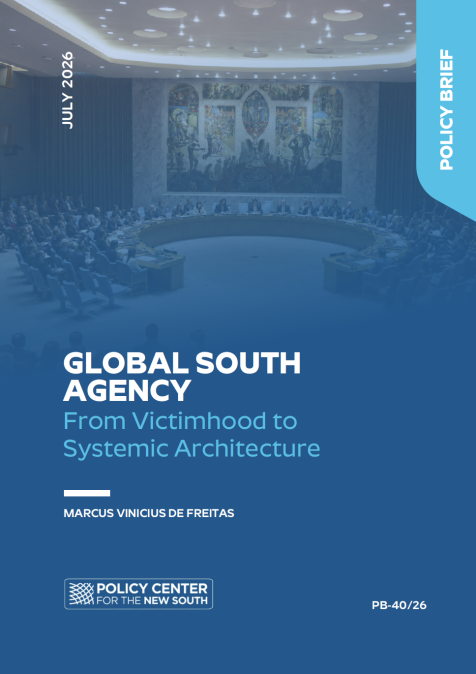
    For much of the post-war period, the Global South was framed as an object of history, defined by dependency, constrained by structural asymmetries, and confined to the margins of global decision-making. That narrative, once empirically grounded, is now no longer adequate. A profound yet uneven transformation is underway. The Global South is no longer only reacting; it is increasingly shaping rules, institutions, and narratives.This Policy Brief argues that the Global South is thus t ...
  • July 3, 2026
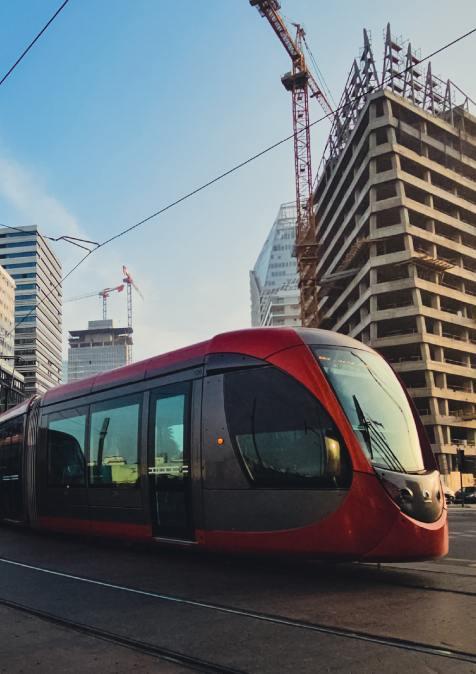
    This Policy Paper has also been published in French and Spanish by Le Grand Continent Morocco offers a compelling example of how a middle-income economy can navigate a more fragmented global environment, characterized by weak growth and slower convergence. Since 2022, economic activity has remained relatively strong, with growth exceeding that of many comparable economies. Non-agricultural growth has averaged 4.4% since 2022, around 1.3 percentage points above its historical av ...
  • Authors
    June 8, 2026
    The energy shock caused by the war between the United States and Israel and Iran has highlighted the need for Africa to refine more of its own crude oil. Africa is a net hydrocarbon exporter, but remains stuck in the old colonial economic model: it mostly exports raw materials and imports refined products. Africa exports about 2.6 billion barrels of crude oil every year, and imports about 1.4 billion barrels of refined products. This is a problem for two reasons. First, Africa ...
  • April 10, 2023
    This policy paper examines India’s growing engagement in North Africa, focusing on five countries: Morocco, Algeria, Tunisia, Libya, and Egypt. Despite lacking a distinct regional policy for North Africa, India has amplified its bilateral engagement with these countries, underpinned by a steadfast commitment to the principle of South-South cooperation. Through its strategic moves in North Africa, India has established a powerful southern-west axis for its foreign policy that stretch ...
  • Authors
    Said El Hachimi
    July 27, 2022
    Sleepless nights and the tireless search for compromise allowed WTO members to agree on concrete deliverables during the WTO 12th Ministerial Conference held last June. Those results reinforce Multilateralism. And this is a significant gain given the multiplicity of global crises that surround us. The Outcome include 6 Agreements, Declarations and Ministerial Decisions that respond to some of today's challenges, notably on Fisheries and Ocean Sustainability as well as responses to P ...
  • Authors
    Sabine Cessou
    May 17, 2022
    Ce thème, abordé au Centre HEC de Géopolitique à Jouy-en-Josas, lors de la 12e édition des Dialogues stratégiques avec le Policy Center for the New South, une rencontre semestrielle, a permis de revenir dans le détail sur cette zone qui relie la Méditerranée à l’océan Indien, à la jointure de trois continents : l’Asie, l’Afrique et l’Europe. Cette route maritime qui s’étend sur plus de 2 200 km, pour une largeur qui varie de 300 km à moins de 30 km entre Djibouti et le Yémen, r ...
  • May 13, 2022
    Depuis 2016, le Policy Center for the New South et le Centre HEC de Géopolitique organisent chaque année deux éditions des « Dialogues Stratégiques ». Cette plateforme d’analyse et d’échange réunit des experts, des chercheurs provenant de différents think-tanks et du monde académique, d...
  • April 25, 2022
    Retrouvez en exclusivité l’interview de Abdelhak Bassou, Senior Fellow au Policy Center for the New South, qui se livre à Helmut Sorge, Columnist au Policy Center for the New South, au sujet des multi-disparités présentes en Afrique. Abdelhak Bassou est l’auteur du Chapitre 5 du rapport...
  • Authors
    Abdelmounaim Fanidi
    April 19, 2022
    Suivant une analyse réaliste des relations internationales, des ‘facteurs objectifs’ ont été longtemps mis en avant pour expliquer le blocage de l’intégration régionale au Maghreb (e.g. le conflit du Sahara). Par une approche constructiviste, cet article a pour vocation d’analyser un facteur subjectif susceptible de freiner ou favoriser l’intégration maghrébine, en l’occurrence les identités nationales. Il se focalisera sur « les discours primordialistes ». Autrement dit, les discou ...