Publications /
Policy Brief
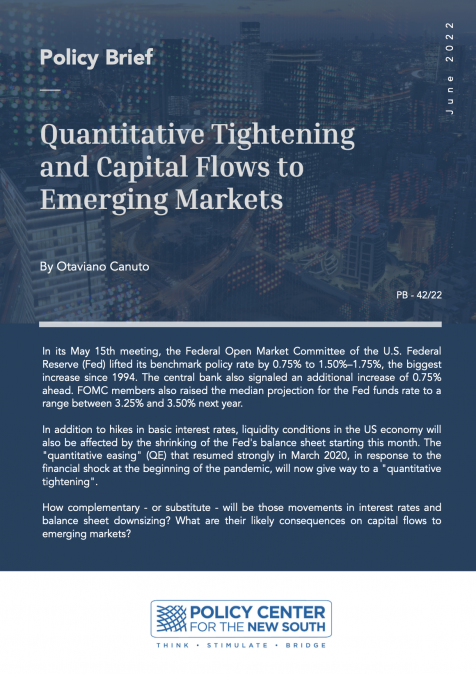
In its May 15th meeting, the Federal Open Market Committee of the U.S. Federal Reserve (Fed) lifted its benchmark policy rate by 0.75% to 1.50%–1.75%, the biggest increase since 1994. The central bank also signaled an additional increase of 0.75% ahead. FOMC members also raised the median projection for the Fed funds rate to a range between 3.25% and 3.50% next year.
In addition to hikes in basic interest rates, liquidity conditions in the US economy will also be affected by the shrinking of the Fed's balance sheet starting this month. The "quantitative easing" (QE) that resumed strongly in March 2020, in response to the financial shock at the beginning of the pandemic, will now give way to a "quantitative tightening".
How complementary - or substitute - will be those movements in interest rates and balance sheet downsizing? What are their likely consequences on capital flows to emerging markets?