Publications /
Policy Brief
STRATEGIC EXECUTIVE SUMMARY
Morocco has embarked with determination on a modernization trajectory driven by digital transition, green transition, and innovation. These dynamics have become strategic drivers of competitiveness, attractiveness, and the creation of high-value-added jobs. However, an analysis of recent microeconomic data reveals a troubling paradox: the most modernized companies, the engines of future growth, are facing the greatest recruitment difficulties.
This finding suggests that the main constraint to the country’s productive transformation is fundamentally a capacity constraint. While we must not overlook how this challenge interacts with other structural factors - such as firm size, access to financing, or productivity requirements - the move toward higher-value-added production by firms is increasing skill requirements to such an extent that the education and training system has struggled to keep pace. This situation undermines the sustainability of these transitions and the creation of durable employment, creating a specific vulnerability for small and medium-sized enterprises (SMEs). Often constrained by limited resources, SMEs exhibit weak internal training capacity, which hinders their technological upgrading.
The objective of this study is to assess this skills gap and identify the key levers to align workforce training policies with the actual needs of the economy. The analysis is based on the microdata from the World Bank’s 2023 Enterprise Survey and uses a segmentation between the "Pioneering Firms" (76.3% of the sample) and "Traditional Firms" (23.7%).
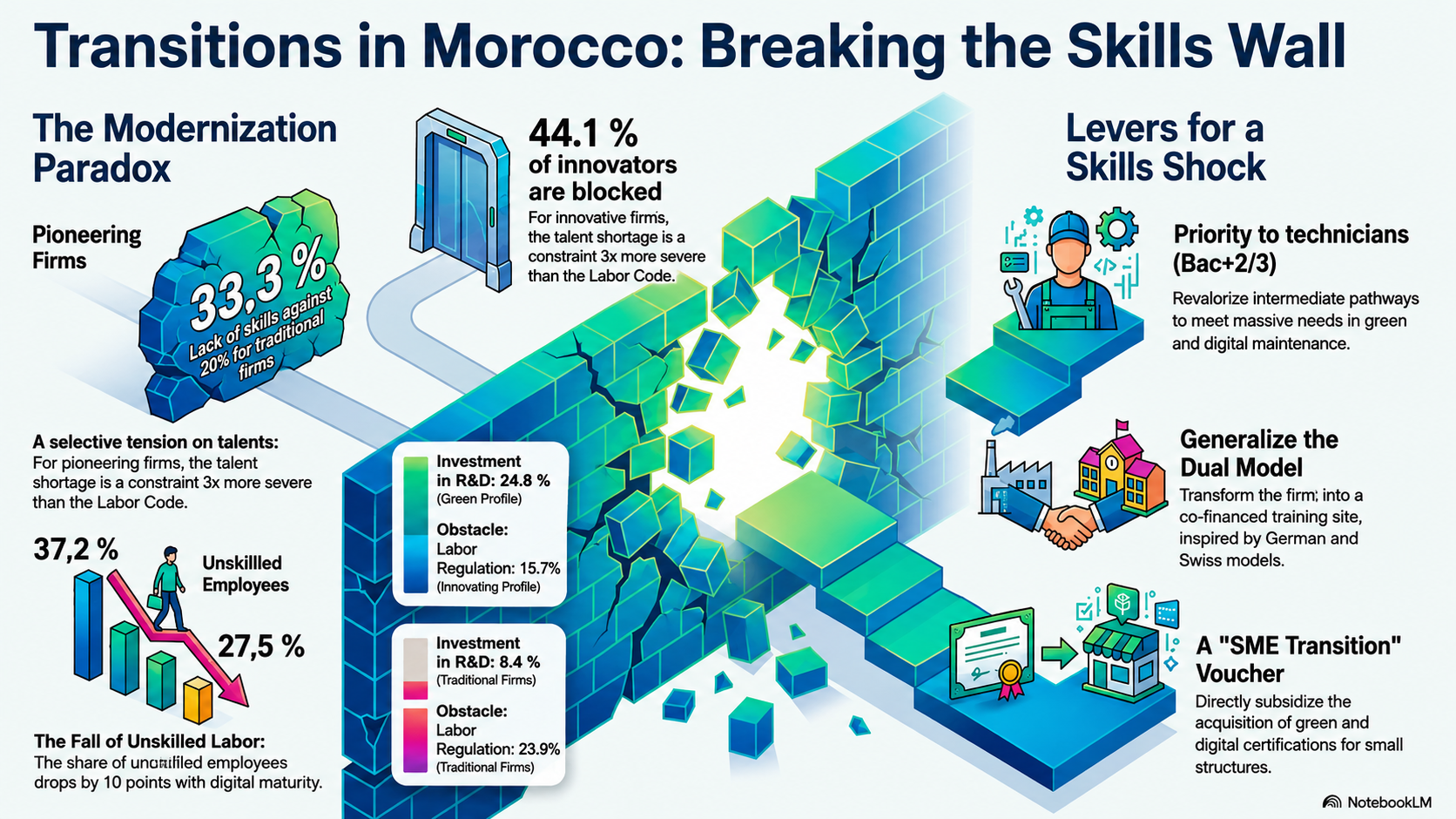
Findings confirm the existence of a selective skills shortage: the lack of a qualified workforce is identified as a major constraint by 33.3% of pioneering firms, compared with 20% of traditional firms. For the most innovative firms, the shortage of skilled labor constitutes a far more severe constraint (44.1%) than labor regulations under the Labor Code (15.7%). The primary bottleneck is therefore human capital rather than a legal one.
Faced with these challenges, the private sector is attempting to respond. However, overall rates of formal workforce training remain extremely low (between 10% and 12% for the most dynamic sectors) given the scale and speed of the transitions underway. Moreover, this effort exhibits a marked strategic polarization: investment is heavily concentrated on operational employees who work directly with new technologies (reaching up to 61.7% in the green economy), while managerial and supervisory staff receive comparatively less investment. This imbalance risks creating an internal skills divide within firms.
In conclusion, the challenge facing Morocco is no longer simply to initiate the transition, but to ensure that it is supported by adequate human capital and remains sustainable over the long term.
ANALYTICAL/TECHNICAL SUMMARY
Morocco has firmly committed itself to a modernization pathway driven by the digital transition, the green transition, and innovation. These trends have become strategic drivers of competitiveness, investment attractiveness, and the creation of high-value-added jobs. However, an analysis of recent microeconomic data reveals a concerning paradox: the most modernized firms, the very engines of future economic growth, are facing the greatest difficulties in recruiting. This finding suggests that the main constraint on Morocco’s productive transformation is neither regulatory nor institutional, but fundamentally one of capacity. As firms move up the value chain, their demand for advanced skills increases substantially, while the supply of education and training struggles to keep pace, weakening the sustainability of these transitions and the creation of long-term jobs.
The objective of this study is to assess the skills gap faced by Moroccan firms engaged in these transitions and to identify the key levers needed to better align training and employment policies with the actual needs of the economy. The analysis is based on the microdata from the World Bank’s 2023 Enterprise Survey and employs a segmentation based on operational practices. Two categories were defined:
"Pioneering Firms", representing 76.3% of the sample and are engaged in at least one of the three transitions (digital, green, or innovation-driven),
"Traditional Firms", accounting for 23.7% of the sample, which continue to operate under conventional business models.
The findings confirm the existence of a selective labor market tension. The shortage of skilled labor is identified as a major obstacle by 33.3% of pioneering firms, a figure significantly higher than the 20% reported by traditional firms. This 13.3-percentage-point gap indicates that while the current training system meets the needs of the conventional economy relatively well, it reaches its limits when faced with the technical and cognitive skill requirements associated with economic modernization.
This skills deficit is particularly critical because it outweighs other commonly cited obstacles. For the most innovative companies, the shortage of skilled labor is considered a far more severe constraint (44.1%) than Labor Code regulations (15.7%). The obstacle is therefore primarily human rather than legal. Specific skill requirements vary considerably depending on the type of transition in which firms are engaged.
- The Digital Transition: From Manual Labor to the Augmented Operator
Digital transformation, which concerns more than 76% of firms (39.1% at the “basic digital” level and 37% at the “advanced digital” level), is reshaping the structure of employment.
Technological substitution: The proportion of low-skilled employees declines sharply as digital maturity increases, falling from 37.2% in non-digital firms to 27.5% in firms with an “advanced digital” profile (e-business),
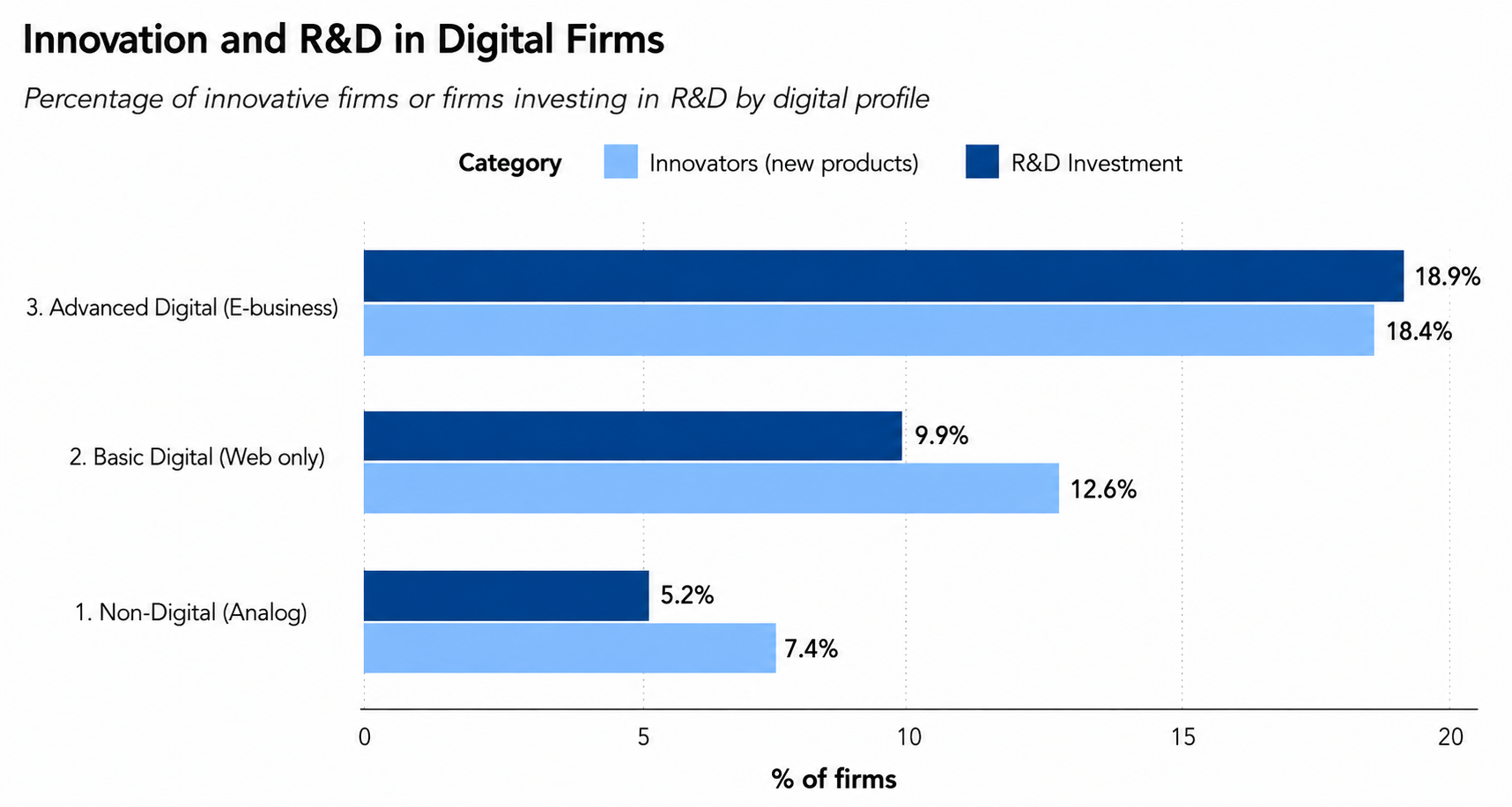
Demand for Cognitive Skills: Digitalization is a powerful driver of innovation. “Digitally advanced” firms are more than three times as likely to invest in R&D (18.4%) than non-digital firms (5.2%). This generates a demand for profiles capable of analytical thinking, project management, and technical creativity, extending well beyond the simple use of digital tools. For 28.6% of these companies, the skills shortage constitutes a major obstacle, nearly double the level of regulatory constraints (15.2%).
- The Green Transition: Demand for Intermediate Technical Expertise
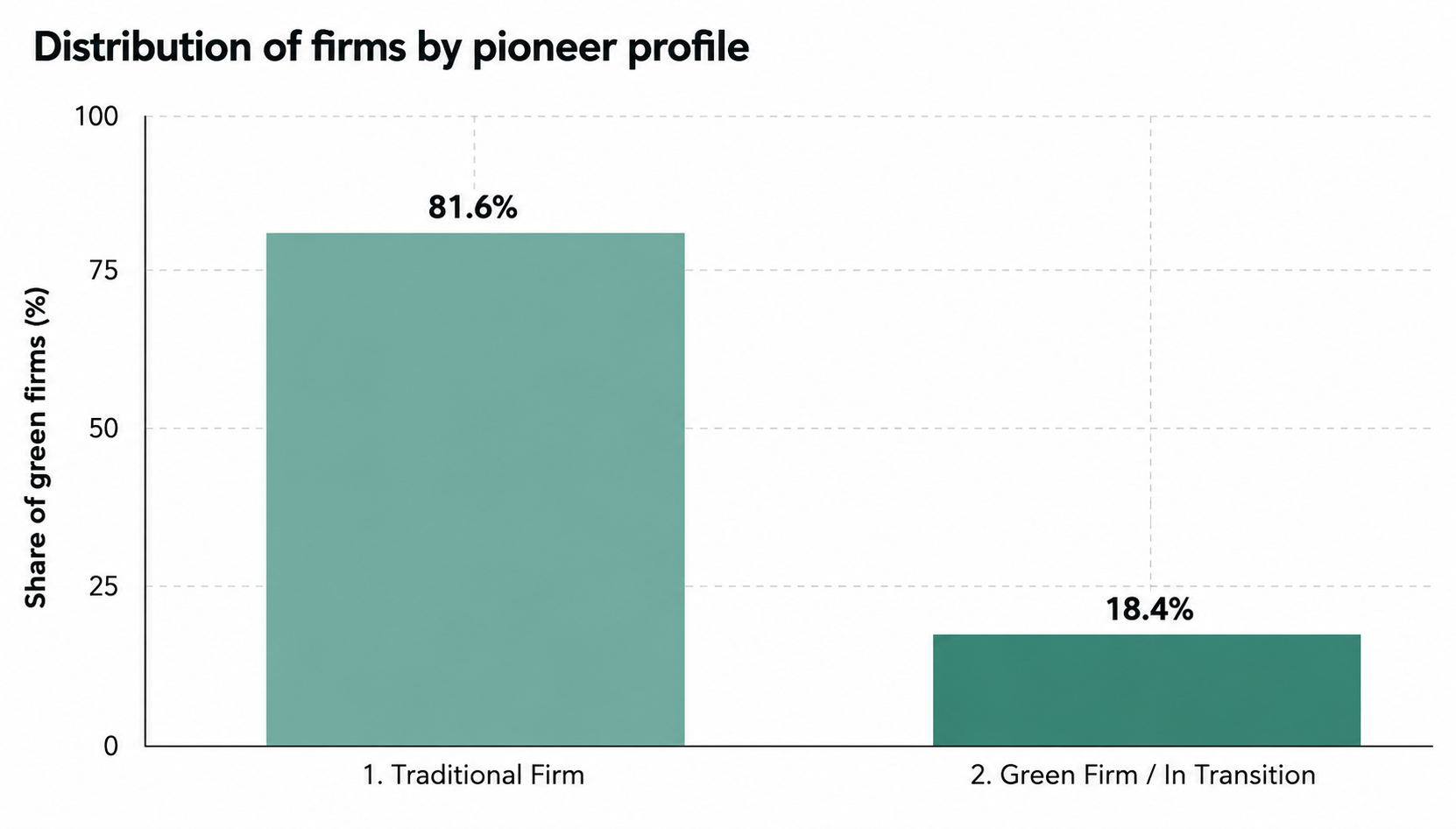
The greening of the economy, which affects 18.4% of firms, is not a niche phenomenon but a profound industrial transformation.
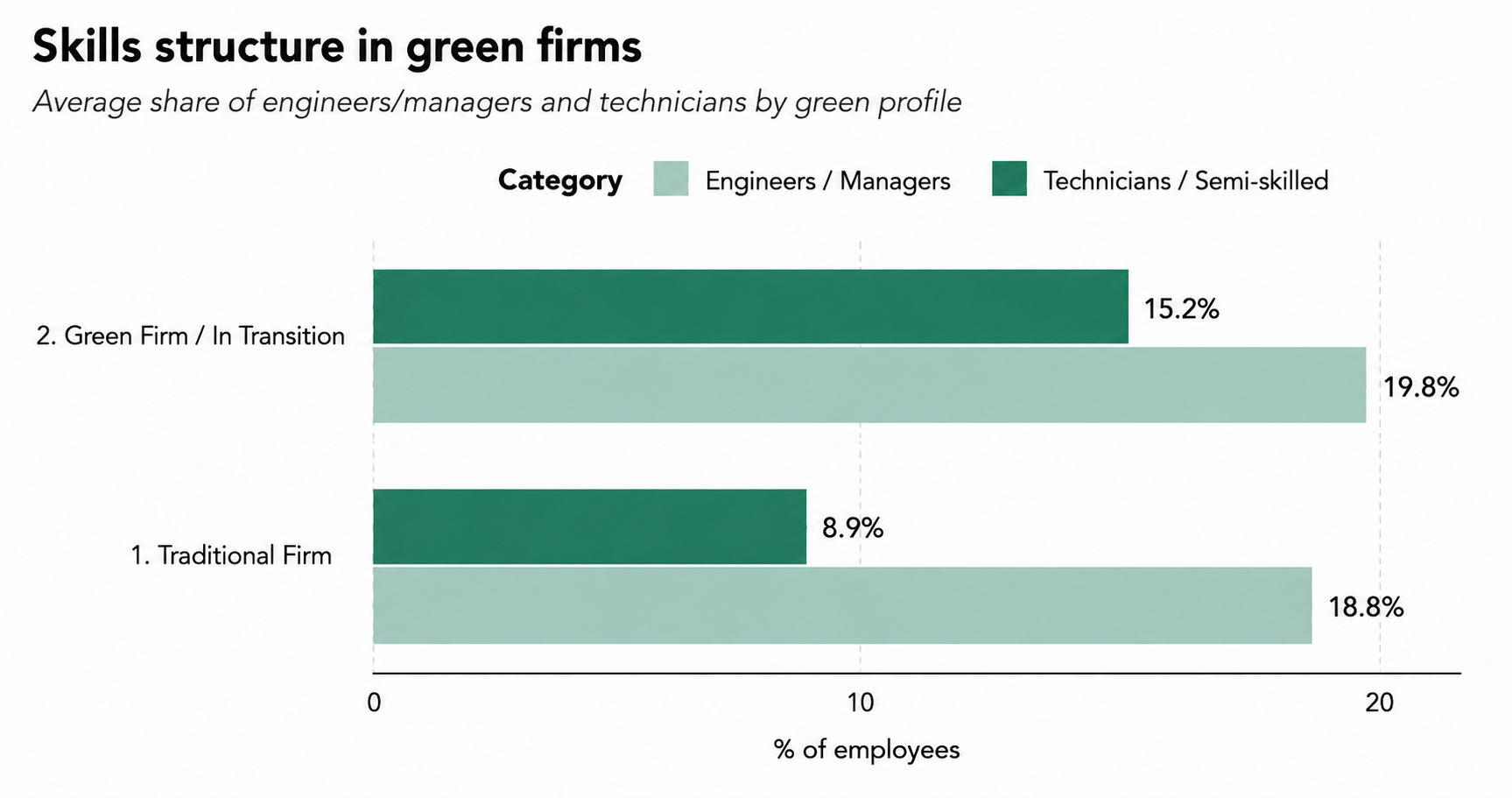
Demand for Skilled Technicians: green firms rely on a strong technical basis. The share of technicians and semi-skilled workers reaches 19.8%, while engineers and managers account for 15.2%, rates, compared with 18.8% and 8.9%, respectively, in traditional firms.Morocco’s “Green Deal” therefore relies primarily on intermediate technical skills (two- to three-year post-secondary education),
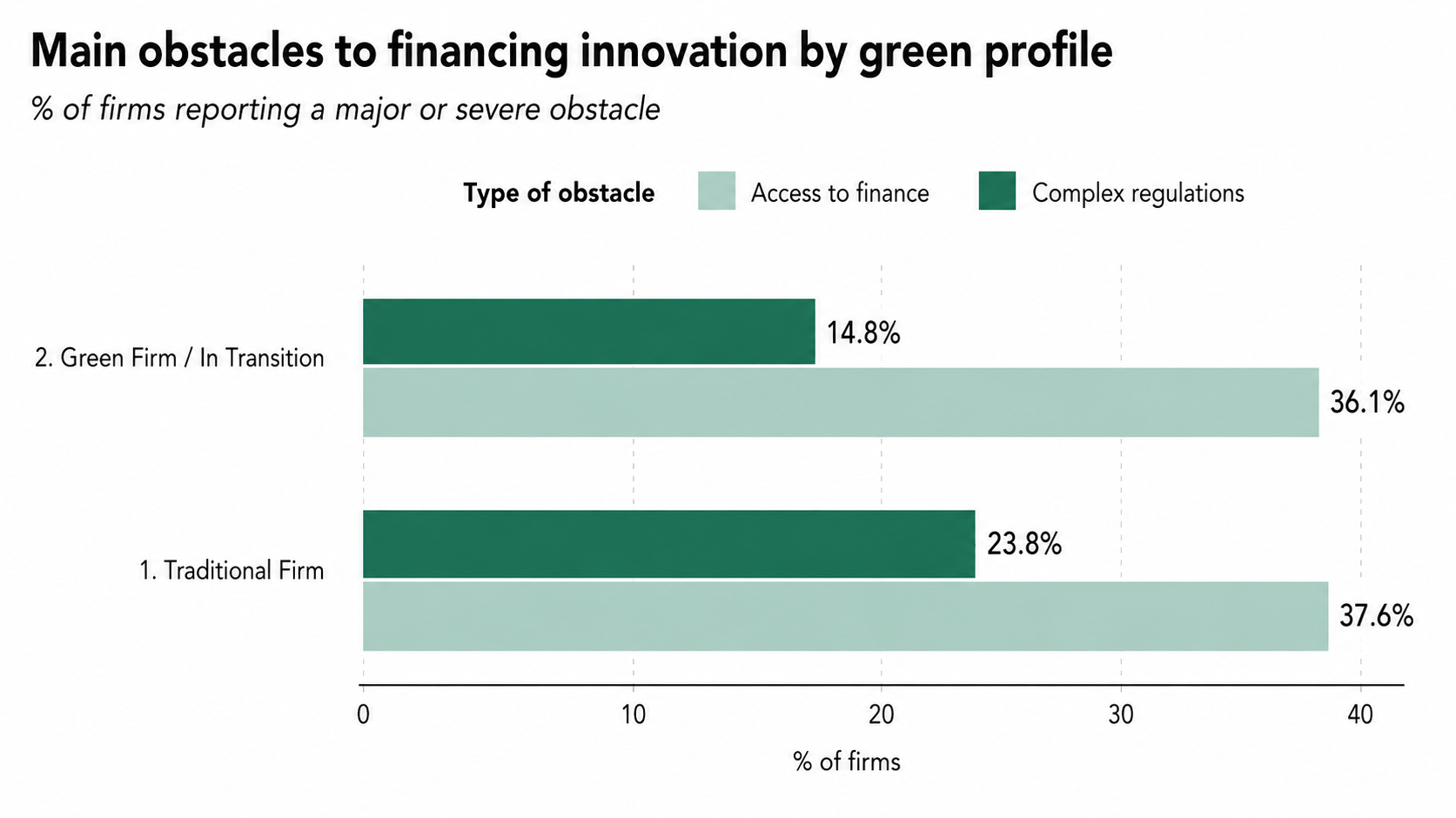
A powerful driver of innovation: environmental sustainability and innovation are strongly correlated. Green firms invest almost three times more in R&D (24.8%) than traditional firms (8.4%). This dual requirement (technical and cognitive) creates a critical “Green Skills Gap”: the shortage of qualified skills is identified as a major obstacle for 36.1% of green firms, far more so than labor regulations (14.8%).
- Transition Through Innovation: A Severe Capacity Bottleneck
Innovation, undertaken by 22.4% of firms (through R&D or the introduction of new products), requires a more sophisticated human capital.
A dual demand: far from being elitist, innovation extends through the entire qualifications pyramid. Innovative firms employ a much higher share of engineers (19.5% versus 7.3%) as well as specialized technicians (24.7% versus 17.3%),
Soft Skills Requirements: Innovation is also managerial in nature. Innovative firms are more likely to adopt proactive management practices, such as root-cause problem solving (29.1%) and performance monitoring through key performance indicators (30.6%). This requires employees with autonomy, critical thinking, and proactivity.
The “Innovator’s Paradox”: this is where the bottleneck is most evident. For 44.1% of innovative firms, the shortage of skills is the main obstacle to growth, a figure nearly three times higher than regulatory constraints (15.7%).
In response to these challenges, the private sector has increasingly relied on continuing vocational training. Formal training opportunities exist, and their use is positively correlated with firms’ degree of modernization. “Digitally advanced” firms are twice as likely (12.1%) to offer formal training programs as non-digital companies (6.2%). Similarly, 10% of innovative firms provide training for their employees, compared to 8.2% of other firms. Although these figures are improving, they show that overall participation in formal training remains modest. Moreover, this effort is marked by significant disparities and a strategic polarization. Investment is overwhelmingly concentrated on operational roles directly engaged with new technologies, at the expense of managerial or administrative staff.
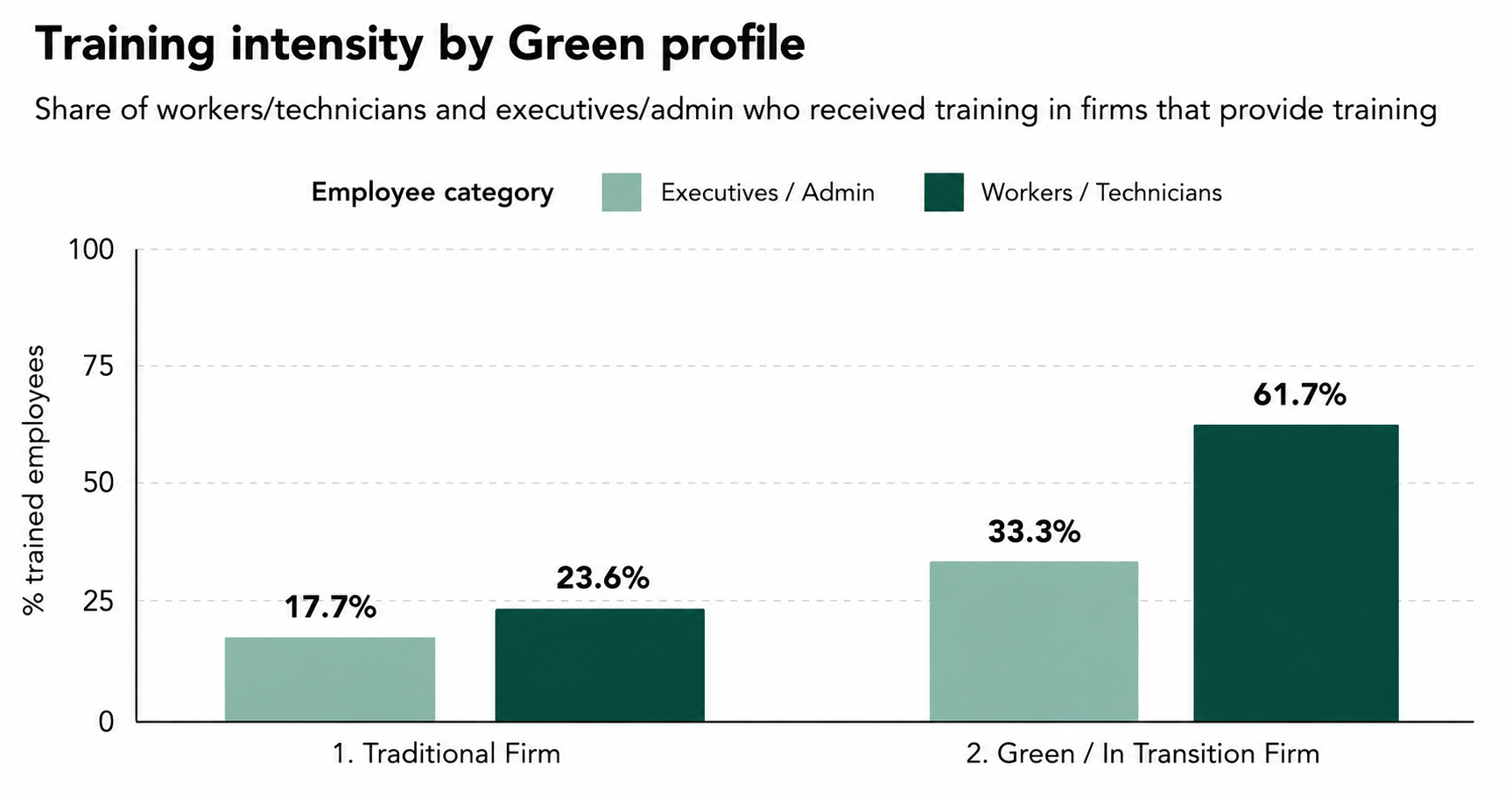
In the green transition, 61.7% of blue-collar workers and technicians receive training, nearly twice the share observed among managerial and administrative staff (33.3%),
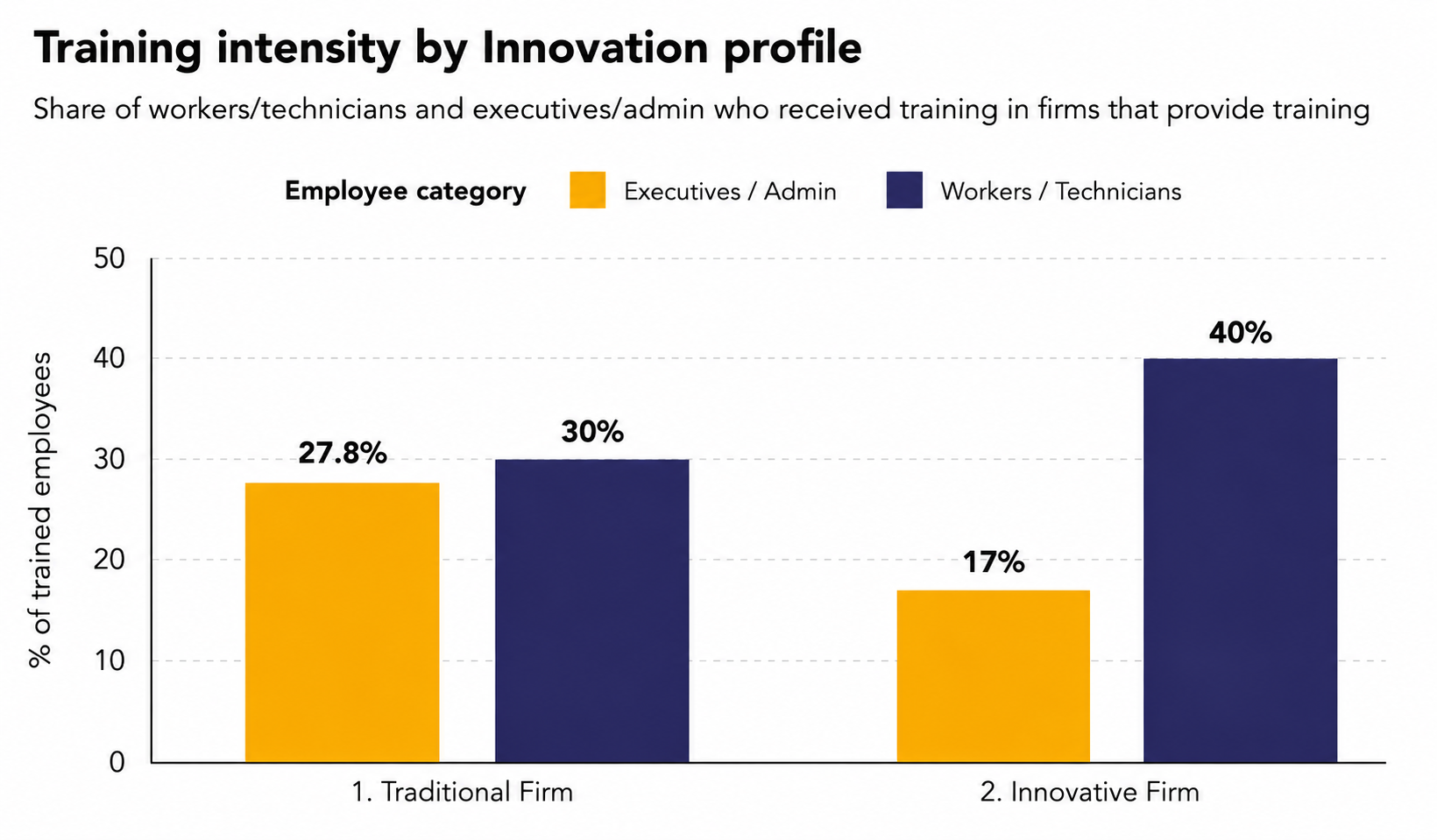
In innovative firms, 40% of technicians and blue-collar workers receive training, compared with only 17% of administrative staff.
This strategy of targeted upskilling represents a rational response aimed at securing firms’ investments. However, it also risks creating an internal skills divide within firms and limiting the broad diffusion of knowledge and capabilities across the productive sector, particularly among less structured SMEs.
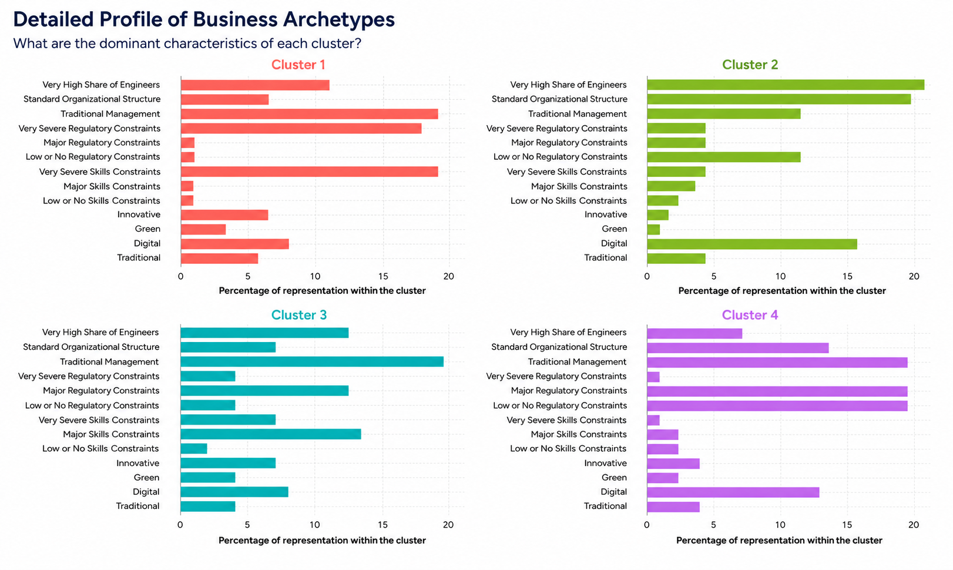
To move beyond this aggregate finding, data analysis allows Moroccan firms to be grouped into four distinct profiles (see figure below). This firm-level in-depth analysis confirms the central theme of our assessment: the further firms move away from the traditional business model and embrace complexity (digitization, green transition, or innovation), the higher the “skills barrier” becomes.
The “Technicians” profile (Cluster 2): This perfectly illustrates the need for intermediate technical skills. These firms exhibit a strong digital presence, but their activities rely primarily on a solid technical workforce, making them highly dependent on the quality of vocational training (two- to three-year post-secondary education),
The “High Knowledge-Intensity Innovators” (Clusters 1 & 3): This is where the paradox is most evident. Characterized by a very high share of engineers and modern management practices, these firms classify the skills shortage as a “very severe” obstacle, completely outweighing regulatory constraints.
The "Traditional" profile (Cluster 4): By contrast, firms less engaged in the ongoing transitions perceive the shortage of skills as a minor or non-existent obstacle, confirming that labor market tensions are primarily a consequence of growth rather than stagnation.
Morocco’s experience mirrors the challenges faced by other emerging and advanced economies. To transform this bottleneck into a driver of economic growth, three approaches inspired by successful international models deserve consideration:
The "Moroccan-style" dual training system (inspired by Germany and Switzerland): To address the strong demand for technicians (19.8% in green firms, 24.7% in innovative firms), Morocco could benefit from expanding work-based apprenticeship systems, in which firms become full-fledged training providers, with public co-financing to reduce costs for SMEs,
Sectoral "Skills Councils" (inspired by Singapore and Canada): establish private-sector-led governance bodies (in the digital, green tech, and automotive sectors) to review training curricula every 18 months. The goal is to reduce the time lag between technological change and curriculum adaptation,
The “SME Transition” Voucher (inspired by Chile and Ireland): Given the limited training capacity of smaller firms, direct subsidies targeted at acquiring “applied digital literacy” or “green certifications” would help democratize upgrading, which is currently concentrated among large leading firms.
Ultimately, the success of Morocco’s digital, innovation, or decarbonization strategies will depend less on its ability to import technologies than on its capacity to develop the talent capable of deploying, operating and deploying them.
I. INTRODUCTION: HUMAN CAPITAL IN THE CONTEXT OF PRODUCTIVE SECTOR TRANSFORMATIONS
Morocco’s economic development trajectory is driven by a commitment to industrial upgrading and technological diversification, supported by national strategies such as the Morocco Digital 2030 Plan and commitments related to decarbonization. However, the success of these transformations depends on aligning firms’ modernization ambitions with the availability of adequately skilled human capital in the labor market. Evidence on employment dynamics suggests that the adoption of new technologies and production processes is reshaping the structure of demand for human capital (World Bank, 2023).
The central question addressed in this Policy Brief is whether the current labor supply is sufficient to sustain the pace of modernization in the productive sector. While macroeconomic indicators provide an overview of unemployment, the analysis of microdata from the World Bank Enterprise Survey (World Bank, 2023) offers a necessary perspective from the demand side. It helps identify the segments of the economy where recruitment pressures are most acute and characterizes the specific skills currently in short supply.
This Policy Brief explores the concept of the “modernization paradox”, which posits that firms engaged in digital, green, or innovation-driven transitions face more severe capacity constraints than traditional firms (World Bank, 2023). By focusing on these “pioneering firms”, the study identifies the specific skill requirements generated by each type of transition and assesses the private sector’s current response through continuing vocational training. This deductive approach, from general observations to technical specificities, aims to formulate policy recommendations capable of sustainably aligning the education and training system with the skill requirements of tomorrow’s economy.
II. GLOBAL ASSESSMENT: A STRUCTURAL DIVIDE IN THE LABOR MARKET
Although the transformation of the Moroccan economy is a tangible trend, driven by ambitious sectoral strategies, its impact on the labor market reveals contrasting pressures. Far from being uniform, the skills challenge manifests itself with varying intensity depending on the maturity of economic actors.
To understand these dynamics, it is necessary to move beyond aggregate national indicators, which tend to mask underlying heterogeneity. A detailed analysis of microdata from the World Bank Enterprise Survey (World Bank, 2023) highlights a marked duality within the productive sector: two distinct business ecosystems coexist, yet they face fundamentally different human capital constraints.
Methodology: Segmentation by Degree of Modernization
In order to identify the specific skill requirements of tomorrow’s economy and avoid diluting the analysis by including a large number of conventional firms, this study adopts an analytical segmentation of the sample. This classification is not based on firm size or industry sector, but on the firms’ actual operational practices.
Therefore, two distinct categories were defined to structure the analysis:
"Pioneering Firms" (76.3% of the sample): This strategic group comprises firms that have concretely engaged in at least one of the three major transitions:
- Digital transition: use of licensed technologies, an active web presence, or the use of electronic payment systems,
- Green transition: monitoring CO2 emissions or the adoption of energy-efficiency measures,
- Innovation transition: investment in R&D or the introduction of new products and processes.
"Traditional Firms" (23.7% of the sample): This group consists of firms operating under conventional business models, without significant adoption of these modernization practices.
2. The Macroeconomic Assessment: A Selective Skills Constraint
A comparison of the perceptions held by these two groups reveals the existence of a capacity divide. While the inadequacy of the labor force is a concern shared across the productive sector, its nature and intensity change significantly once firms embark on a process of upgrading and modernization.
The data indicates a strong positive correlation between the degree of operational sophistication and recruitment difficulties. The shortage of an adequately skilled workforce is identified as a major constraint by 33.3% of pioneering firms, compared with only 20% of traditional firms.
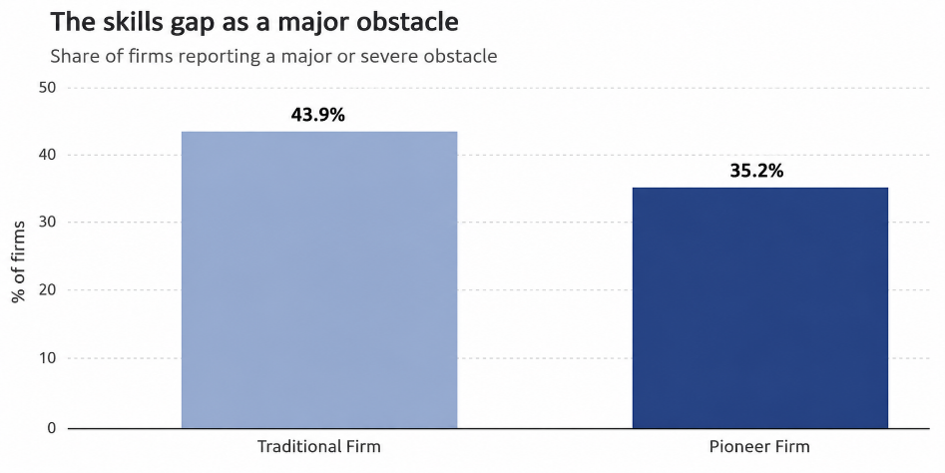
Source: Authors' calculations based on the World Bank Enterprise Survey (Morocco 2023).
Note: More than one-third of firms undergoing modernization identify a lack of skills as a major obstacle to their growth, a gap of +13.3 points compared to the traditional sector.
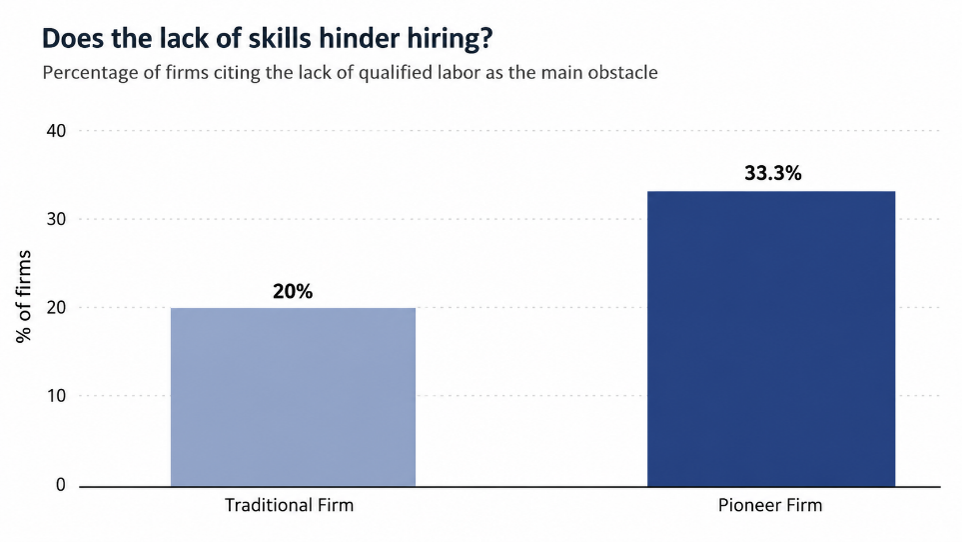
This statistically significant gap suggests that the current education and training system can meet the needs of the conventional economy, but reaches its limit when confronted with the technical and adaptive skill requirements of modernizing firms. This finding points to a clear conclusion: the modernization of production systems does not reduce the demand for labor; rather, it raises the required bar for workers, creating labor market frictions that risk slowing the country’s economic transformation unless the supply of skills adapts rapidly.
III. SECTORAL ANALYSIS: THE SPECIFIC REQUIREMENTS OF THE THREE TRANSITIONS
While the overall assessment confirms the existence of a skills gap, the nature of the skills required varies significantly depending on the modernization pathway adopted by firms. A detailed analysis by type of transition provides a clearer understanding of these specific skill requirements.
The Digital Transition: From Manual Labor to the Augmented Operator
To understand the evolution of labor demand, it is necessary to assess the degree of digitalization across firms. The figure below presents a segmentation of the business sector based on the intensity of digital technology adoption.
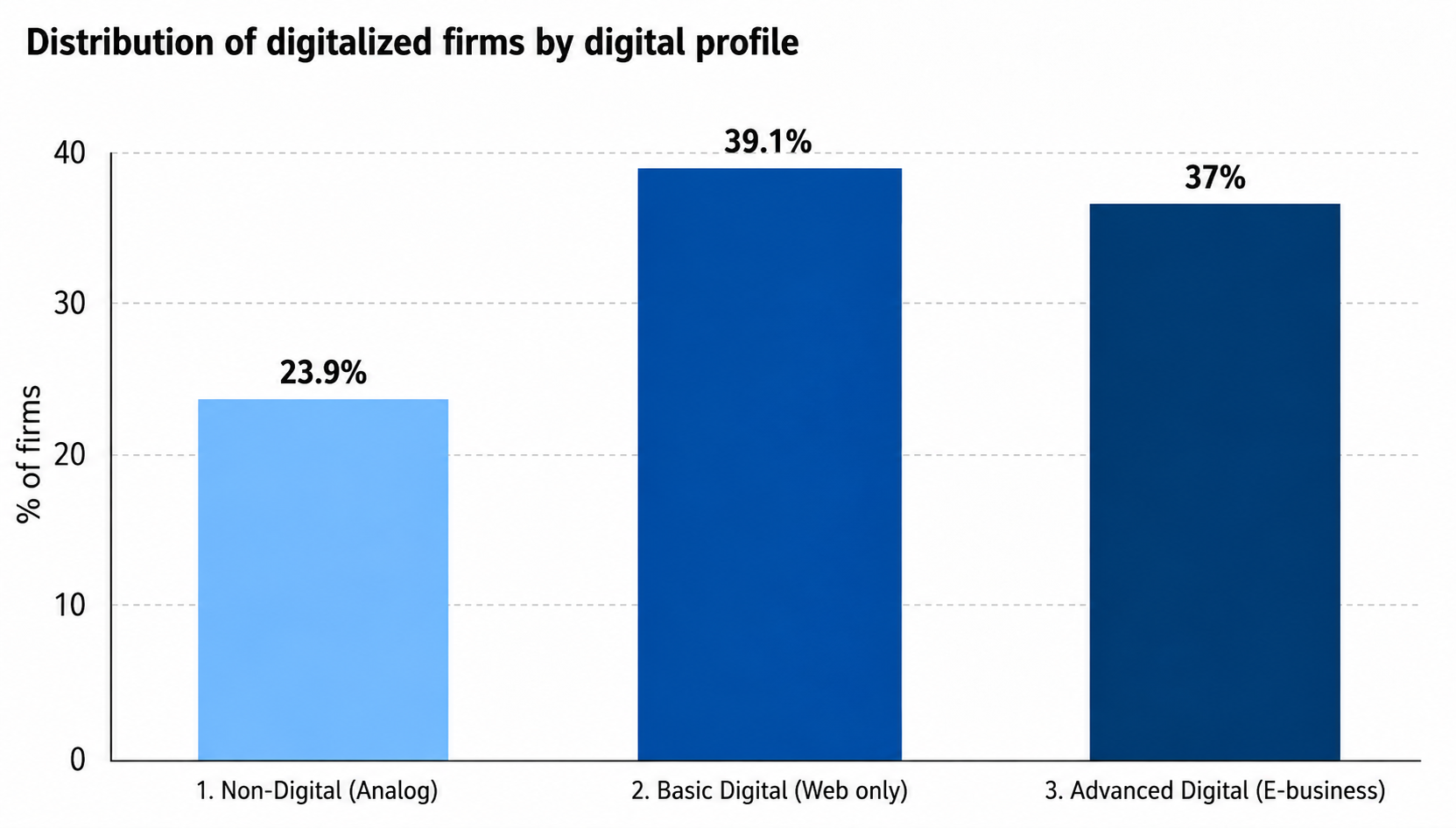
The analysis reveals that the Moroccan economy has moved well beyond the initiation stage. While 23.9% of firms still operate on a purely “analog” (non-digital) model, the vast majority have integrated digital technology into their operations. More significantly, findings show that firms with an “advanced digital” profile (37%), the ones that go beyond a passive web presence to incorporate e-commerce and electronic transactions, now account for nearly as much as the “basic digital” segment (39.1%).
This shows that the digital transition is not merely superficial: more than one-third of firms have made their business models more complex through e-business, which has automatically created a demand for new and more specialized skills.
a. Declining Demand for Unskilled Labor
This technological transformation has a direct impact on workforce composition. Data analysis reveals an inverse correlation between a firm’s level of digital intensity and its reliance on low-skilled labor.
As illustrated in the figure below, the share of low-skilled employees declines mechanically as firms modernize. While these employees still account for 37.2% of total employment in firms operating under an analog business model, their share drops to 27.5% among “e-business” firms.
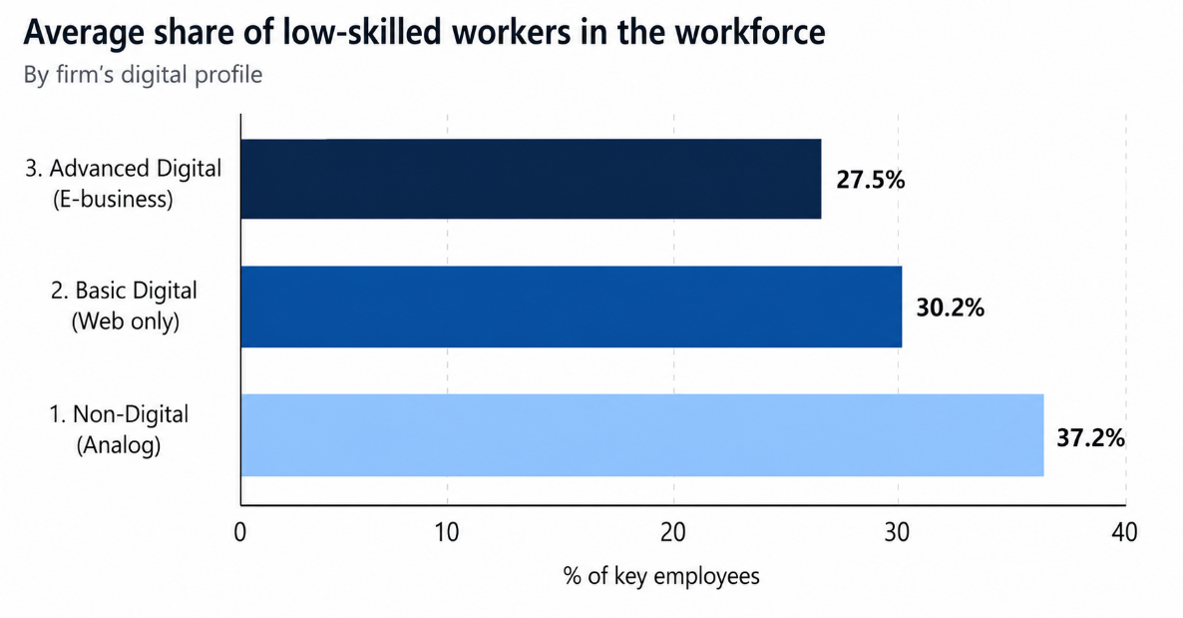
Source: Authors' calculations based on the World Bank Enterprise Survey (Morocco 2023).
This decline of nearly 10 percentage points suggests the existence of a technology-driven substitution effect: the modernization of administrative or logistical processes, together with the adoption of digital technologies, reduces the demand for purely routine execution-based labor. Consequently, for young people without qualifications, employment opportunities are becoming increasingly limited within the most dynamic firms in the service and industrial sectors (World Bank, 2023).
b. Innovation creates a demand for cognitive skills
The declining demand for low-skilled labor is offset by the expansion of higher-value-added activities. The data reveals a structural correlation between firms’ digital maturity and their innovation capacity.
As shown in the figure below, the transition to “advanced digital” firm status is accompanied by a shift in the production paradigm. 18.4% of these firms invest in Research & Development (R&D), more than three times the proportion observed among non-digital firms (5.2%). Similarly, nearly 19% of advanced digital firms intoduce new products to the market.
Source: Authors' calculations based on the World Bank Enterprise Survey (Morocco 2023).
This greater innovation intensity has direct implications on the types of skills employers' demand. Investment in R&D requires employees with advanced cognitive skills, including: analytical thinking, complex problem-solving, and technical creativity. Consequently, the skills shortage reported by these firms is not due to a lack of available workers, but rather to a scarcity of individuals capable of supporting and driving a knowledge-based economy (World Bank, 2023).
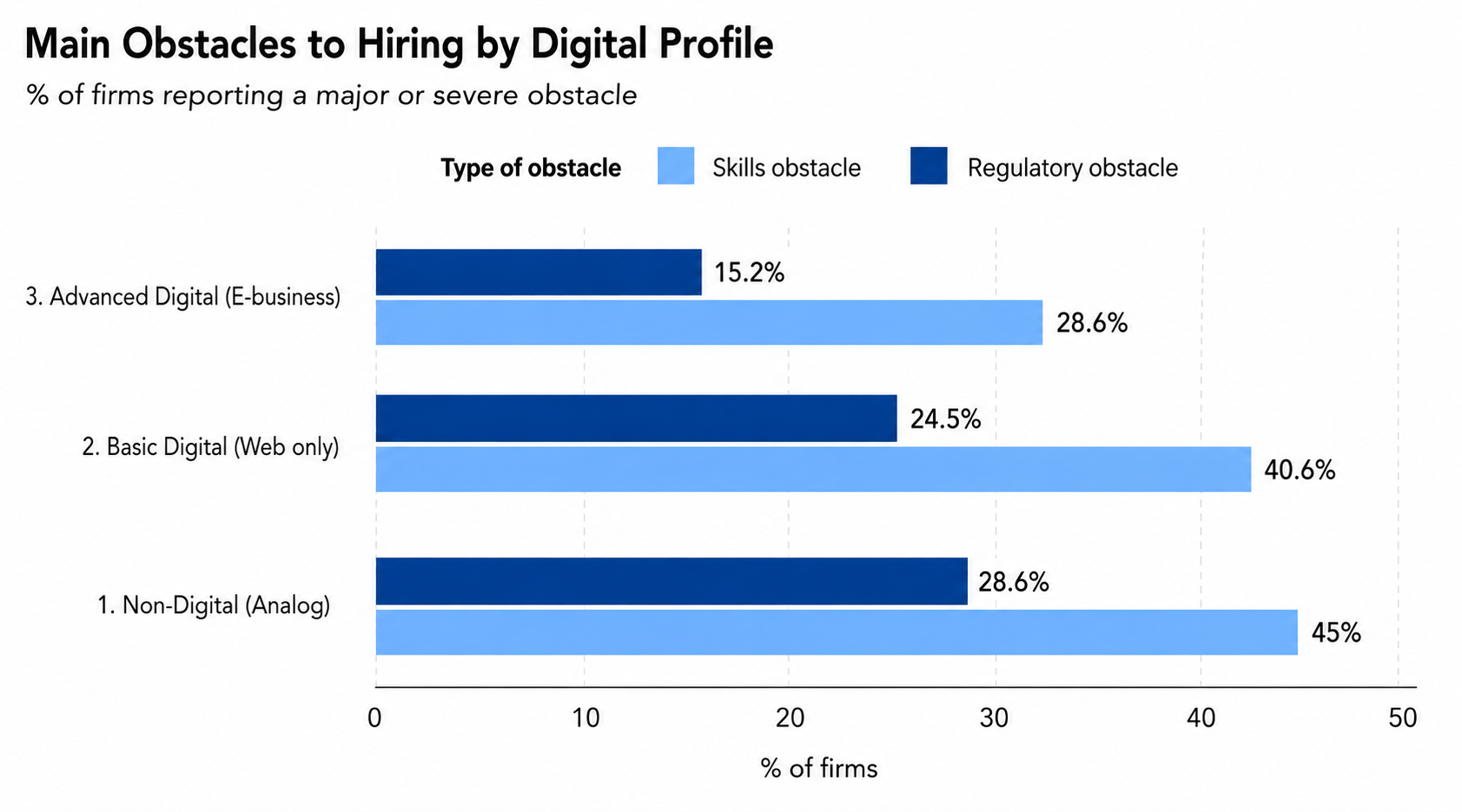
The growing demand for highly qualified workers is also reflected in the hierarchy of recruitment constraints. Data analysis makes it possible to distinguish whether barriers to hiring in the digital economy are primarily administrative or human-capital-related.
As illustrated in the figure below, skills shortages consistently emerge as the dominant constraint, consistently surpassing labor market regulatory barriers. For firms in the “advanced digital” segment, the lack of a skilled workforce is identified as a major obstacle by 28.6% of respondents, nearly double the rate observed for labor regulations (15.2%).
This gap confirms that, for firms operating in the digital economy, the principal constraint is not labor market rigidity but rather insufficient human capital. The challenge is therefore not legal or regulatory, but rather one of capacity: the difficulty lies not in hiring procedures, but in identifying candidates with the digital literacy required to operate in complex technological environment (World Bank, 2023).
2. The Green Transition: A Technical and Normative Imperative
The green transition, often viewed primarly through the lens of environmental compliance, is in fact a major industrial transformation. An analysis of firms classified as “green firms” (those that monitor their CO2 emissions and/or implement energy-efficiency measures) shows that the greening of the economy fundamentally reshapes the skills required by employers. Contrary to popular belief, "green jobs" are not entirely new, isolated occupations, but rather existing occupations that require the development of specific technical skills.
Source: Authors' calculations based on the World Bank Enterprise Survey (Morocco 2023).
a. Growing demand for intermediate technical skills
The adoption of environmental standards generates an immediate operational demand for technical expertise. An analysis of workforce composition indicates that green firms rely more heavily on a skilled technical workforce than traditional firms.
As shown in the figure below, the proportion of technicians and specialized employees is significantly higher among firms engaged in the green transition.
Source: Authors' calculations based on the World Bank Enterprise Survey (Morocco 2023).
This finding suggests that Morocco’s “Green Deal” relies primarily on intermediate technical skills (Bac+2/3). Demand extends beyond engineering and design functions to include the installation, maintenance, and monitoring of new industrial processes (World Bank, 2023).
b. The Green Transition as a Driver of Innovation and R&D
Beyond the technical dimension, the green transition is emerging as a powerful driver of research and development. To reduce carbon emissions and improve energy efficiency, firms must frequently adapt existing technologies or develop new production processes.
The data confirms this high level of technological intensity: green firms invest in R&D at nearly three times the rate of traditional firms (24.8% versus 8.4%).
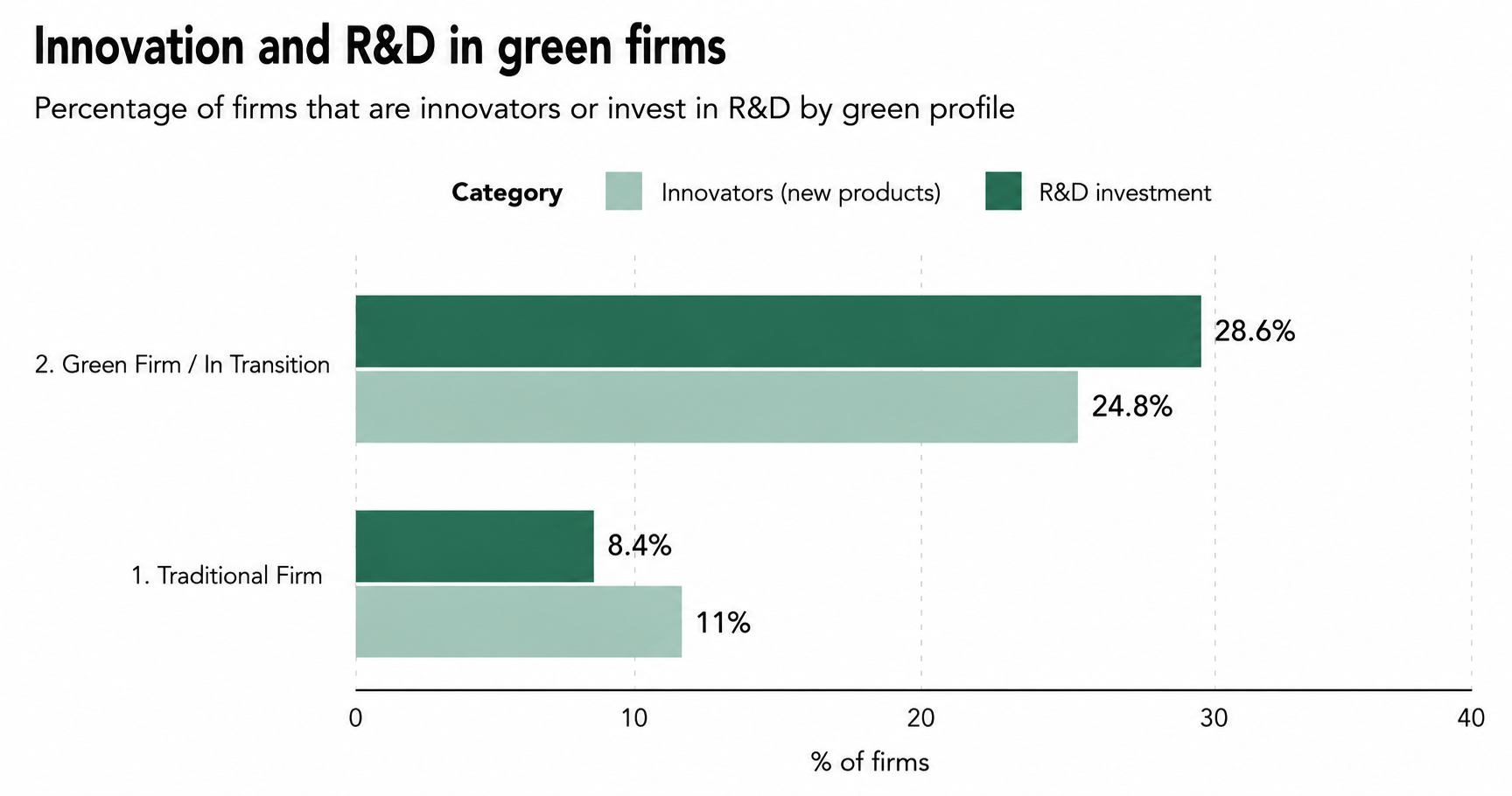
Source: Authors' calculations based on the World Bank Enterprise Survey (Morocco 2023).
This strong correlation between environmental sustainability and innovation creates a demand for professionals capable of managing technological complexity. Green firms are looking for employees who can lead innovation projects, conduct complex technical audits, and maintain constant monitoring of technological and regulatory developments (World Bank, 2023).
c. A Critical Shortage of “Green Skills”
This dual requirement, technical expertise for operational activities and cognitive capabilities for R&D, creates substantial pressure in the labor market. Green firms increasingly struggle to recruit suitable candidates, as current training systems have yet to fully align with these emerging skills requirements.
Analysis of recruitment barriers shows that skills shortages are preconceived as a far more significant obstacle than labor regulations among firms operating within the green economy.
Source: Authors' calculations based on the World Bank Enterprise Survey (Morocco 2023).
Note: Among firms engaged in a green transition, 36.1% identify skills shortage as a significantly greater constraint, compared with 14.8% citing labor regulations, illustrating a “green skills gap”.
The skills gap is therefore the principal barrier to firms’ ecological transition. This human capital constraint risks slowing progress toward Morocco’s national sustainability goals due to a lack of human capital capable of implementing green investments effectively (World Bank, 2023).
3. Innovation-Driven Transformation: The Capacity Bottleneck
Innovation is the ultimate driver of the Moroccan economic upgrading. However, the introduction of new products or new industrial processes is not solely a matter of capital investment. An analysis of firms classified as “innovative” (those that have introduced a new product or service or are investing in R&D) shows that innovation is, above all, a human process that shifts labor demand toward greater complexity.
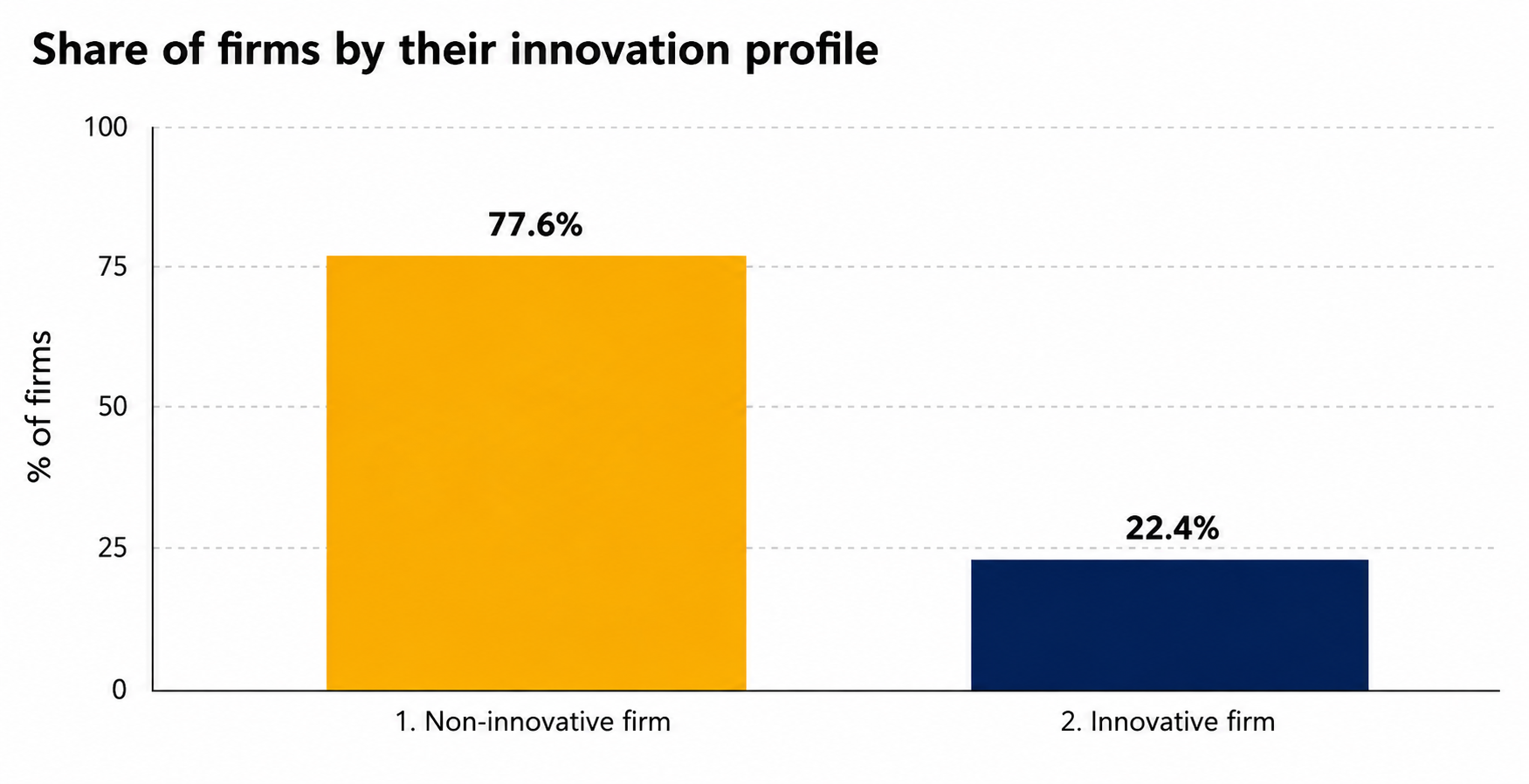
Source: Authors' calculations based on the World Bank Enterprise Survey (Morocco 2023).
a. Dual demand: engineers and specialized technicians
Contrary to the conventional view that would limit innovation solely to research laboratories, the data show that innovation permeates the entire occupational skills pyramid. Innovative firms exhibit a significantly more skilled workforce composition than average.
As shown in the figure below, these firms employ a significantly higher share of engineers and managers, as well as specialized technicians.
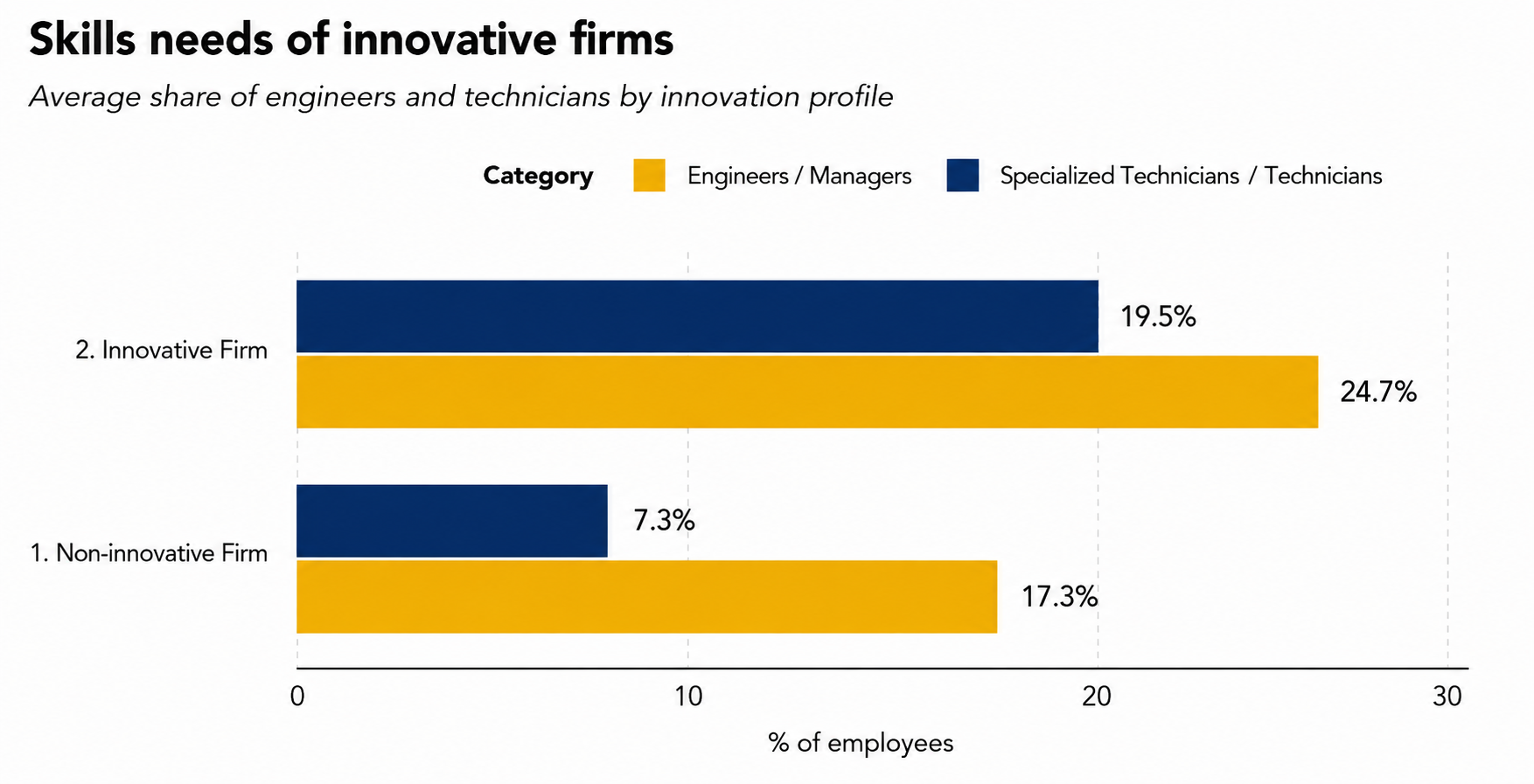
Source: Authors' calculations based on the World Bank Enterprise Survey (Morocco 2023).
This observation underscores the need for a balanced approach to training. An innovation-driven economy requires not only “brains” - engineers and researchers responsible for designing new technologies - but also "skilled workers" - specialized technicians capable of prototyping, testing and manufacturing next-generation products and industrial processes (World Bank, 2023).
b. Innovation requires cognitive and managerial skills (soft skills)
Innovation extends beyond technical expertise; it also requires organizational capabilities to manage uncertainty and solve complex problems. Analysis of managerial practices (Module R of the Enterprise Survey) reveals a strong correlation between firms’ innovative profile and the adoption of advanced management practices.
Innovative firms are considerably more likely to implement proactive management systems based on root-cause problem solving and rigorous key performance measurements using Key Performance Indicators (KPIs).
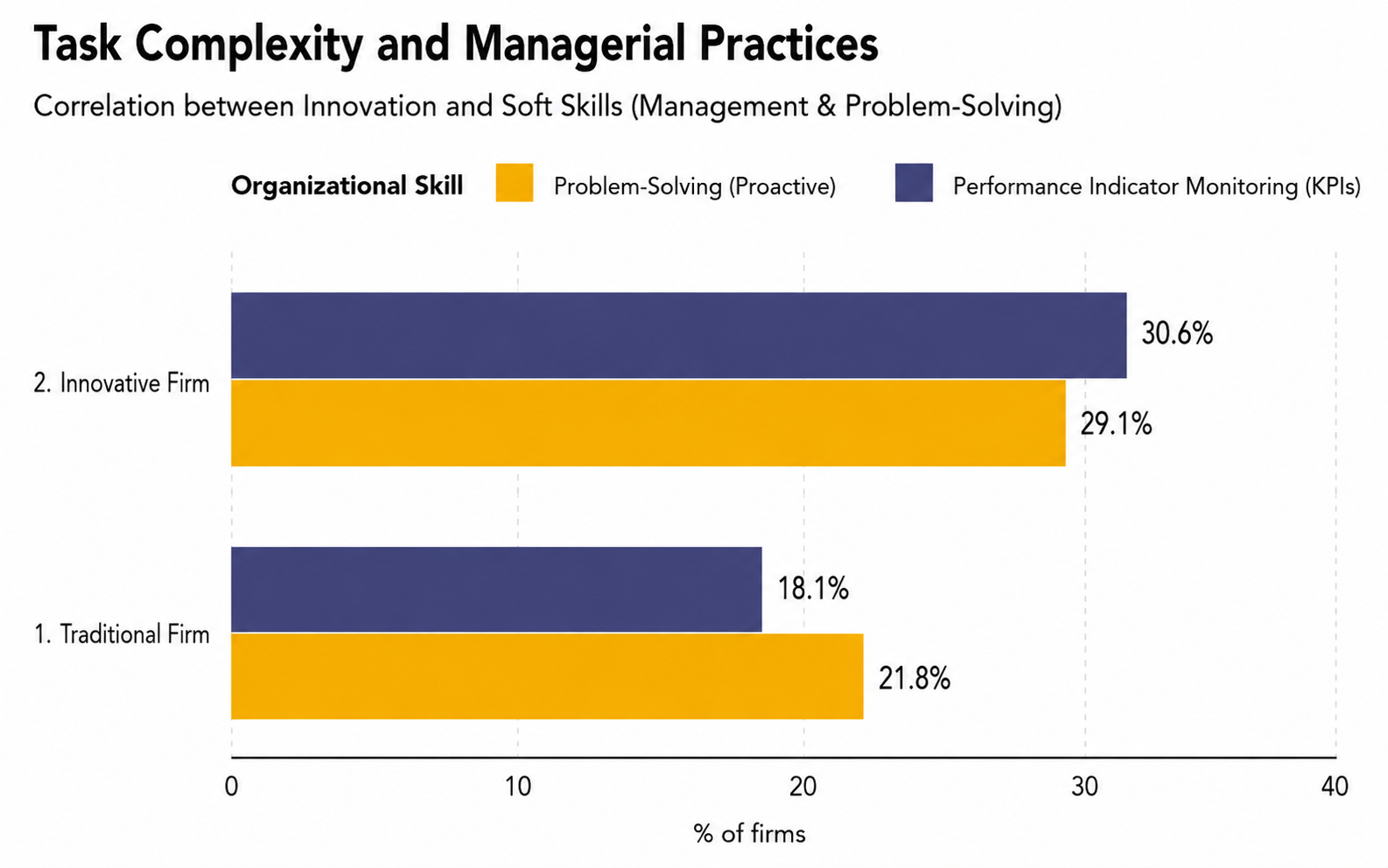
Source: Authors' calculations based on the World Bank Enterprise Survey (Morocco 2023).
Note: There is a close link between innovation and managerial sophistication. Innovative firms are more likely to implement proactive problem-solving processes and performance monitoring systems using key performance indicators, requiring employees capable of independent decision-making and critical thiking.
This organizational sophistication creates a demand for cross-functional skills, or soft skills: autonomy, critical thinking, data analysis skills, and proactivity. Consequently, the skills gap extends beyond technical expertise (hard skills) to encompass professional behaviors and interpersonal competencies required to thrive in innovative work environments (World Bank, 2023).
c. The “Innovator’s Paradox”: When Skills Matter More Than Regulation
This requirement for technical and behavioral qualifications poses a major challenge for innovative firms. Comparative analysis of business constraints reveals a genuine paradox: innovation is constrained less by the regulatory environment than by the availability of qualified human capital. Therefore, 44.1% of innovative firms identify the “lack of skilled workers” as a major obstacle, compared with only 15.7% citing “labor regulations”.
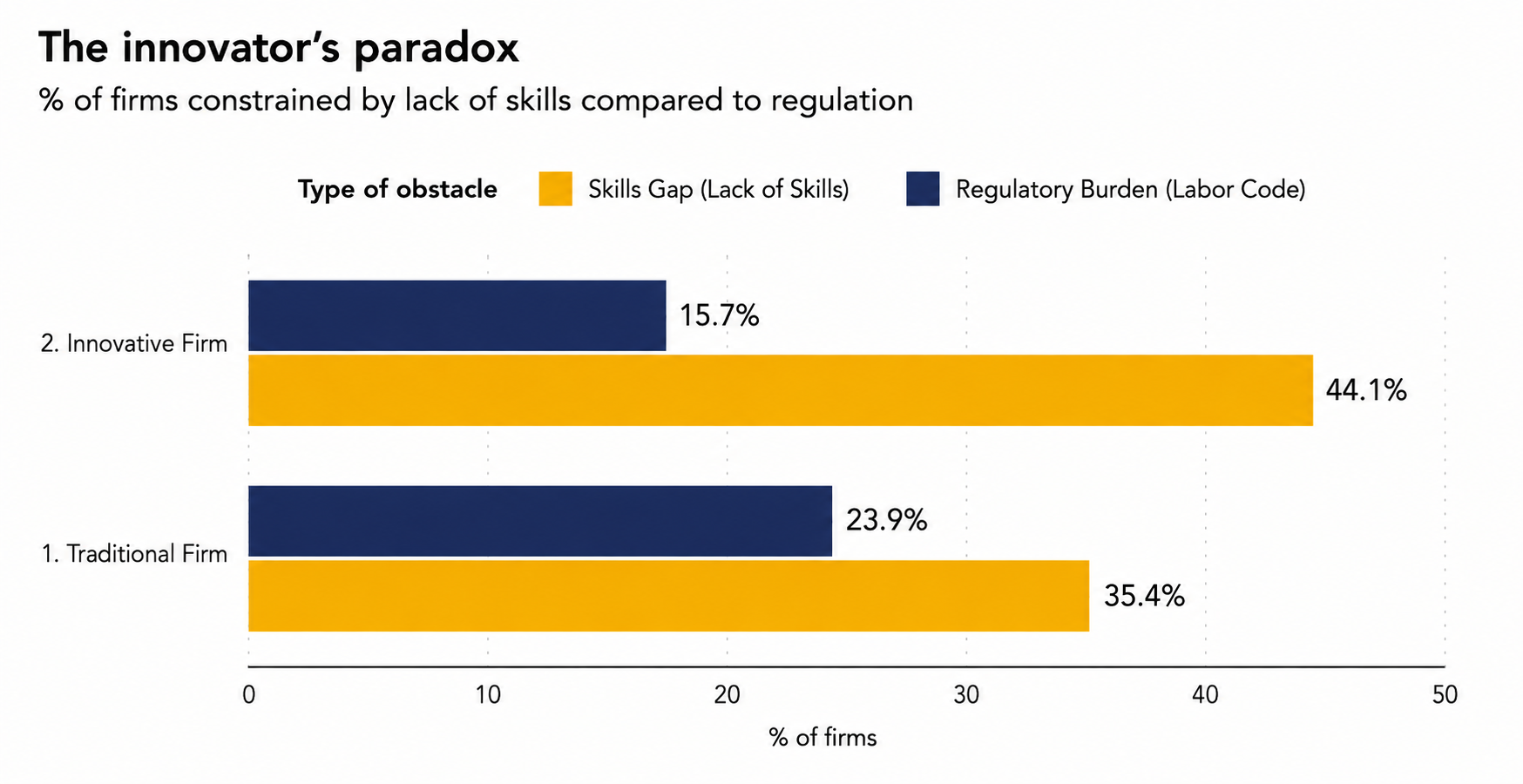
This finding carries important policy implications. It means that for nearly half of the firms driving growth through innovation, the main obstacle is the difficulty of finding the necessary talent. Without a “skills shock” focused on technical creativity and complex problem-solving, financial incentives designed to promote innovation are likely to remain ineffective due to insufficient human capital to translate investments into productive outcomes (World Bank, 2023).
IV. FIRMS' RESPONSE: A POLARIZED APPROACH TO CONTINUING TRAINING
In response to persistent structural labor market tension, the private sector has not remained passive. To address the mismatch in entry-level skills, firms, particularly those engaged in a modernization process, are making use of continuing education and vocational training as a tool. However, analysis of how these efforts are distributed reveals a marked asymmetry, which could hinder the dissemination of expertise throughout Morocco’s productive sector.
A training effort correlated with modernization
Faced with recruitment challenges and rapidly evolving technologies, formal training has become the primary adjustment mechanism used by the private sector. Data analysis reveals a direct correlation between a firm’s degree of modernization and its propensity to invest in human capital (World Bank, 2023).
Digital transition, in particular, appears to be a key driver of workforce training. Firms classified as “advanced digital” enterprises are proportionally twice as likely to provide formal training programs (12.1%) as firms operating under traditional analog business models (6.2%) (World Bank, 2023).
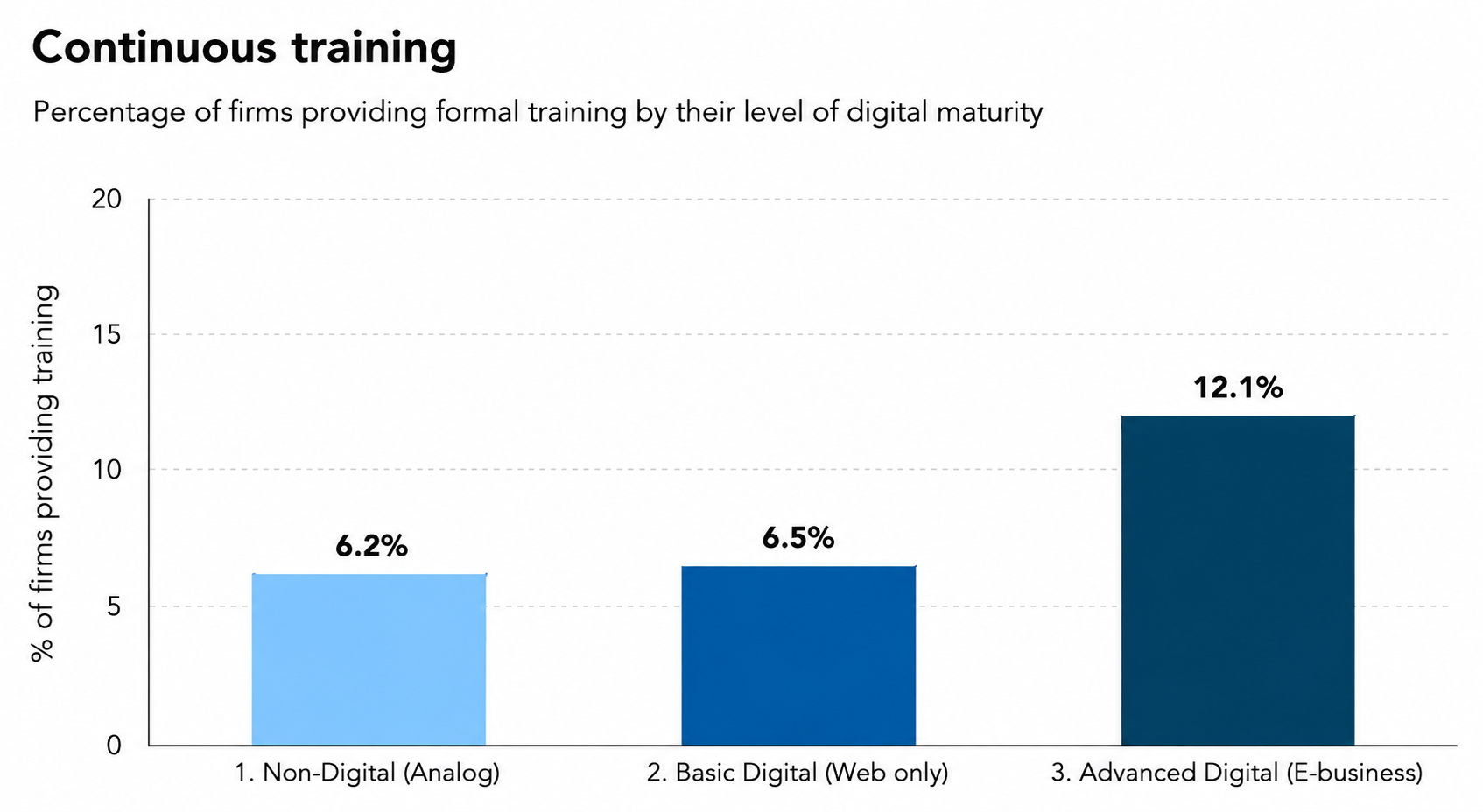
Source: Authors' calculations based on the World Bank Enterprise Survey (Morocco 2023) - Variable L10.
A similar trend is observed among innovative firms. Entreprises introducing new products or production processes report a training provision rate of 10% compared with 8.2% among firms that have not engaged in innovation activities (World Bank, 2023).
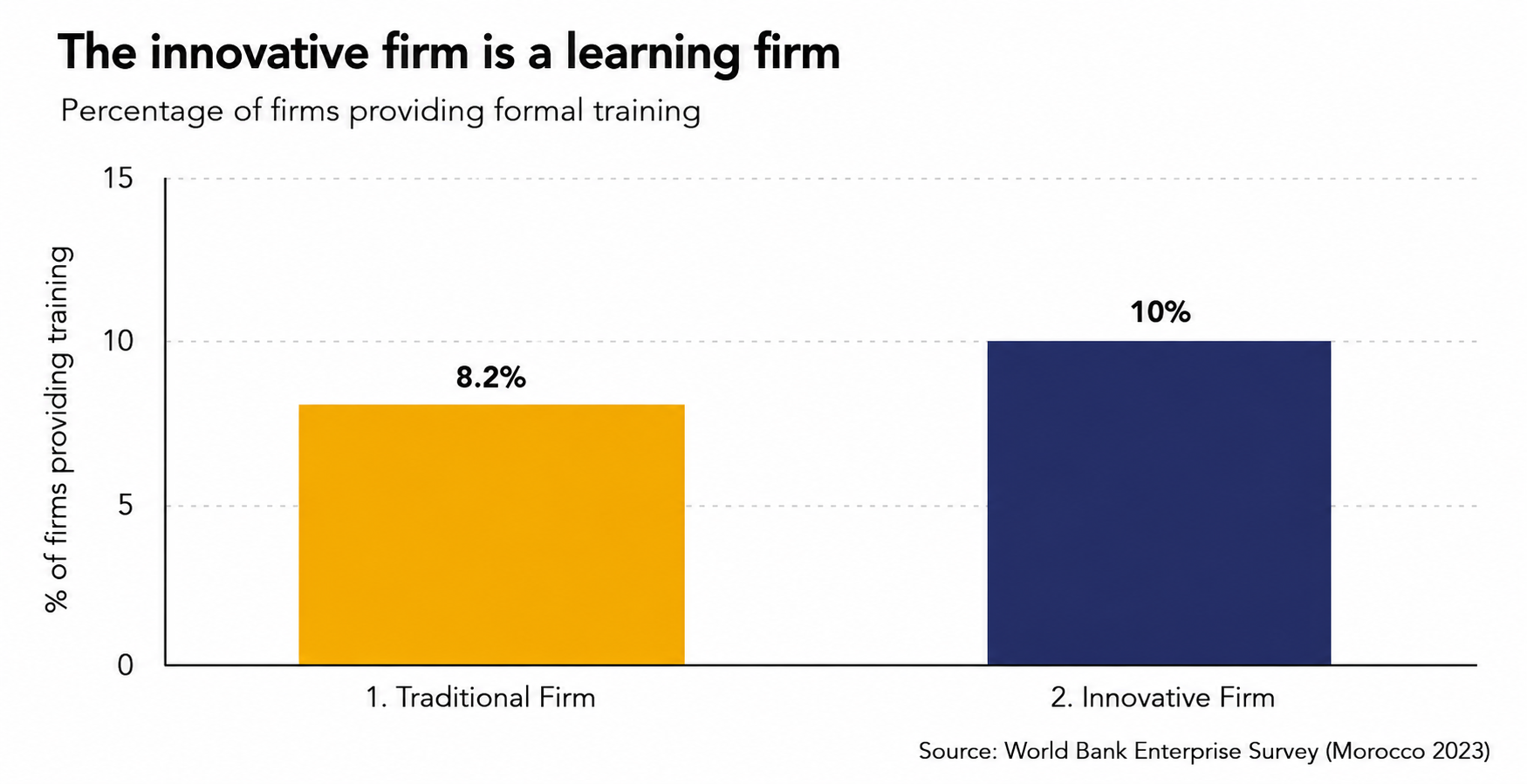
Source: Authors' calculations based on the World Bank Enterprise Survey (Morocco 2023).
These findings suggest that firms engaged in moving upmarket increasingly function as “learning organizations”. They attempt to address internally the skills shortages identified during recruitment in order to safeguard technological investments and maintain their competitiveness (World Bank, 2023). Continuing training is therefore viewed not as an optional expense, but as a necessary condition for implementing productive modernization.
2. Focusing training efforts on operational roles
Analysis of training intensity (defined as the proportion of employees receiving formal training within firms that offer training) shows that investment in human capital is closely aligned with technical requirements of each economic transition (World Bank, 2023). Unlike traditional organizations, firms engaged in profound modernization focus their resources on employees directly involved with new technologies or production processes.
a. Operational Skills as Drivers of Digital Transformation
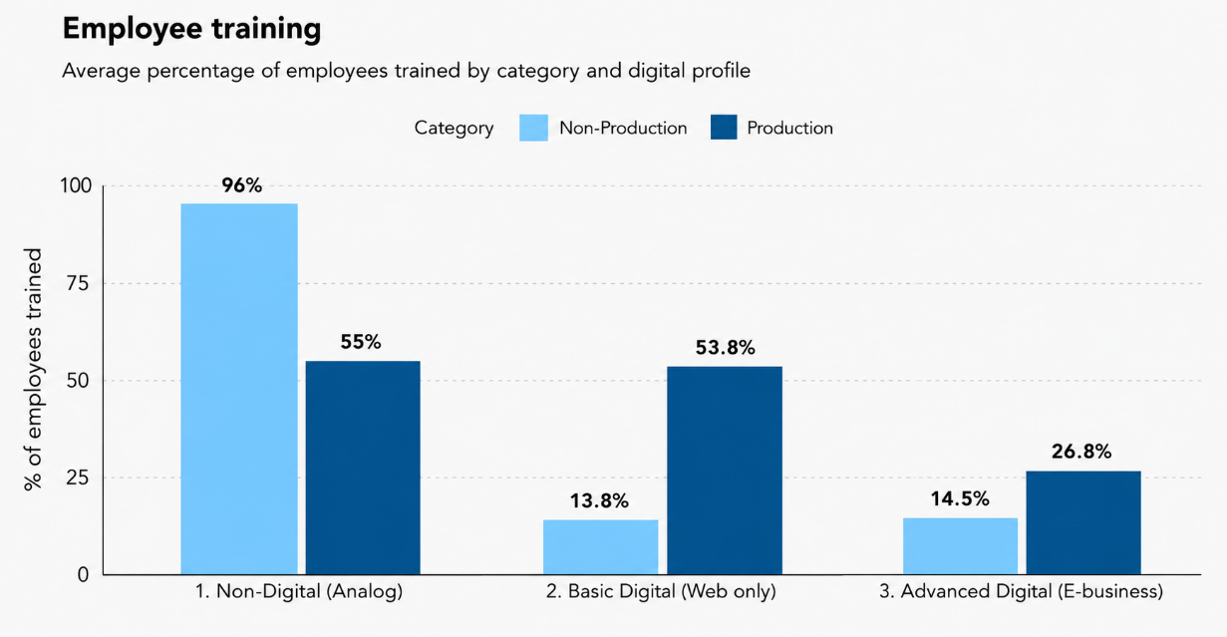
In the digital transformation segment, the distribution of training changes as a firm’s technological maturity increases. While analog firms train a large proportion of their managerial staff, firms with an “advanced digital” profile reverse this pattern. In these organizations, 26.8% of production employees receive formal training, compared with 14.5% of “non-production” staff (World Bank, 2023).
Source: Authors' calculations based on the World Bank Enterprise Survey (Morocco 2023).
b. The Technical Imperative of the Green Transition
The need for workforce upgrading is particularly pronounced among firms undergoing the green transition. Firms identified as “Green or in Transition” have the highest intensity rates for technical staff. Within this segment, 61.7% of production workers and technicians participate in formal training programs, nearly twice the proportion observed among managers and administrative staff (33.3%) (World Bank, 2023).
Source: Authors' calculations based on the World Bank Enterprise Survey (Morocco 2023).
c. Innovation as a Catalyst for Technical Learning
A similar pattern emerges among innovative firms. The introduction of new products and production processes requires rapid adaptation of operational capabilities. As a result, 40% of production workers and technicians receive formal training, compared with only 17% of administrative and managerial staff (World Bank, 2023).
Source: Authors' calculations based on the World Bank Enterprise Survey (Morocco 2023).
These findings indicate that, for pioneering firms, continuing training is a strategic tool used to address specific technical gaps among frontline workers (World Bank, 2023). Internal training efforts are therefore primarily directed toward those directly engaged with digital technologies, green production systems, and product innovations, reflecting a targeted upskilling strategy focused on core operational functions.
V. POLICY RECOMMENDATIONS: ALIGNING HUMAN CAPITAL WITH ECONOMIC MODERNIZATION
The analysis suggests that Morocco’s continued digital, green, and innovation transition in depend on the education and training system’s ability to meet the evolving skill requirements of pioneering firms. The following recommendations aim to reduce the capacity gap identified (World Bank, 2023).
Adapting training with the technical requirements of economic transitions
The analysis indicates that the modernization of production facilities is changing the nature of the profiles sought in the labor market. To respond to this shift, initial training programs must be tailored to the specific needs expressed by the most dynamic sectors of the economy (World Bank, 2023).
a. Prioritize intermediate technical skills
The study shows that innovation and the green transition depend not only on a highly qualified "conception” workforce, but also on a substantial pool of specialized technicians. Innovative firms employ a significantly larger share of specialized technicians (24.7%) than traditional firms (17.3%) (World Bank, 2023). Similarly, firms undergoing a green transition report growing demand for qualified technical personnel to ensure the maintenance and energy efficiency of their facilities (19.8%) (World Bank, 2023).
Therefore, policymakers should strengthen and revalorize the status of intermediate technical programs (Bac+2/3) and to strengthen short-term vocational training programs by incorporating specialized modules on new industrial processes and sustainability standards such as energy efficiency, connected industrial maintenance, and environmental management (World Bank, 2023).
b. Promoting "Applied Digital Literacy" on a Broad Scale
The analysis shows that digital maturity is closely linked to firms’ research and development capacity. Firms with an “advanced digital” profile invest more than three times as much in R&D (18.4%) as traditional analog firms (5.2%) (World Bank, 2023). This level of technological sophistication requires skills that go beyond basic computer programming skills. This drives the systematic integration of expertise in digital management tools, e-commerce, and digital financial services into management, business, and logistics programs.
c. Strengthen complex problem-solving skills
Management practice data reveal that innovative firms adopt more proactive organizational approaches. A greater number of them implement root-cause problem-solving approaches (29.1%) and use performance management systems based on KPIs (World Bank, 2023). These practices require employees with a high degree of autonomy, analytical thinking, and critical reasoning. The introduction of teaching methods focused on project-based learning and experiential education would help develop the transversal cognitive competencies increasingly demanded by firms engaged in modernization.
Promote more inclusive continuing training
An analysis of the intensity of internal learning indicates that while pioneering firms invest more in human capital, this effort remains unevenly distributed. To ensure a uniform upgrade of the productive sector, public policies must encourage the dissemination of skills across all socio-professional categories (World Bank, 2023).
a. Supporting the "upskilling" of operational workers
The data reveal significant disparities in access to training within firms that provide training.
In the innovation sector, for example, production staff receive less investment than managers, despite growing technical needs (World Bank, 2023). To encourage firms to invest in their operational workforce, one approach would be to introduce tax credits or training subsidies at a higher rate when the investment targets workers, technicians, or production employees. Such measures would help reduce the cost of technical upgrading for firms while preventing the risk of skills obsolescence.
b. Reducing capacity constraints in strategic sectors
The skills gap is particularly pronounced among firms engaged in the green transition, where 36.1% of respondents identify inadequate workforce skills as a major obstacle (World Bank, 2023). Although these firms are already providing extensive training to their technicians (61.7%), the cost of this transition can be a barrier for small and medium-sized enterprises (World Bank, 2023). Targeted subsidy programs could finance environmental certification for technical staff, thereby facilitating SMEs’ compliance with international sustainability standards. One possible approach would be to create specific “Green Skills” support funds to assist SMEs in obtaining environmental certification for their employees.
c. Improve Youth Employability Through Work-Based Learning
The shortage of skilled workers remains a barrier to hiring for 33.3% of firms engaged in modernization (World Bank, 2023). This finding suggests that the transition from initial training to employment requires specific support within the firm. One recommendation would be to encourage public-private partnerships for reskilling, as well as apprenticeship and professional training contracts in strategic sectors (digital, green, and R&D). By co-financing the training of new recruits under the age of 30 during their initial months of employment, the government would enable pioneering firms to secure the talent they need while reducing unemployment among recent graduates.
CONCLUSION: ALIGNING HUMAN CAPITAL WITH MOROCCO'S ECONOMIC AMBITION
Data analysis of the 2023 World Bank Enterprise Survey provides a clear picture of Morocco’s economic transformation: modernization is well underway and increasingly dynamic, yet it is constrained by a persistent “skills gap”. The “Modernization Paradox”, where the most advanced firms are also those most severely constrained by talent shortages, is not a temporary market fiction but a structural challenge that threatens Morocco's development trajectory toward its 2030 economic objectives. The main bottleneck to Morocco’s competitiveness is no longer access to capital or regulatory burdens, but rather the availability of skilled human capital.
The digital, green, and innovation transitions do more than simply introduce new technologies; they fundamentally redefine the nature of work and the value of skills.
The digital transition makes applied digital literacy and advanced cognitive skills non-negotiable, while reducing demand for low-skilled labor, creating significant inclusion challenges.
The Green Transition relies less on design engineers than on a large workforce of intermediate-level technicians (with 2-3 years of post-secondary education) capable of installing, maintaining, and optimizing sustainable industrial systems,
Innovation requires a combination of highly skilled professionals (engineers, researchers) and specialized technicians, all supported by transversal competencies such as autonomy, complex problem-solving, and critical thinking.
Although the private sector has responded proactively through continuing training, these efforts remain both insufficient and unevenly distributed.
Training investments are concentrated on technical roles within large, pioneering firms, leaving a significant share of employees and most SMEs behind. Market forces alone are therefore unlikely to eliminate this structural skills deficit. Without ambitious public intervention and a nationwide “skills push”, Morocco risks
Both a slower technological upgrading and widening labor market inequalities between a skilled elite and a growing share of workers whose skills become increasingly obsolete.
Transforming the initial and continuing education system has therefore become a strategic imperative rather than a policy option. The recommendations should align on three complementary priorities:
Refocus initial training on intermediate technical occupations (Bac+2/3) by systematically integrating modules on connected industrial maintenance, energy efficiency, data analysis, and e-commerce,
Implement a more inclusive continuing education policy through enhanced tax incentives (tax credits) for the training of workers and technicians, thereby promoting the dissemination of skills across the productive sector,
Strengthen workplace-based learning pathways, including apprenticeships and professional training contracts by co-financing the training of young recruits in strategic sectors (digital technologies, green industries and R&D) to facilitate their successful labor market integration,
Align innovation, employment, and skills policies so that every sectoral strategy (the Morocco Digital 2030 Plan, the national decarbonization strategy) includes a fully costed and adequately funded “human capital development” component.
To put this vision into practice and transform this “skills gap” into a driver of growth, public policy must incorporate three key dimensions:
Anticipating change through strategic skills foresight: establish a National Strategic Skills Observatory responsible for continuously monitoring emerging skill needs associated with the digital and green transitions, enabling education providers to adjust curricula before talent shortages become critical.
Targeted support for SMEs: The analysis reveals a divide between pioneering large companies and the rest of the business community. SMEs with limited internal capacity to train their employees should receive dedicated support. This could take the form of shared training schemes or “skills vouchers” designed to help SMEs finance workforce upgrading and technological adaptation.
A differentiated reform timeline: A successful skills strategy requires both immediate and long-term interventions. In the short run, emergency measures are needed, particularly through substantial fiscal incentives to encourage continuing training for the exiting workforce. Over the medium and long term, structural reforms of intermediate technical education (particularly two- and three-year post-secondary vocational programs) are essential to align the education and training system with the future needs of Morocco’s economy.
Ultimately, the success of Morocco’s national strategies, including “Morocco Digital 2030” and the national decarbonization strategy, will depend on its ability to place human capital at the center of economic transformation, making it not merely a complementary input but the primary driver of Morocco’s economic sovereignty.
Bibliographic References
Main source:
- World Bank. (2023). Microeconomic Data from the Morocco Enterprise Survey 2023. Washington, D.C.: World Bank Group.
Contextual and conceptual references:
- OECD (2021). OECD Skills Strategy for Morocco: Assessment and Recommendations. OECD Skills Studies,
OECD Publishing, Paris. - World Economic Forum (2023). The Future of Jobs Report 2023. Cologny, Geneva: World Economic Forum.