Publications /
Policy Paper

Back
L’Examen périodique universel : miroir de l’état des droits humains au Maroc
May 24, 2023

La création, par l’ONU, en 2006, du Conseil des droits de l’Homme (CDH) et la mise en place, une année après, de l'Examen périodique universel (EPU), ont constitué une avancée significative dans le processus de promotion de la protection des droits de l'Homme dans le monde. Désormais, et sans aucune distinction, tous les États sont régulièrement assujettis à cet examen qui couvre l’ensemble des droits individuels et collectifs ainsi que les libertés fondamentales consacrés par les Instruments internationaux en la matière. La valeur ajoutée de ce nouveau mécanisme de suivi des politiques des États et de reddition des comptes à travers le dialogue et la coopération vient consolider un ensemble d’outils de protection des droits de l’Homme dont les premiers jalons ont été posés par la Déclaration universelle du 10 décembre 1948. Malgré son indéniable apport, l’EPU accuse quelques carences et dysfonctionnements.

Pour son quatrième examen, intervenu en novembre 2022, le Maroc a été destinataire de 306 recommandations dont il a accepté 232. Le nombre élevé de ces recommandations, leur formulation, souvent vague et répétitive ainsi que le sort qui leur est réservé par les États, représentent un échantillon des carences qui limitent la crédibilité et l'efficacité de ce nouveau mécanisme.

RELATED CONTENT

  • September 28, 2026
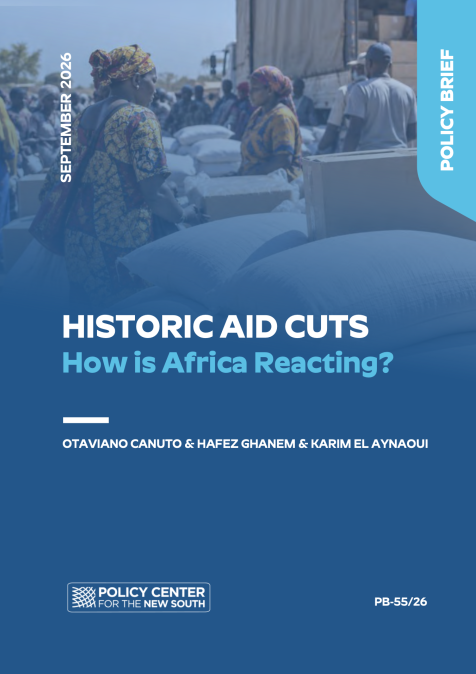
    This paper was initially published in French on the website of the Fondation Jean-Jaurès. There was a historic decline in Official Development Assistance (ODA) in 2025. Foreign aid to developing countries from members of the OECD-DAC fell by some 23%, the largest decline on record and the second consecutive annual decline. Aid to Africa fell by more than 25%. The International Monetary Fund (IMF) described this decline in ODA to Africa as “a shock like no other.” It differ ...
  • Authors
    Marianna Albuquerque
    September 23, 2026
    The author of this opinion, Marianna Albuquerque, is a 2022 alumna of the Atlantic Dialogues Emerging Leaders Program.As world leaders gather in New York for the 81st United Nations General Assembly, climate change returns to the center of multilateral diplomacy under markedly different circumstances. The debate is no longer confined to whether the world must decarbonize, but increasingly centers on how the transition will happen, who will bear its costs, who will capture ...
  • Authors
    Joana Ama Osei-Tutu
    September 12, 2026
    The author of this opinion, Joana Ama Osei-Tutu, is a 2017 alumna of the Atlantic Dialogues Emerging Leaders Program.South-South cooperation (SSC) is often presented as an alternative to the hierarchical relationships that have historically characterized international development. In principle, SSC means Global South countries learn from one another, share expertise and resources, and develop solutions grounded in their own experiences, rather than importing models designe ...
  • August 14, 2026
    In this Episode, Arup Banerji discusses why local expertise—not just international advice—should be intentionally embedded in African development policy. He cites cash transfer programs a ...
  • July 7, 2026
    For a long time, security in the Sahel relied on Western military deployments, which failed to curb the jihadist threat, thereby demonstrating the limitations of a cooperation model based on logistical and doctrinal dependence on foreign partners. The three Sahelian states have decided to break away from this system and build“integrated security sovereignty.” This approach has taken hold against a backdrop of openness to new partners. Russia has thus established itself as the main m ...
  • June 26, 2026
    Three years after the adoption of the first National Action Plan (NAP) on the Women, Peace and Security (WPS) Agenda, Morocco has made real institutional progress, but implementation is still inadequate. The extension of the NAP opens a window of opportunity to prepare a second, more ambitious and operational cycle.This Policy Brief identifies four persistent obstacles: a virtually stagnant female employment rate of 19.1%, less than 3% female representation in peacekeeping contingen ...
  • June 15, 2026
    As part of the OECD Multilateral Development Finance Week 2026 (MDF Week), the Policy Center for the New South (PCNS) is organizing a webinar entitled “Rethinking Development Finance: African Agency and the Future of Multilateral Development Co-operation after ODA Retrenchment.” The dis...