Publications /
Research Paper

Back
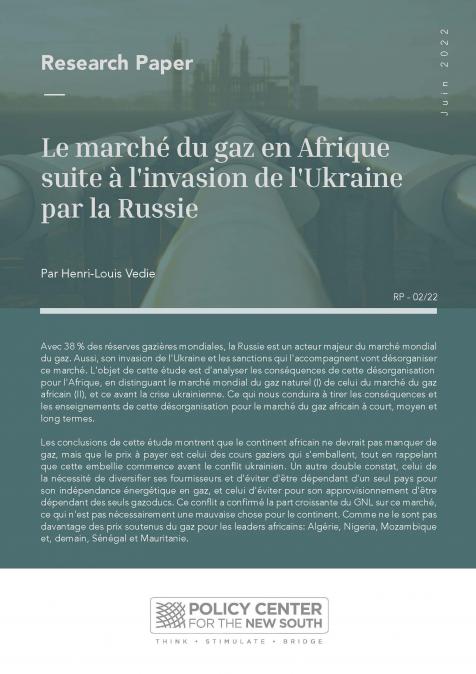
Le marché du gaz en Afrique suite à l'invasion de l'Ukraine par la Russie
June 10, 2022

Avec 38 % des réserves gazières mondiales, la Russie est un acteur majeur du marché mondial du gaz. Aussi, son invasion de l’Ukraine et les sanctions qui l'accompagnent vont désorganiser ce marché. L'objet de cette étude est d'analyser les conséquences de cette désorganisation pour l'Afrique, en distinguant le marché mondial du gaz naturel (I) de celui du marché du gaz africain (II), et ce avant la crise ukrainienne. Ce qui nous conduira à tirer les conséquences et les enseignements de cette désorganisation pour le marché du gaz africain à court, moyen et long termes.

Les conclusions de cette étude montrent que le continent africain ne devrait pas manquer de gaz, mais que le prix à payer est celui des cours gaziers qui s'emballent, tout en rappelant que cette embellie commence avant le conflit ukrainien. Un autre double constat, celui de la nécessité de diversifier ses fournisseurs et d'éviter d'être dépendant d'un seul pays pour son indépendance énergétique en gaz, et celui d'éviter pour son approvisionnement d'être dépendant des seuls gazoducs. Ce conflit a confirmé la part croissante du GNL sur ce marché, ce qui n'est pas nécessairement une mauvaise chose pour le continent. Comme ne le sont pas davantage des prix soutenus du gaz pour les leaders africains: Algérie, Nigeria, Mozambique et, demain, Sénégal et Mauritanie.
RELATED CONTENT

  • Authors
    March 15, 2018
    President Trump’s proclamation that, because of national security concerns, he will apply a 25% tariff on all steel and a 10% tariff on all aluminium imports into the United States – except provisionally and dependent on NAFTA negotiations those from Canada and Mexico – affects, respectively 5.1 billion Euros and 1.1 billion Euros of EU exports. These are not trivial sums. However, the invocation of the national security exception in this case has implications that go far beyond nar ...
  • Authors
    Silvia Colombo
    Mohamed El Harrak
    Nicolò Sartori
    May 27, 2016
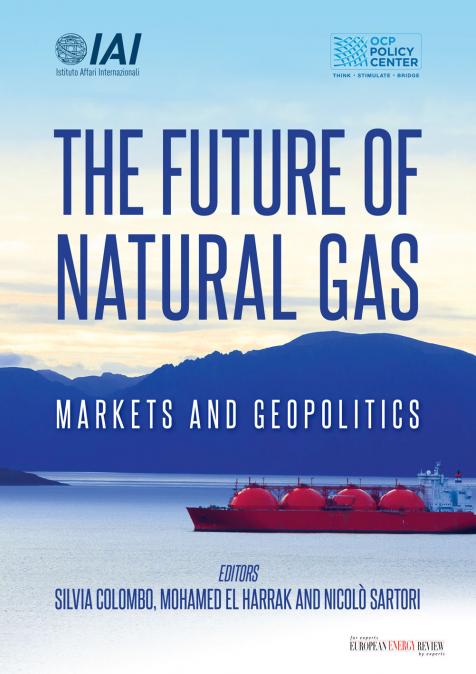
    Energy is at the core of the remarkable current transitions in the global economy and geopolitics, and natural gas plays a crucial role in these processes. In this context of rapidly evolving trends at the market level and developing dynamics between regional and global actors, The Future of Natural Gas aims at analysing the role of natural gas in the future energy mix by considering several key factors: the ambitious climate policies agreed by the international community, cost issu ...
  • Authors
    Russel Dinh
    January 27, 2016
    The IMF recently revised down its growth forecasts, making large changes in the forecasts for some emerging markets, in particular Brazil and oil-producing countries (such as Nigeria and Saudi Arabia). This report presents a snapshot of the global unemployment outlook and discusses what the recent revisions could mean for the unemployment outlook for these countries based on past relationships between growth and unemployment. We conclude with a look at the growth-unemployment link f ...
  • November 5, 2015
    The global unemployment rate is expected to increase slightly in 2016 to 5.7 percent but remain well below the peak of 6.2 percent recorded in 2009. The increase results from deteriorating growth prospects among many emerging markets and in some oil-producing countries. According to forecasts released in the IMF’s October 2015 World Economic Outlook, big increases in unemployment are expected to occur next year in Venezuela, Brazil, Argentina, and Russia. ...
  • August 18, 2015
    OCP Policy Center and the German Marshall Fund of the United States, in partnership with the Fernando Henrique Cardoso Institute, organized an Atlantic Strategy Group conference on June 23rd and 24th, 2015 in São Paulo, Brazil with a focus on trade, energy, food, and Geopolitical System...
  • From

    26
    5:30 pm May 2026
    تعالج هذه الحلقة تصاعد التوترات حول مضيق هرمز وانعكاساتها على استقرار أسواق الطاقة العالمية، في ظل عالم يشهد تحولات جيوسياسية متسارعة. وتناقش كيف كشفت الأزمة هشاشة نظام الطاقة الدولي واعتماده على ممرات استراتيجية حساسة، كما تتوقف عند تداعيات أي اضطراب محتمل على أسعار النفط والتضخم والنمو الاقتصادي العالمي. وتسعى الحلقة إلى فهم ما إذا كان العالم يعيش أزمة ظرفية أم بداية تفكك تدريجي للنظام الطاقي الذي حكم العقود الماضية  ...