Publications /
Policy Paper

Back
La quête de puissance tous azimuts de la Russie : "Étranger proche", Moyen-Orient et Afrique
Authors
September 30, 2022

Lorsque l’URSS (Union des Républiques socialistes soviétiques) est démantelée ; il s’installe en Occident un sentiment de victoire définitive qui porte au trône du monde la puissance occidentale, démocratique et libérale. La mondialisation, qui avait timidement pointé du nez durant les années 80, commence à s’ériger en occidentalisation du monde.

L’Occident n’avait pourtant pas su gérer sa victoire. Au lieu d’intégrer le continuateur de l’URSS, il le marginalise et l’humilie ; une erreur doublée par le statut de puissance nucléaire et politique qu’il accorde à la Russie en lui permettant d’occuper le siège de l’URSS à l’ONU et en transférant une partie de l’arsenal nucléaire hérité par Kiev à Moscou.

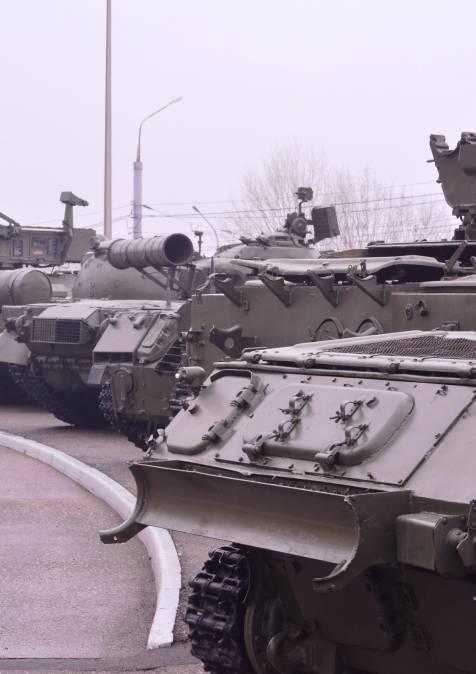
Boris Eltsine avait incarné cette Russie humiliée, marginalisée et reléguée au rang de petite puissance régionale. Son successeur, Vladimir Poutine, nostalgique de la grandeur des empires tsarien et soviétique, entreprend avec grande conviction de chercher dans la gloire du passé, les ressorts d’une résurrection de la puissance de Moscou. Méthodiquement, une stratégie séquentielle va lui permettre d’aller successivement de la construction d’une nouvelle doctrine russe à la réclamation d’un rôle dans la régulation du monde, en passant par le renforcement de l’État, le renforcement de l’armée et des interventions militaires tous azimuts.
RELATED CONTENT

  • July 22, 2022
    L'ancienne secrétaire d'État chargée des Affaires étrangères et des Droits de l'homme, Rama Yade, met le point sur la position de l’Europe face aux difficultés de l’Afrique en temps d’inc ...
  • Authors
    July 22, 2022
    “February 24, 2022,” noted Robert Pszczel in « Nato Review”(July 7, 2022),”is likely to engrave itself on the history template of the contemporary world.”Pszczel, a Senior fellow  at the Polanski Foundation, Warsaw, and former Polish diplomat serving as director  of the NATO information office  in Moscow for half a decade, judged Russia’s unprovoked, unjustified invasion of Ukraine is  not only a “manifestation of a huge  security danger that has shatte ...
  • July 21, 2022
    2021 was a year of global geopolitical disruption and geo-economic upheaval. As events gather momentum, the world enters a period of geopolitical and geo-economic transition; the end of one historical cycle foreshadowing the uncertain prospects of a new one. We are henceforth, in presen...
  • July 21, 2022
    كانت سنة 2021 سنة اضطراب جيو-سياسي وانقلاب جيو-اقتصادي عالميين. ومع تزايد زخم الأحداث، دخل العالم فترة تحول جيو-سياسي وجيو-اقتصادي تعلن نهاية دورة تاريخية وتُنبِّؤ بآفاق غير مؤكدة لدورة جديدة. وعليه، فإننا من الآن فصاعداً أمام تغير عالمي حقيقي ينطوي على نقاط ضغط متعددة وقوىً دافعة جيو-س...
  • July 20, 2022
    2021 was a year of global geopolitical disruption and geo-economic upheaval. As events gather momentum, the world enters a period of geopolitical and geo-economic transition; the end of one historical cycle foreshadowing the uncertain prospects of a new one. We are henceforth, in presen...
  • July 20, 2022
    كانت سنة 2021 سنة اضطراب جيو-سياسي وانقلاب جيو-اقتصادي عالميين. ومع تزايد زخم الأحداث، دخل العالم فترة تحول جيو-سياسي وجيو-اقتصادي تعلن نهاية دورة تاريخية وتُنبِّؤ بآفاق غير مؤكدة لدورة جديدة. وعليه، فإننا من الآن فصاعداً أمام تغير عالمي حقيقي ينطوي على نقاط ضغط متعددة وقوىً دافعة جيو-س...
  • Authors
    July 12, 2022
    October 22, 1962. One of those days in history to be forever part of destiny- warships of the Soviet Union confronting the US Navy off Cuba, an ally of Moscow, which convinced Fidel Castro to participate in a secret conspiracy: the stationing of strategic nuclear missiles on the island, located just 90 miles off the continental United States. Once discovered, US President John F. Kennedy ordered a naval quarantine on Moscow's ships. History would be repeated another time on a differ ...
  • Authors
    June 27, 2022
    Three questions to Jamal Machrouh   This article was initially published on https://www.institutmontaigne.org/   Morocco was among the countries not taking part in the March 2 UN General Assembly vote following Russia’s invasion of Ukraine. This position raised questions in Europe as Morocco is Europe's largest partner in the Maghreb. Jamal Machrouh, Senior Fellow at the Policy Center for the New South, sheds light on Morocco's perceived neutrality in the Ukrainia ...