Publications /
Policy Brief

Back
L’insurrection de Cabo Delgado au Mozambique: un conflit interne à dimension transfrontalière
July 26, 2021

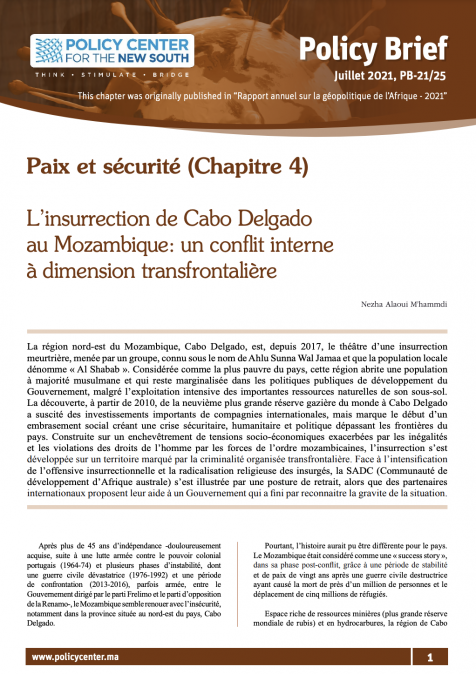
La région nord-est du Mozambique, Cabo Delgado, est, depuis 2017, le théâtre d’une insurrection meurtrière, menée par un groupe, connu sous le nom de Ahlu Sunna Wal Jamaa et que la population locale dénomme « Al Shabab ». Considérée comme la plus pauvre du pays, cette région abrite une population à majorité musulmane et qui reste marginalisée dans les politiques publiques de développement du Gouvernement, malgré l’exploitation intensive des importantes ressources naturelles de son sous-sol. La découverte, à partir de 2010, de la neuvième plus grande réserve gazière du monde à Cabo Delgado a suscité des investissements importants de compagnies internationales, mais marque le début d’un embrasement social créant une crise sécuritaire, humanitaire et politique dépassant les frontières du pays. Construite sur un enchevêtrement de tensions socio-économiques exacerbées par les inégalités et les violations des droits de l’homme par les forces de l’ordre mozambicaines, l’insurrection s’est développée sur un territoire marqué par la criminalité organisée transfrontalière. Face à l’intensification de l’offensive insurrectionnelle et la radicalisation religieuse des insurgés, la SADC (Communauté de développement d’Afrique australe) s’est illustrée par une posture de retrait, alors que des partenaires internationaux proposent leur aide à un Gouvernement qui a fini par reconnaitre la gravite de la situation.
RELATED CONTENT

  • Authors
    Lina Jaoid
    October 8, 2026
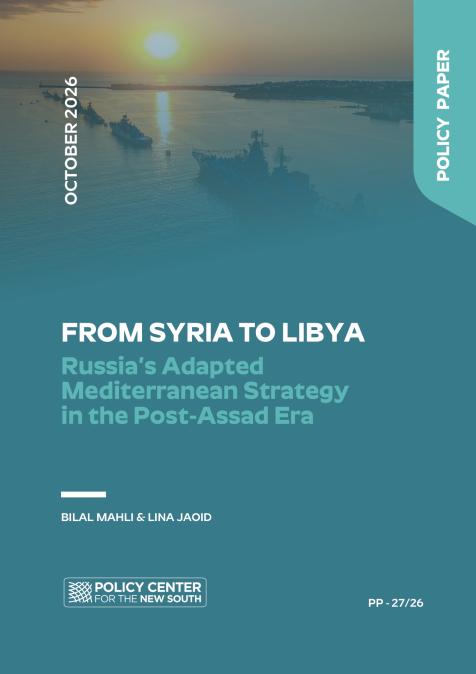
    In the two years since the fall of Bashar al-Assad in Syria, Russia has restructured its Mediterranean presence. Although Russia’s limited and increasingly conditional access to the Khmeimim and Tartus facilities in Syria has been preserved, its presence in the country has morphed from Assad’s ‘patron-client’ configuration to a more negotiated engagement. Simultaneously, Russia has upgraded its force-projection and logistical infrastructure in eastern Libya, giving it an access path ...
  • Authors
    Marie-Noelle Nwokolo
    October 6, 2026
    The author of this opinion, Marie-Noelle Nwokolo, is a 2024 alumna of the Atlantic Dialogues Emerging Leaders Program.In September 1978, delegations from 138 countries gathered in Buenos Aires, Argentina, around a powerful idea: developing countries had knowledge, experience and capabilities worth sharing with one another. The Buenos Aires Plan of Action gave institutional form to what we now call South-South Cooperation, part of a wider post-colonial effort by developing ...
  • September 28, 2026
    This paper was initially published in French on the website of the Fondation Jean-Jaurès. There was a historic decline in Official Development Assistance (ODA) in 2025. Foreign aid to developing countries from members of the OECD-DAC fell by some 23%, the largest decline on record and the second consecutive annual decline. Aid to Africa fell by more than 25%. The International Monetary Fund (IMF) described this decline in ODA to Africa as “a shock like no other.” It differ ...
  • Authors
    Marianna Albuquerque
    September 23, 2026
    The author of this opinion, Marianna Albuquerque, is a 2022 alumna of the Atlantic Dialogues Emerging Leaders Program.As world leaders gather in New York for the 81st United Nations General Assembly, climate change returns to the center of multilateral diplomacy under markedly different circumstances. The debate is no longer confined to whether the world must decarbonize, but increasingly centers on how the transition will happen, who will bear its costs, who will capture ...
  • Authors
    Meryam Amarir
    August 13, 2026
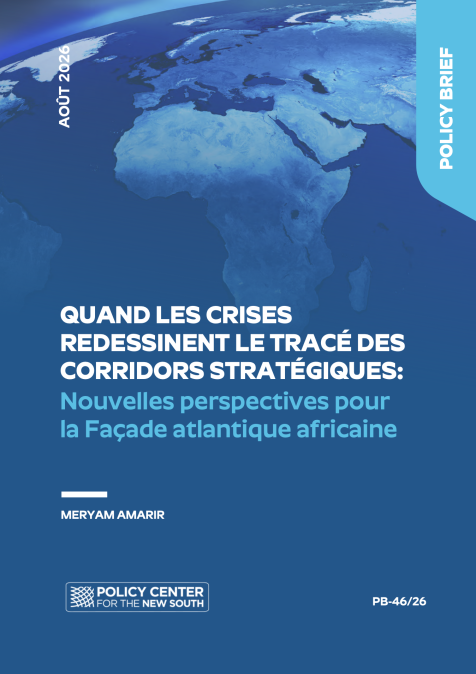
    Recent crises in the Middle East, particularly attacks targeting commercial vessels in the Red Sea and tensions surrounding the Strait of Hormuz, have highlighted the vulnerability of the main strategic corridors of global trade. Rather than fundamentally disrupting the organization of trade flows, these crises are accelerating an ongoing transformation driven by the search for more resilient connectivity chains, the diversification of trade routes, and the development of logistics ...
  • Authors
    Meryam Amarir
    August 13, 2026
    Les crises récentes au Moyen-Orient, notamment les attaques ciblant les navires commerciaux en mer Rouge et les tensions autour du détroit d'Ormuz, ont mis en évidence la vulnérabilité des principaux corridors stratégiques du commerce mondial. Plus qu'un bouleversement de l'organisation des échanges, elles accélèrent une transformation déjà engagée, fondée sur la recherche de chaînes de connectivité plus résilientes, la diversification des itinéraires commerciaux et le développement ...