Publications /
Policy Brief

Back
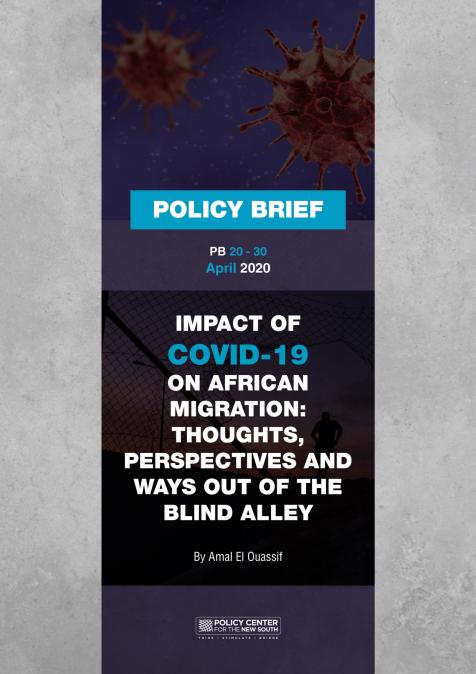
Impact of Covid-19 on african migration: Thoughts, perspectives and ways out of the blind alley
Authors
April 14, 2020

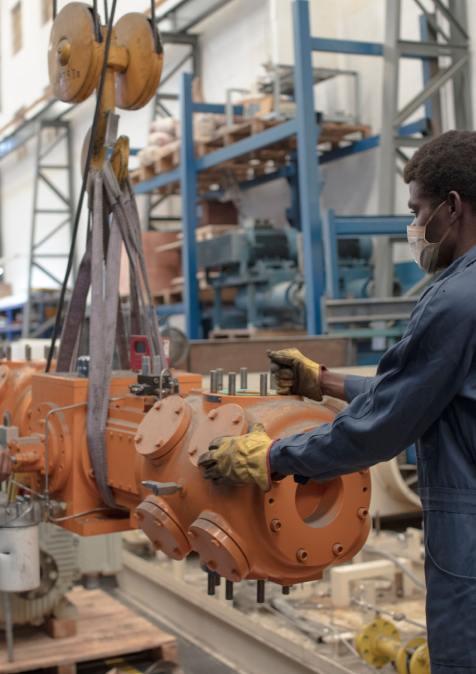
Africa has not been spared from the economic and political consequences of the COVID-19 pandemic. Acting as a catalyst for decreased job opportunities at home and increased foreign-born unemployment rates in host economies, COVID-19 will most likely affect the overall economic conditions of migrants and reinforce the root causes of irregular mobility. On the political side, narratives that feed the fear of ‘outsiders’ can be easy to disseminate in times of crisis when the economy slows and inward-looking social and economic policies appear to be the safest. Escaping the blind alley will require coordinated policy approaches. First, immediate protection for migrants and asylum seekers at the closed borders of countries should be provided. Then long-term policies to tackle the social and economic vulnerabilities in these countries should be developed.

RELATED CONTENT

  • Authors
    Khalid R. Temsamani
    February 26, 2026
    La multiplication des crises systémiques à l’échelle mondiale – qu’elles soient environnementales, sanitaires, énergétiques ou liées aux enjeux de sécurité globale – impose une évolution profonde des modes d’action diplomatique. Dans ce contexte, l’intégration structurée des connaissances scientifiques dans les relations internationales apparaît comme une condition déterminante pour la formulation de réponses collectives efficaces et légitimes. La diplomatie scientifique s’inscrit a ...
  • Authors
    Samir Bhattacharya
    Abhishek Khajuria
    February 26, 2026
    Sports diplomacy can be defined as a foreign-policy approach that uses sport as a tool to advance national interests, shape international perceptions, and foster cross-border engagement. As a subset of cultural and public diplomacy, it operates where politics, identity, and popular culture intersect. In an increasingly polarised and fragmented global order, sports diplomacy has emerged as one of the ‘softest’ of soft-power instruments, able to reach audiences that traditional diplom ...
  • February 19, 2026
    This Africafe's episode examines Brazil-Africa relations: historical ties shaped by the slave trade and diaspora, Lula’s trade expansion, and competition with China/EU. It explores South-South diplomacy’s potential to reshape global institutions, the role of “South Atlanticism,” and fut...
  • Authors
    February 17, 2026
    La Marche Verte fait partie de ces moments féconds qui n’ont pas cessé d’influer sur le cours des événements politiques du Maroc, par la place qu’elle a prise, dès le départ, dans la longue durée, le contexte dans lequel elle s’est déployée, la logique des interactions dans laquelle elle s’est inscrite par ses causes et ses effets, et comme une des figures éclatantes du récit national. ...
  • February 13, 2026
    Le général Olivier Tramond analyse la réduction de la présence militaire française en Afrique comme un changement stratégique profond plutôt qu’un renoncement. Au-delà des coups d’État et ...
  • Authors
    Amine Ghoulidi
    February 5, 2026
    This Paper was originally published on orient-online.com  The Western Mediterranean’s exposure to the Sahel is usually framed in terms of security spillovers and crisis management. This paper argues that this framing misreads how Sahelian access conditions now shape Mediterranean integration. Morocco’s Atlantic Initiative is a state-led corridor strategy combining Atlantic port infrastructure, inland transit routes, and energy systems to connect landlocked Sahelian economi ...
  • January 29, 2026
    Le Mali, le Burkina Faso et le Niger, réunis au sein de l’Alliance des États du Sahel (AES), affirment l’ambition de bâtir une souveraineté nationale qui leur permettrait de s’émanciper de la domination et des influences extérieures et de se doter d’une liberté d’action dans les choix de développement politique et économique. Cependant, cette ambition se heurte à de nombreuses contraintes économiques et sécuritaires.La souveraineté ne peut se construire sans une base économique soli ...
  • January 23, 2026
    The post-1945 international order, an architecture born of war-weariness and colonial twilight, is now a majestic but empty shell. Its foundational promise—a universal system of rules administered impartially—has been hollowed out by decades of selective enforcement, instrumentalized law, and a chasm between the rhetorical ideals of its custodians and their geopolitical practice. This is not a temporary dysfunction, but a systemic failure of legitimacy. From the invasion of Iraq und ...
  • January 23, 2026
    This episode of AfriCAFÉ examines how Africa’s development aid landscape is shifting amid major cuts by traditional donors and changing global priorities. Through a discussion with Stephen Klingebiel and Andrew Sumner, it questions whether aid has truly driven development or fostered de...