Podcasts

Back

Africa in Global Negotiations: From the UN to Emerging Multipolar Arenas

27
March 2026
By Maged Abdelaziz and Bilal Mahli

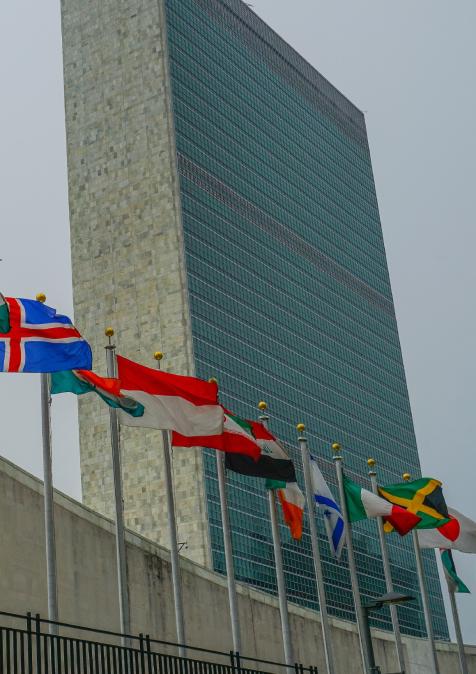
In this episode of the Policy Center for the New South podcast, Ambassador Maged Abdelaziz examines the opportunities and constraints shaping Africa’s influence in global negotiations. He reflects on the stalled reform of the UN Security Council, the centrality of the veto issue, and the importance of African unity. Against a backdrop of a weakened multilateral system, he highlights the growing relevance of alternative forums such as the G20 and BRICS+, as well as regional organizations like the African Union, in advancing Africa’s priorities.

RELATED CONTENT

  • July 7, 2026
    For a long time, security in the Sahel relied on Western military deployments, which failed to curb the jihadist threat, thereby demonstrating the limitations of a cooperation model based on logistical and doctrinal dependence on foreign partners. The three Sahelian states have decided to break away from this system and build“integrated security sovereignty.” This approach has taken hold against a backdrop of openness to new partners. Russia has thus established itself as the main m ...
  • June 26, 2026
    Three years after the adoption of the first National Action Plan (NAP) on the Women, Peace and Security (WPS) Agenda, Morocco has made real institutional progress, but implementation is still inadequate. The extension of the NAP opens a window of opportunity to prepare a second, more ambitious and operational cycle.This Policy Brief identifies four persistent obstacles: a virtually stagnant female employment rate of 19.1%, less than 3% female representation in peacekeeping contingen ...
  • June 15, 2026
    As part of the OECD Multilateral Development Finance Week 2026 (MDF Week), the Policy Center for the New South (PCNS) is organizing a webinar entitled “Rethinking Development Finance: African Agency and the Future of Multilateral Development Co-operation after ODA Retrenchment.” The dis...
  • April 24, 2026
    Pendant longtemps, la sécurité du Sahel reposait sur les dispositifs militaires occidentaux qui ne sont pas parvenus à juguler la menace jihadiste, démontrant ainsi les limites d’un modèle de coopération fondé sur la dépendance logistique et doctrinale envers les partenaires étrangers. Les trois États sahéliens ont décidé de rompre avec ce système et de construire « une souveraineté sécuritaire intégrée » Cette orientation s’est affirmée dans un contexte d’ouverture à de nouvea ...
  • April 9, 2026
    Trois ans après l'adoption du premier Plan d'Action National (PAN) sur l'Agenda Femmes, Paix et Sécurité (FPS), le Maroc affiche des avancées institutionnelles réelles mais une mise en œuvre encore insuffisante. L'extension du PAN ouvre une fenêtre d'opportunité pour préparer un second cycle plus ambitieux et opérationnel.Ce Policy Brief identifie quatre obstacles persistants : un taux d'activité féminine de 19,1% en quasi-stagnation, une représentation des femmes inférieure à 3% da ...
  • January 23, 2026
    This episode of AfriCAFÉ examines how Africa’s development aid landscape is shifting amid major cuts by traditional donors and changing global priorities. Through a discussion with Stephen Klingebiel and Andrew Sumner, it questions whether aid has truly driven development or fostered de...
  • January 6, 2026
    La création de l’Alliance des États du Sahel (AES) symbolise une rupture politique et géostratégique majeure, appuyée sur un discours souverainiste et anti-occidental. Deux ans après, Mali, Burkina Faso et Niger peinent à assurer leur intégrité territoriale, à stabiliser leur sécurité intérieure et à bâtir une gouvernance solide. L’intégrité territoriale est un problème commun aux trois États, car dans ces pays, la cohésion de l’État et le contrôle du territoire sont directement men ...
  • January 2, 2026
    Ce Policy Paper analyse les enjeux politiques, économiques et opérationnels du Fonds pour les pertes et dommages, créé pour répondre aux impacts climatiques irréversibles subis par les pays les plus vulnérables. Il clarifie d’abord la notion de pertes et dommages, qui mêle effets économiques et non économiques, et souligne les défis d’attribution liés à la superposition entre chocs climatiques et fragilités structurelles. L’analyse met ensuite en lumière les tensions d’économie poli ...
  • Authors
    December 3, 2025
    Resolution 2797 of the United Nations Security Council does not mark the end of an issue, but the culmination of masterful time management. Morocco has not only won support, it has won the tempo. By combining the Chronos of constancy and the Kairos of opportunity, it has demonstrated that a foreign policy can be based on the philosophy of time as much as on geopolitics.This diplomacy of controlled time can today be seen as an implicit doctrine of the Kingdom: a strategy in which pat ...