Publications /
Policy Paper

Back
Capital flows and emerging market economies since the global financial crisis
Authors
January 20, 2023

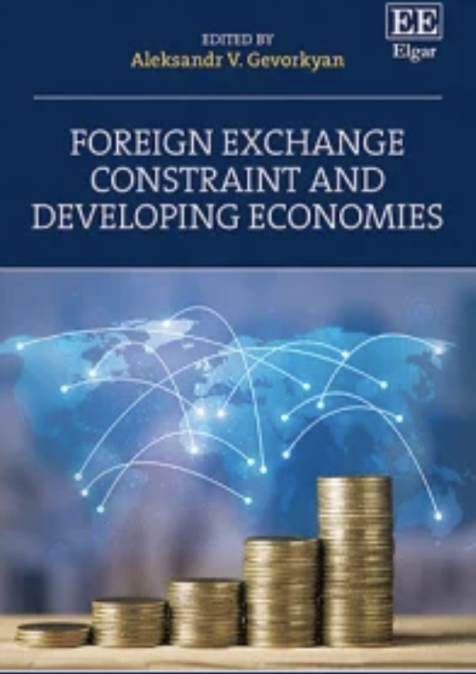
This paper was originally published as a chapter within the Book, Foreign Exchange Constraint and Developing Economies, published on January 2023 (ISBN  978 1 80088 049 8).


The decade after the global financial crisis (GFC) of 2007–2009 saw signifi- cant changes in the volume and composition of capital flows in the global economy. Portfolio investments and other non-bank financial intermediaries (NBFIs) are behind an increasing share of foreign capital flows, while bank- ing flows have shrunk in relative terms. This chapter approaches the implica- tions of such a metamorphosis of finance for capital flows to emerging market economies (EMEs).

Changes in capital flows accompanied structural shifts in financial inter- mediation in capital-source countries, with NBFIs increasingly shaping the demand for and supply of liquidity in financial markets. The channels of systemic risk propagation have changed with the higher profile acquired by NBFIs, with leverage fluctuations through changes in margins rising in weight.

Risks associated with capital flows to EMEs have changed accordingly. Foreign capital potentially brings benefits to EMEs. However, wide swings in capital flows carry high risks to macroeconomic and financial stability, including the adverse effects of sudden stops to capital inflows and challenges faced by economies with weaker institutions and less-developed financial markets.

Capital inflows in emerging market economies are driven by both global and country-specific drivers. The abundance of global liquidity since the GFC has pushed investors to search for yield, with shifts in risk appetite becoming a source of fluctuations. On the other hand, changes in the macroeconomic fundamentals and institutional frameworks of EMEs have made investors more selective.

The weight of global factors came to the fore in the first half of 2020, when the financial shock in advanced economies caused by coronavirus outbreaks led to a substantive wave of capital outflows from emerging markets, with unprecedented speed and magnitude. The shock was mitigated subsequently by central banks’ counter-shock policy moves in source countries, as well as by EME policy tools in managing the risks associated with extreme shifts in capital flows.

The chapter first examines the metamorphosis of finance and of capital flows after the GFC, up to the shock to capital flows to EMEs during the 2020–2021 coronavirus crisis. Then we analyse the extent to which normali- zation of monetary policies in advanced economies may lead to shocks in those flows, as well as why exchange-rate fluctuations between the US dollar and other major currencies can affect capital flows to EMEs. Finally, we assess the range of policy instruments that EME policymakers tend to resort to when managing risks derived from capital-flow volatility.

RELATED CONTENT

  • Authors
    January 31, 2019
    Without reforms, financial markets’ optimism may crumble – and bring the house down. Judging by the reaction of financial markets, the Brazilian economy started the year at high speed. The real is among the world’s best-performing currencies so far in 2019 and the main stock market index Ibovespa hit a string of record highs leading into last week, when it broke the 97,000-point mark. Future interest rates have fallen sharply.  Foreign investors are buying in as well. The pre ...
  • Authors
    Pierre-Richard Agénor
    November 30, 2018
    L'importance de la stabilité macroéconomique et financière pour l'amélioration à long terme des niveaux de vie a conduit à un profond renouvellement de l'analyse macroéconomique dans les pays en développement, tant sur le plan analytique qu'empirique. Pour la première fois, le présent ouvrage fournit au public francophone un traitement approfondi et rigoureux des questions actuelles liées à l'analyse et à la gestion macroéconomique dans ces pays. Cette macroéconomie du développemen ...
  • Authors
    February 20, 2018
    The current market turmoil that began on Wall Street worries policy makers in emerging markets, who fear bad consequences on the economic expansion. Since the global economy’s fundamentals remain strong, this fear seem unjustified. However, there are some other risks originating in the United States, namely protectionism and fiscal deficits, which may significantly darken the economic outlook in 2019 and beyond. ...
  • Authors
    Taoufik Abbad
    July 5, 2017
    The continuous and reinforced process of accumulating physical capital, in which Morocco has embarked since the early 2000s, has helped to preserve the stability of the fundamental equilibrium and cushion the economy from various external and exogenous shocks. However, these accumulation efforts have not led to a significant increase in productivity gains or to an accelerated transformation of the productive base. This Policy Brief aims to describe the underpinnings of the capital a ...
  • Authors
    Taoufik Abbad
    July 5, 2017
    Le processus continu et renforcé de l’accumulation du capital physique, dans lequel s’est engagé le Maroc depuis le début des années 2000, a permis de préserver la stabilité des équilibres fondamentaux et d’amortir les différents chocs exogènes, aussi bien internes qu’externes. Cependant, cet effort d’accumulation n’a pas permis d’insuffler un accroissement significatif des gains de productivité et d’accélérer la transformation de la base productive. Ce Policy Brief propose de décri ...
  • June 21, 2017
    Ce podcast est présenté par Moubarack Lo. Il y analyse l’apport de l’adhésion marocaine à la CEDEAO suite à l’accord de principe donné par ses membres au 51e sommet de Monrovia le 4 juin ...
  • Authors
    Edité par
    Idriss El Abbassi
    Lahcen Oulhaj
    Aziz Ragbi
    November 28, 2016
    Le présent ouvrage se propose d’apporter quelques éléments d’appui supplémentaires aux policy-makers pour une meilleure identification des défaillances des marchés au Maroc et une mise en place d’une stratégie de diversification et une politique industrielle efficientes, sans toutefois tomber dans la situation inverse où une stratégie mal définie et des outils mal choisis peuvent se traduire par une défaillance des politiques publiques. L’appréhension des difficultés qu’éprouve l’é ...
  • Authors
    October 4, 2016
    Brazil has been suffering from anemic productivity growth. This is a major challenge because in the long run, sustained productivity increases are necessary to underpin inclusive economic growth. Without them, increases in real labor earnings tend to conflict with global competitiveness; collecting taxes in order to fund government expenditures on infrastructure and social policies becomes a heavy burden; returns to private investment becomes harder to achieve; and ultimately c ...
  • Authors
    July 21, 2016
    The pace of global growth has tapered off since the crisis and the ensuing rebound. The concept of ‘secular stagnation’ was first used in 1938 by Alvin Hanson in reference to the American economy during the Great Depression. It refers to a situation where growth is slow over a protracted period, underemployment prevails and inflation is low. In such situations, the propensity to save tends to increase as a result of uncertainty and pessimism, and liquidity – which depends on interba ...
  • Authors
    Under the Supervision of
    Philippe Chalmin
    July 4, 2016
    Guinea’s bauxite, Moroccan phosphates, Nigerian Bonny Light, Zambian copper, Côte d'Ivoire’s cocoa, Ethiopian coffee or Madagascar’s vanilla: all are examples demonstrating that raw materials have a dimension that is as global as it is local. Global by the markets on which they are traded, local by their quality, a key element of their price, and their macroeconomic impact, particularly for Africa. In line with the 2016 CyclOpe report, which celebrates three decades of existence thi ...