Publications /
Opinion
The author of this opinion, Isabela Carvalho, is a 2018 alumna of the Atlantic Dialogues Emerging Leaders Program.
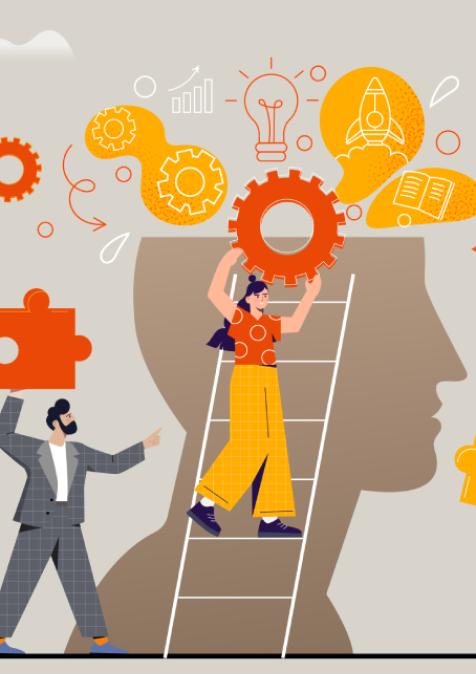
In today’s interconnected world, knowledge plays a vital role in driving change and shaping solutions. Yet despite the rise of digital tools and global collaboration, persistent gaps in how knowledge is managed and shared continue to limit the Global South’s ability to fully harness its potential. Strengthening resilient knowledge ecosystems fosters inclusive development, fuels social innovation, and builds long-term resilience.
Knowledge is dynamic and multifaceted, taking on various forms depending on context and application. It can be personal and intuitive, shaped by individual experiences (tacit knowledge), or structured and documented, making it easily transferable (explicit knowledge). Some knowledge is highly specialized, rooted in deep expertise within a specific domain, while other forms are broad and adaptable, applicable across diverse settings (general knowledge). It can also be practical, guiding hands-on execution, or theoretical, offering concepts and frameworks. Beyond individual understanding, knowledge can be collective, embedded within a group or culture, or ancestral, passed down through generations.
Knowledge lies at the heart of impact-driven organizations. It shapes the development of programs, the design of products, and the scaling of solutions. More importantly, it enables organizations to influence institutions, policymakers, and communities—ensuring that programs and innovations translate into meaningful impact and systemic change.
To make this process effective, organizations need strong knowledge management (KM)—systems that systematically create, capture, distribute, and apply knowledge to advance their missions. Without effective KM, valuable insights are lost, inefficiencies persist, and organizations struggle to build on past experiences or make data-informed decisions. A well-structured KM system helps refine best practices, prevent the repetition of mistakes, and support strategic, evidence-based decision-making. This results in better resource utilization, more impactful programs, and a more integrated ecosystem of social impact.
In regions where resources are limited and social challenges are complex, investing in KM is not optional—it is essential. Prioritizing excellence in KM across the Global South can accelerate impact, enhance collaboration, and ensure that solutions are not only created but also sustained and scaled where they are needed most.
The Two Fronts of KM: Internal and External Learning
Effective KM is designed to organize learning in ways that drive improvement and foster collaboration. To maximize impact, institutions must focus on two key areas:
Institutional Learning (Internal):
This involves ensuring that all knowledge generated within an organization—whether through research, program development and monitoring, infrastructure design, or product creation—is systematically captured, organized, and made accessible to support continuous improvement. It means building systems that allow staff to learn from the organization’s accumulated experience over time. This often includes embedding learning processes into daily workflows, designing targeted trainings to highlight existing tools, and creating opportunities to revisit past initiatives and the insights they generated. The overall goal is simple but critical: to ensure that hard-earned lessons are not lost, but instead become a living resource that strengthens future work.
Cross-Institutional Collaboration (External):
This dimension focuses on cultivating a culture where knowledge is actively shared across institutions and sectors, allowing the broader ecosystem to benefit from collective learning. It requires a deliberate commitment to openness—sharing insights not only with peer organizations but also with actors from adjacent or entirely different fields. As social challenges become increasingly interconnected and complex, it is clear that no single organization can drive systemic change alone. This is why it is essential to create spaces and mechanisms that allow diverse institutions to come together, exchange experiences, and contribute their knowledge. This collaborative approach is grounded in the idea that “the whole is greater than the sum of its parts”—by combining varied perspectives, we unlock solutions that are more innovative, effective, and scalable.
Social enterprise Durian Nigeria is a prime example of effective KM in action—both for internal learning and external sharing. The organization empowers rural women by equipping them with the training and skills needed to transform local waste into reusable items and sustainable sources of income.
Durian captures and organizes knowledge through its various training programs—for instance, teaching women how to craft furniture, household items, jewelry, and musical instruments from bamboo, a renewable local resource. This systematization not only benefits the learners directly involved but is also shared within the organization to ensure continuous improvement and ongoing adaptation of training methods. As Durian’s operations have expanded to multiple communities, the organization has built a portfolio of successful solutions that can be customized and adapted to diverse contexts. This portfolio incorporates best practices, data, insights, and feedback from past implementations.
In its commitment to fostering a knowledge-sharing culture, Durian collaborates with community leaders, nonprofit organizations, government agencies, and business professionals. This ensures that effective practices and innovative solutions in community empowerment are widely disseminated. By bringing together knowledge from—and for—key stakeholders and rural communities, Durian not only strengthens its own impact but also contributes meaningfully to the broader economic development of rural areas in Nigeria.
Enhancing Institutional Learning for Greater Impact – Optimizing Internal Processes
A well-structured KM system enables organizations to document and apply their learnings, fostering continuous evolution based on past experiences. This internal process serves three critical functions:
Leveraging Successes: By capturing best practices and successful methodologies, organizations can replicate and refine their most effective approaches.
Avoiding Past Mistakes: Systematically analyzing past challenges prevents teams from repeating errors and relying on ineffective practices.
Optimizing Resources: Building on existing assets and insights ensures more efficient use of time, funding, and human capital, while avoiding redundancy.
Laboratório de Educação (Labedu) exemplifies this approach through its comprehensive work to improve education in Brazil. The organization uses knowledge systematization not only to enhance practice but also to develop innovative tools and frameworks for child and youth learning.
Labedu’s methodology bridges research, knowledge production, and implementation. The process begins by identifying learning challenges through up-to-date research and local data. Based on this foundation, the organization develops strategic and practical educational materials and tools, which are shared freely to make scientific knowledge more accessible and actionable. These resources are then tested and applied in real-world settings through partnerships with schools and other institutions.
Implementation is closely monitored, and feedback from the field informs refinements to both content and delivery methods. Crucially, the questions and insights that emerge during implementation are fed back into the research process—restarting the cycle of innovation. This ongoing loop ensures that insights gained from practice continuously inform future research and development, avoiding redundancy and enhancing the relevance and effectiveness of solutions.
Building a Culture of Cross-Institutional Knowledge Sharing – Optimizing External Processes
While institutional learning is essential, broader and more sustainable impact emerges when organizations actively share insights across sectors and disciplines. Many social and environmental challenges in the Global South are too complex for any single actor to address alone—they require coordinated action from NGOs, social enterprises, governments, and private sector players. When knowledge remains siloed within individual institutions, opportunities for systemic change are diminished.
To foster meaningful cross-institutional collaboration, organizations can:
Establish Knowledge Exchange Mechanisms: Create open-access repositories, facilitate joint research initiatives, and support field-wide learning communities.
Encourage Multi-Stakeholder Partnerships: Bring together insights from across sectors—private, public, social, and academic—to co-develop innovative and scalable solutions.
Promote Transparency: Share both successes and failures openly to accelerate collective learning.
Develop Incentives for Sharing: Recognize and reward contributions to knowledge dissemination, embedding sharing practices into organizational culture and metrics of success.
MapBiomas exemplifies a robust KM system that not only systematizes and analyzes data but also fosters extensive collaboration across sectors and disciplines. The initiative has provided comprehensive mapping and monitoring of land cover and land use across Brazil’s major biomas—Amazon, Cerrado, Caatinga, Pantanal, Atlantic Forest, and Pampa. Its data is publicly accessible, transparent, and updated regularly. The MapBiomas operates through a broad network of over 70 partners, including major private companies, NGOs, universities, and tech startups. This collaborative model ensures that the data is not only comprehensive but also translated into action across sectors.
MapBiomas has revealed that the majority of deforestation—around 70%—is occurring on private properties. This insight comes from the integration of deforestation alerts with Brazil’s Rural Environmental Registry (CAR), legal authorizations for vegetation removal, and maps of protected zones. Because private lands are linked to identifiable owners or institutions, Brazilian authorities are now able to pinpoint those responsible. This data-driven approach strengthens enforcement actions, such as fines or legal proceedings, by providing robust documentation.
Another prominent example of the impact of such broad collaboration is MapBiomas’ partnership with banks, using land-use data to enhance due diligence. This ensures that investments and loans do not support activities associated with deforestation. Such initiatives highlight the critical need for coordinated action among NGOs, social enterprises, governments, and private sector actors to address social and environmental challenges in Latin America.
KM as a Driver for Systemic Change
Tackling complex social and environmental challenges requires more than quick fixes—it demands a systemic approach that addresses root causes. While many initiatives respond to visible symptoms—like food insecurity or limited access to healthcare—these often reflect deeper, structural issues. These issues are usually just the tip of the iceberg, pointing to root causes that become apparent only when we take a closer look beneath the surface.
In this context, KM becomes more than an operational tool—it becomes a driver of systemic change. When organizations take the time to capture what they learn, reflect on their experiences, and share those insights widely, they create the conditions for smarter, more coordinated action. This flow of knowledge, both within institutions and across networks, shifts the focus from isolated interventions to broader, more resilient solutions.
Conversely, neglecting to document and share knowledge—both internally and externally—leads to stagnation. Knowledge hoarding (or “knowledge withholding”) whether intentional or unintentional, impedes innovation, impact, and growth. Organizations that embed both institutional learning and cross-institutional knowledge-sharing into their core strategies create a multiplier effect, making solutions more effective, scalable, and adaptable across different contexts.
Institutions that invest in both internal learning and external collaboration are also better positioned to design scalable, context-sensitive solutions. Their capacity to adapt and respond grows, as does their overall impact. This is especially critical in the Global South, where the stakes are high and the need for bold, systemic responses to challenges like climate change, public health, and inequality is urgent.
When knowledge is seen as something we all contribute to and learn from, real transformation becomes possible. What we reflect on today can spark the breakthroughs of tomorrow. By making learning and sharing core parts of our culture and how we work together, we take meaningful steps toward building systems that truly work for everyone.