Publications /
Annual Report
Book / Report
Available soon on livremoi.
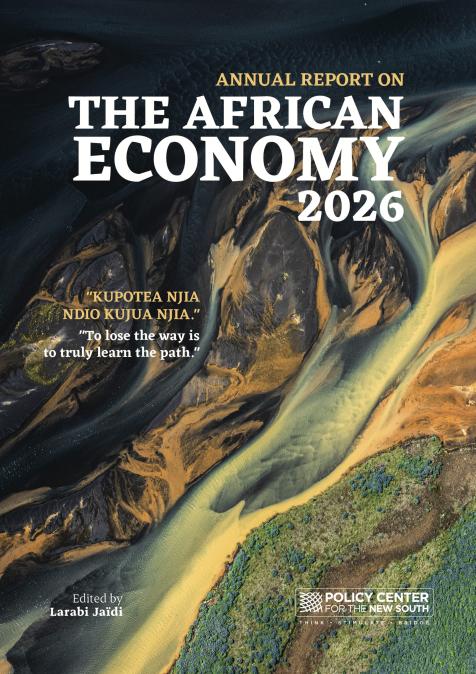
The 2026 edition of the Annual Report on the African Economy examines the issue of the valorization of Africa’s natural resources, particularly its mineral wealth. While the continent holds some of the world’s largest known reserves of a wide range of minerals and metals, the objective is not merely to catalogue these resources, but rather to explore the conditions under which natural resource endowments can be transformed into drivers of Africa’s industrial development. Several considerations motivated the decision to revisit this issue from fresh and innovative perspectives.
Recent trends in the global economy point to a resurgence in mining production. This trend has accelerated as a result of rising international investment – from China, the United Arab Emirates, India, Russia, the United States, Canada, and Japan – in a range of metals, including copper, cobalt, manganese, bauxite, iron, titanium, and tin, as well as gold and diamonds, and, more recently, in new minerals such as graphite, platinum, rare earth elements, and lithium.
The energy transition is driving increased demand for mineral resources, particularly those referred to as critical minerals. The metals required for the manufacture of electric vehicles (cobalt, copper, lithium, and graphite), fuel cells (platinum), and wind and solar photovoltaic technologies (copper, lithium, cobalt, and nickel) are already being extracted and exported from the continent. As a result, Africa is once again attracting considerable economic and strategic interest.
Growing global demand presents African countries with an opportunity to foster partnerships aimed at developing their mineral resources, the associated infrastructure, and related industries. Realizing this opportunity, however, will depend on the ability of African states to safeguard their interests in the face of the new “rush for strategic raw materials.”
African countries have undertaken investments to capitalize on the mining boom driven by the critical minerals required for the energy transition, as well as by other valuable minerals such as gold. They must now develop new policies to promote the processing and transformation of these minerals on the continent, enabling them to derive greater benefits from these resources while mitigating the associated environmental and social impacts.
Revisiting this theme also means reflecting on the lessons drawn from Africa’s experience in managing its natural and mineral resources. A guiding thread underpins the analysis and ensures coherence across the report’s three core sections. It highlights the relationship between the governance of the sector in the territories where these resources are located and the conflicts arising from their exploitation and valorization by the various actors involved.
Most African countries can be characterized as rentier economies. These economies are marked by the concentration of resource wealth in the hands of political and economic elites, a heavy dependence on a limited number of foreign partners, and very low levels of local value addition to raw materials. The paradox of Africa’s vast mineral wealth on the one hand and the persistent human development deficits experienced by its populations on the other remains a defining feature of the continent’s economic and social landscape.
The abundance of mineral resources represents a significant source of potential wealth for many African countries. Yet poor governance of these resources has often turned this advantage into a “resource curse,” preventing countries from achieving the level of development that might otherwise have been expected. This phenomenon has manifested itself in tangible ways across many parts of the continent, although some countries have sought to shield themselves from its effects. As a result, the governance of mineral resources can have profoundly different implications for local communities, public authorities, mining companies, and even the regions where extractive activities take place. This is because resource abundance generates economic rents that can be readily captured when institutions are weak.
The report also highlights the conflicts generated by the extraction and commercialization of mineral resources across the continent. While mining activities often generate substantial profits, they may also give rise to disputes over land use, access to subsoil resources, and environmental degradation, thereby fueling tensions between communities. These conflicts unfold at multiple scales – within countries, across borders, and at the global level – and are partly driven by competition over control of mineral resources and the distribution of resource rents.
Many mines and extraction sites remain beyond the effective control of states, particularly in border regions. Armed conflicts stem from the interaction of multiple factors- cultural, social, political, military, and geopolitical – each operating according to its own dynamics and timescale. They involve a wide range of actors, alliances, and motivations. This raises the question of the specific role that mineral resources play in the emergence of these conflicts and in the self-reinforcing and often uncontrolled dynamics through which they spread.
The first part of this report examines the impact of natural and mineral resources on Africa’s macroeconomic balances, as well as on the development of sectoral and territorial policies governing these resources.
Africa’s macroeconomic landscape is currently characterized by broadly resilient yet uneven growth, while remaining exposed to significant structural vulnerabilities. Global geopolitical tensions and the fragmentation of international trade have heightened these vulnerabilities despite the continent’s considerable strengths, particularly its abundant natural resource endowment. In this context, the principal macroeconomic challenge is to transform this short-term resilience into sustained, inclusive growth that is less dependent on commodity cycles.
The exploitation of natural resources exerts a profound yet ambivalent influence on the macroeconomic stability of African countries. While revenues from strategic resources constitute a major source of investment financing, their strong dependence on fluctuations in international commodity prices exposes economies to heightened volatility in growth, public finances, balance-of-payments positions, and exchange rates. Such dependence may also give rise to symptoms of “Dutch disease.” These economic vulnerabilities are compounded by institutional risks – including rent capture, weak governance, and conflicts over resource control – which undermine the effectiveness of public policies and hinder economic diversification.
International trade in primary commodities remains one of the main determinants of Africa’s integration into the global economy. However, the continent’s participation in global value chains remains largely confined to the export of unprocessed commodities. If this pattern persists, it is likely to perpetuate an extractive model that generates limited value creation and employment. The challenge now is for African countries to develop processing industries and strengthen the logistics infrastructure needed to support higher-value activities.
The dynamics of mineral rents in Africa also reveal a high concentration of value creation, capture, and distribution in the hands of a limited number of actors. A significant share of these rents escapes the state through tax optimization, illicit financial flows, smuggling, corruption, and the limited negotiating and enforcement capacities of public institutions. In Africa, the central challenge therefore lies not so much in the generation of mineral rents as in the quality of their governance, capture, and redistribution in support of inclusive and sustainable development.
The major shortcomings affecting the transport of mineral resources in Africa remain one of the principal constraints on the competitiveness of the extractive sector and on the continent’s integration into global value chains. These challenges are compounded by weak cross-border connectivity, lengthy and costly customs procedures, multiple administrative border controls, and the high cost of freight and insurance services.
A key challenge in the pricing of mineral resources is to limit the effects of exchange rate volatility on international trade. The idea of an international unit of account backed by natural resources has been regularly raised in discussions on reforming the international financial architecture. Its objective would be to reduce dependence on the U.S. dollar while better reflecting the real wealth of commodity-producing countries. However, significant obstacles remain. International commodity prices are subject to often abrupt economic, geopolitical, and technological cycles, and the establishment of a new unit of account would require complex political negotiations. It would also raise difficult questions regarding the composition and weighting of the underlying basket of resources, as well as the governance of the issuing institution.
The second part of the report, which focuses on Africa’s Regional Economic Communities (RECs), examines the relationship between the valorization of mineral resources and industrialization, while assessing the impact of regional conflicts on this dynamic.
In the two Regional Economic Communities examined in depth (ECCAS and EAC), the relationship between the exploitation of natural and mineral resources and industrialization remains characterized by a paradox: abundant mineral wealth has yet to translate into meaningful industrial transformation. At the same time, the growing global demand for critical minerals presents a historic opportunity to reshape this development model. Whether this opportunity can be realized will depend on the ability of member states to implement a common industrial policy based on local processing, innovation, productive integration, and industrial upgrading.
Across both Regional Economic Communities, internal sociopolitical conflicts and cross-border tensions remain the principal obstacles to establishing a virtuous relationship between natural resource exploitation and economic development. A substantial share of resource wealth continues to fuel dynamics of conflict and predation rather than economic transformation.
In several countries, extractive resources have become instruments of territorial control, financing for armed groups, and political consolidation, fostering the emergence of a genuine “political economy of resource rents”. Control over strategic minerals constitutes a major source of financing for armed groups, criminal networks, and certain transnational actors, thereby sustaining chronic insecurity, weakening state authority, and discouraging long-term productive investment.
Conflicts also undermine the infrastructure essential to the development of extractive industries. In many border areas, illicit trade, mineral smuggling, and clandestine financial flows have supplanted formal commercial channels. Beyond armed conflict, domestic sociopolitical tensions over the distribution of extractive rents also constrain the developmental impact of the mining sector. The unequal distribution of resource wealth fuels community grievances and, in some cases, local violence. Tensions between states further impede regional economic integration. Border insecurity, political disputes, population movements, and humanitarian crises continue to hinder the development of regional transport corridors.
Ultimately, Africa’s experience demonstrates that the main constraint on development lies not in the abundance or scarcity of natural resources, but in the quality of their governance and the political and security environment within which they are exploited.
Rare earth elements, critical minerals, and the potential seabed resources offer Africa a strategic opportunity to move beyond its traditional role as a supplier of raw materials and become a major player in the global value chains underpinning the energy and digital transitions. This transformation could foster the emergence of interregional corridors linking mining basins to industrial hubs, energy platforms, and ports, as well as maritime corridors connecting the Atlantic, Eastern, and Mediterranean seaboards around integrated development hubs. Major powers are actively engaged in this process, each pursuing its own strategic objectives.
Corridor strategies have become an important vehicle for the valorization of Africa’s mineral resources. Those supported by China are closely aligned with the Belt and Road Initiative and pursue a dual objective: strengthening regional integration in Africa while securing China’s access to strategic raw materials. Although this approach has facilitated the rapid implementation of infrastructure projects, it has also raised concerns regarding debt sustainability, procurement practices, technology transfer, local employment, local content, and the governance of strategic infrastructure.
By contrast, corridor strategies developed under the partnership between Japan and African countries follow a markedly different approach. They emphasize the development of integrated economic corridors designed to enhance industrial competitiveness, strengthen regional connectivity, and facilitate the integration of African economies into global value chains. Japanese firms generally favor partnerships with local companies, while corridor governance is based on long-term institutional cooperation, joint planning, technology and skills transfer, and the strengthening of administrative capacities.
Corridors financed under the partnership between the European Union and Africa are conceived as instruments of strategic connectivity, regional integration, and supply chain resilience between the two continents. They are closely associated with the Global Gateway strategy, under which the European Union presents these corridors as drivers of economic transformation, intra-African trade, and stronger links between African and European markets. At the same time, they also serve broader European strategic interests by securing access to critical minerals, African markets, and alternative trade routes in the context of growing strategic competition with China.
Africa's blue frontier, encompassing its vast maritime spaces and Exclusive Economic Zones, constitutes one of the continent’s greatest reservoirs of growth and strategic influence. It offers considerable opportunities for the development of the blue economy. Africa’s Atlantic, Mediterranean, Indian Ocean, and Red Sea coastlines provide direct access to the world’s major maritime trade routes, giving the continent an exceptional geostrategic position at several critical chokepoints. In the context of the energy transition and the reconfiguration of global supply chains, this blue frontier could become a powerful driver of regional integration, maritime corridor development, and coastal industrialization, provided that African states are able to exercise effective stewardship over its resources.
Yet this maritime frontier continues to face significant governance challenges. Africa’s maritime spaces are characterized by institutional fragmentation, limited coordination among coastal states, weak surveillance and enforcement capacities, and insufficient harmonization of maritime policies across Regional Economic Communities. They also require the development of a common African framework for the sustainable exploitation of deep-seabed resources in order to avoid reproducing an extractive model that generates limited value creation.
Cross-border conflicts over natural and mineral resources remain one of the principal obstacles to Africa’s economic integration. These conflicts are no longer confined to disputes over territorial sovereignty; they increasingly concern access to mineral deposits, control over extraction areas, the distribution of resource rents, marketing channels, transport infrastructure, logistics corridors, and value chains. The concentration of mineral resources in border regions, combined with weak institutional capacities, porous borders, and governance asymmetries between neighboring states, has fostered the emergence of informal cross-border economies characterized by smuggling, illicit financial flows, mineral trafficking, and competition among public authorities, private companies, armed groups, and local communities.
In the Great Lakes region, these dynamics are particularly acute because of the exceptional concentration of strategic minerals. In the Sahel, and particularly in the Liptako-Gourma region, resource-related conflicts take a different form, with security, community, and economic dimensions closely intertwined. In the Horn of Africa, disputes over natural resources are more closely linked to access to water, land, hydrocarbons, emerging mineral resources, and the strategic infrastructure connecting landlocked countries to the Red Sea and Indian Ocean coastlines.
These three regions illustrate a common reality: the absence of coordinated cross-border governance of natural resources has become a major constraint on Africa’s economic integration. The development of regional value chains requires the harmonization of mining regimes, joint management of shared resource basins, closer coordination of fiscal and customs policies, improved mineral traceability, secure transport corridors, and regional mechanisms for sharing resource rents. Transforming natural resources into a driver of development therefore requires a fundamental shift in governance – from a national logic of competition to a regional approach based on cooperation, co-investment, and shared value creation.
Africa possesses the institutional and political foundations needed to establish mediation mechanisms capable of preventing and resolving conflicts related to natural resources, provided that their operational effectiveness and legitimacy are strengthened. Beyond traditional conflict prevention mechanisms, there is a need to develop specialized resource diplomacy instruments capable of addressing issues such as the delimitation of extraction areas, the sharing of resource rents, the joint management of transboundary deposits, the security of mining corridors, the fight against illicit financial flows, and the settlement of disputes involving states, companies, and local communities. Such a governance framework would help transform natural resources from sources of rivalry into regional common goods, thereby fostering trust among states, promoting the development of regional value chains and shared infrastructure, and strengthening continental integration.
The third part of the report focuses on cross-cutting and sectoral issues, examining the operationalization of the African Continental Free Trade Area (AfCFTA) through the lens of its contribution to the valorization of mineral resources and the structural transformation of African economies.
In this regard, the AfCFTA seeks to shift Africa’s economic model from one based on the export of raw commodities to one centered on value creation within the continent by promoting industrial complementarities among countries endowed with natural resources, processing capacities, logistics infrastructure, or consumer markets. From this perspective, strategic raw materials are increasingly viewed as the foundation of future regional value chains.
However, these normative advances continue to face significant structural constraints. Tariff offers and rules of origin have yet to become fully operational across all States Parties; national mining and industrial policies remain insufficiently harmonized; non-tariff barriers continue to impede trade; and transport, energy, and logistics infrastructure remain inadequate to support continental value chains. These constraints are compounded by limited industrial processing capacities, fragmented financial markets, restricted access to finance for African enterprises, illicit financial flows, and conflicts over the control of natural resources, all of which constrain productive integration.
Africa now possesses an increasingly coherent normative framework to promote investment in the natural resource and mining sectors. Nevertheless, this framework remains fragmented and unevenly implemented. The principal obstacles to its consolidation include the fragmentation of national policies, fiscal competition among states to attract investors, regulatory instability, weak institutions responsible for enforcing contracts, governance deficits, corruption, illicit financial flows, inadequate transport and energy infrastructure, and security risks in several mining regions. These challenges are further compounded by the underdevelopment of African financial markets, the limited capacity of development banks to finance large-scale industrial projects, the absence of a coordinated African policy on strategic minerals, and the difficulty of harmonizing investment regimes.
Africa’s bargaining power in the governance of critical mineral resources remains limited. This reflects the fragmentation of national policies, competition among producing countries, weak industrial processing capacities, and continued dependence on external investors, technologies, and markets. Strengthening the continent’s strategic autonomy will require action on several fronts. A common African policy should establish shared positions on the conditions governing access to mineral resources, investment standards, mining taxation, local content requirements, technology transfer, and environmental standards. At the same time, enhancing strategic autonomy will require the mobilization of economic and financial instruments capable of reducing the continent’s dependence on external actors.
Africa has made significant progress in adopting the social and environmental standards applicable to the exploitation of mineral resources, driven by the combined effects of national reforms, continental commitments, and the growing requirements of international markets. Many countries have modernized their mining codes by incorporating provisions on environmental impact assessments, the protection of local communities, community consultation mechanisms, mine-site rehabilitation, corporate social responsibility, contract transparency, and revenue sharing. Despite these advances, the effective implementation of these standards continues to face major constraints. The administrative, technical, and financial capacities of many states remain insufficient to effectively oversee extractive activities, enforce environmental obligations, and monitor companies’ social commitments.
Artisanal and small-scale mining occupies a central place in Africa’s mining sector and constitutes an important economic and social pillar for many rural communities. It represents a significant segment of African mineral value chains whose wealth-creation potential could be substantially enhanced through better integration into formal production, processing, and marketing systems. However, this potential is constrained by a range of structural challenges, including inadequate regulatory frameworks and complex formalization procedures. These shortcomings fuel conflicts among artisanal miners, industrial operators, and local communities over access to mineral deposits, while also encouraging smuggling, illicit financial flows, and informal trading networks. In several regions – notably the Sahel, the Great Lakes region, and Central Africa – artisanal mining sites have become sources of financing for armed groups, organized crime, and corruption, further weakening the governance of natural resources.
African mining and extractive champions are playing an increasingly important role in the development of the continent’s mining industries, yet their potential remains far from being fully harnessed to support Africa’s economic transformation. The diversity of strategies adopted by these firms reflects the heterogeneity of African economies. Some have pursued vertical integration by investing in local processing activities, while others seek to become pan-African players through operations in multiple countries, partnerships with international investors, and participation in mining corridor and regional industrial platform projects. By contrast, many firms remain highly dependent on international markets, foreign technologies, and external financing, limiting their ability to exercise genuine continental leadership. To become true drivers of economic transformation, Africa’s mining champions will need to move beyond national or purely extractive strategies and embrace a continental vision based on industrial integration, technological innovation, and regional cooperation.
The fertilizer industry has become one of Africa’s most strategic sectors, sitting at the intersection of food security, the valorization of natural resources, industrialization, and regional economic integration. Africa’s fertilizer value chain has evolved significantly toward a strategy encompassing production, formulation, distribution, and the adaptation of fertilizers to the specific needs of African agriculture. This sector offers considerable potential to stimulate intra-African trade, enhance agricultural productivity, strengthen food security, and accelerate industrialization across the continent. Significant challenges nevertheless remain, particularly with regard to access to competitively priced energy, logistics infrastructure, financing, standards harmonization, the dissemination of fertilizers to smallholder farmers, and innovation aimed at developing products better suited to African soils and the requirements of sustainable agriculture.
The profound transformation of the global automotive industry, driven by the transition to electric vehicles, is turning critical mineral resources into geoeconomic assets of strategic importance. Africa’s endowment of these resources offers the continent a historic opportunity to position itself in the higher value-added segments of the global automotive value chain. The challenge extends beyond mining to encompass mineral refining, chemical processing, the production of battery active materials, cell assembly, and the manufacture of electric components and electric vehicles. Success will depend on the ability of African countries to coordinate their mining, industrial, energy, and trade policies, invest in infrastructure, research, and skills development, harmonize regulatory frameworks, and attract balanced technology partnerships. By doing so, Africa can become a major player in the emerging global electric mobility economy, not merely as a supplier of critical minerals, but as a producer of value-added industrial products and technologies.
The evolution of the global pharmaceutical industry, marked by the search for more resilient supply chains and advances in biotechnology, also presents new opportunities for Africa. The continent possesses an exceptional endowment of natural resources capable of supporting an integrated pharmaceutical industry. It is home to nearly one-quarter of the world’s biodiversity, as well as mineral resources essential to the production of numerous active pharmaceutical ingredients. These assets are complemented by agricultural resources used in excipients, essential oils, bioactive compounds, and ingredients for the pharmaceutical and cosmetics industries. The availability of these resources could provide the foundation for a continental pharmaceutical value chain, provided they are integrated into a common industrial strategy that promotes the valorization of Africa’s biodiversity while strengthening health security. Achieving this objective will require investments in scientific research, biotechnology, industrial infrastructure, intellectual property protection, the conservation of genetic resources, skills development, and the harmonization of pharmaceutical regulations across African countries.
In giving voice to Africa’s social priority, the report places particular emphasis on the gender dimension the AfCFTA. Women account for a substantial share of informal cross-border trade, yet they continue to face structural barriers to accessing finance, land, business ownership, public procurement, technology, skills development, commercial networks, and social protection. The Protocol on Women and Youth in Trade represents a major innovation in Africa’s economic integration agenda, recognizing that trade liberalization can only deliver inclusive outcomes if women enjoy the same access to economic opportunities as men. Its transformative potential also lies in its ability to facilitate women’s integration into the new value chains fostered by the AfCFTA. However, its effectiveness will depend on its alignment with national policies that promote skills development, financial inclusion, social protection, the formalization of economic activities, and targeted support for women-led enterprises.
Women’s entrepreneurship has gradually become a priority in Africa’s economic development agenda. Significant progress has been made through the adoption of national strategies to support women-owned small and medium-sized enterprises, the establishment of guarantee funds and dedicated credit facilities, the expansion of entrepreneurship support programmes, business management training, mentoring initiatives, business incubators and accelerators, and the gradual improvement of women’s access to digital financial services. Despite these advances, African women entrepreneurs continue to face structural constraints that limit their ability to build competitive, high-growth businesses. Moreover, support mechanisms remain fragmented, insufficiently coordinated, and rarely aligned with national industrial and trade policies.
The epilogue of this edition examines the relationship between climate change and social inequalities. This relationship has emerged as one of the most significant developments in the global analysis of inequality. Whereas traditional approaches focused primarily on disparities in income, wealth, and access to essential services, the climate crisis reveals a new form of inequality based on a dual asymmetry between responsibility and vulnerability. Low-income countries, and African countries in particular, have contributed relatively little to historical greenhouse gas emissions, yet they are among the most exposed to the impacts of climate change, including droughts, floods, desertification, sea-level rise, land degradation, and food insecurity.
This disconnect between the principal emitters and the principal victims has renewed debates on climate justice, the differentiated responsibilities of states, and the need for international mechanisms to support solidarity, adaptation finance, and compensation for loss and damage. Within countries themselves, the impacts of climate change further exacerbate existing social inequalities, as poorer populations, informal workers, smallholder farmers, women, young people, and rural communities generally possess fewer resources to adapt to climate shocks, rebuild their livelihoods, or seize the new opportunities created by the green transition.
This new perspective calls for a fundamental rethinking of inequality-reduction policies by fully integrating the environmental dimension into development strategies. Inequality can no longer be understood solely as the result of an unequal distribution of wealth; it must also be viewed as reflecting unequal access to adaptive capacities, clean technologies, climate finance, resilient infrastructure, and the employment opportunities created by the energy transition.
In concluding this overview of the new edition of the Report, we trust that the conditions required to bring about the much-needed structural transformation in the management of Africa’s natural and mineral resources have been thoroughly examined throughout its thirty-five chapters. We extend our sincere gratitude to all the contributors for the quality of their work and for their constructive engagement with the members of the Scientific Committee, who oversaw the development of the Report’s overarching theme and its articulation across regional, transregional, and continental perspectives. Special acknowledgment is due to Ms. Saloi El Yamani for her constant availability and meticulous attention to detail throughout the various stages of coordinating and monitoring the contribution. We also wish to express our appreciation to everyone involved in the editing and production of the Report for their professionalism and dedication. Their individual and collective contributions have been invaluable.
Larabi Jaidi Senior Fellow, Policy Center for the New South | Karim El Aynaoui Executive President, Policy Center for the New South |