Podcasts

Back

The New South as a Frontline of the U.S.-China Technological Rivalry

20
May 2026
By Helmut Sorge & Otaviano Canuto

In this podcast, Otaviano Canuto discusses how the U.S.-China technological rivalry is increasingly shaped not only by innovation, but also by the ability to integrate technology into energy systems, infrastructure, and industrial production. The conversation highlights the growing strategic importance of the Global South, where countries can leverage their energy resources and critical minerals to strengthen their position in global supply chains. The discussion also underlines how energy availability and infrastructure capacity may become decisive factors in determining future technological leadership

RELATED CONTENT

  • Authors
    February 9, 2017
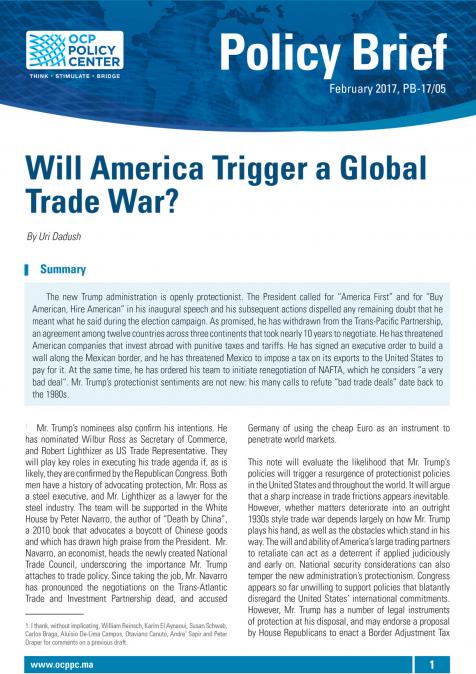
    The new Trump administration is openly protectionist. The President called for “America First” and for “Buy American, Hire American” in his inaugural speech and his subsequent actions dispelled any remaining doubt that he meant what he said during the election campaign. As promised, he has withdrawn from the Trans-Pacific Partnership, an agreement among twelve countries across three continents that took nearly 10 years to negotiate. He has threatened American companies that invest a ...
  • Authors
    Ian Lesser
    November 18, 2013
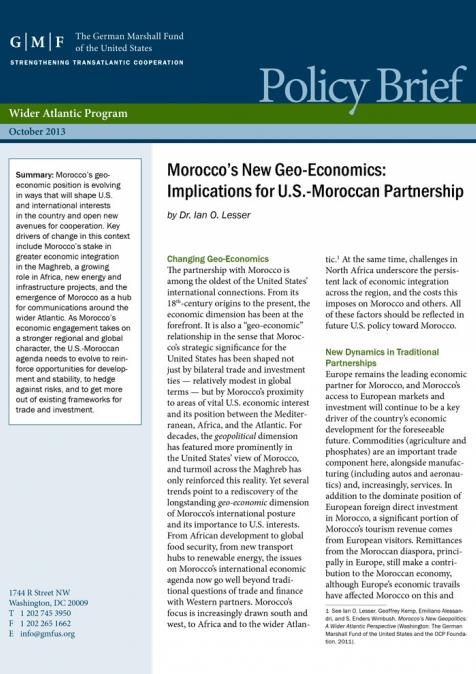
    This policy brief argues for a closer relationship between Morocco and the United States. Morocco’s geo-economic position is evolving in ways that will shape U.S. and international interests in the country and open new avenues for cooperation. Key drivers of change in this context include Morocco’s stake in greater economic integration in the Maghreb, a growing role in Africa, new energy and infrastructure projects, and the emergence of Morocco as a hub for communications around th ...
  • From

    23
    4:30 pm February 2022
    Les hostilités commerciales entre la Chine et les États-Unis, qui se sont intensifiées sous la présidence de D. Trump et qui se sont poursuivies sous l'administration américaine actuelle, marquent un tournant dans la libéralisation de l'économie mondiale depuis la fin de la Seconde Guerre mondiale. Le système commercial mondial est en ruine en raison de cette guerre commerciale, ainsi que du démantèlement du processus de règlement des différends de l'Organisation mondiale du commerce et des violations fréquentes des règles par ses membres. Cependant le système commercial d'après-guerre ne touche pas à sa fin ; il évolue plutôt vers un ensemble d'interactions commerciales plus compliquées, politiques et controversées. La nouvelle structure sera très probablement basée sur une O ...