Publications /
Policy Brief

Back
Will America Trigger a Global Trade War?
Authors
February 9, 2017

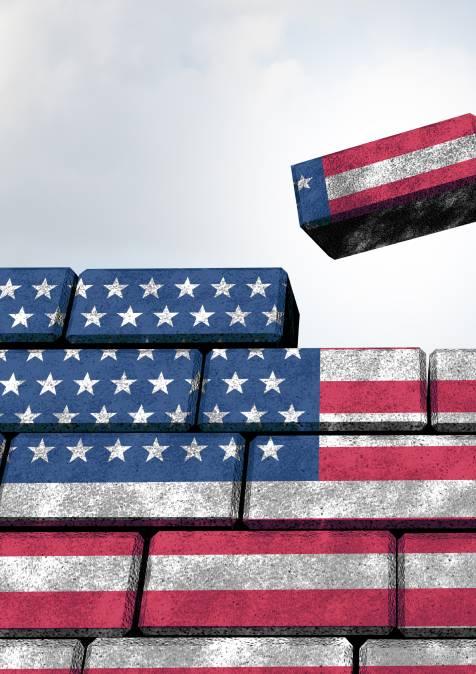
The new Trump administration is openly protectionist. The President called for “America First” and for “Buy American, Hire American” in his inaugural speech and his subsequent actions dispelled any remaining doubt that he meant what he said during the election campaign. As promised, he has withdrawn from the Trans-Pacific Partnership, an agreement among twelve countries across three continents that took nearly 10 years to negotiate. He has threatened American companies that invest abroad with punitive taxes and tariffs. He has signed an executive order to build a wall along the Mexican border, and he has threatened Mexico to impose a tax on its exports to the United States to pay for it. At the same time, he has ordered his team to initiate renegotiation of NAFTA, which he considers “a very bad deal”. Mr. Trump’s protectionist sentiments are not new: his many calls to refute “bad trade deals” date back to the 1980s
RELATED CONTENT

  • Authors
    February 12, 2026
    Divergent regulatory regimes for data, driven by different motivations, ranging from privacy protection in the European Union to information control in China, could eventually produce distinctively different, and possibly contradictory, bodies of data. Artificial-intelligence models trained on those datasets could produce differing and possibly even conflicting outputs. To the extent that AI outputs start to shape human perception and to influence decisions, in governments and ...
  • Authors
    February 11, 2026
    The U.S.–China technological rivalry has become a central axis of global economic and geopolitical competition. While the United States continues to lead in frontier innovation—most notably in advanced semiconductors and artificial intelligence (AI)—China has consolidated strengths in large-scale implementation, manufacturing capacity, and control over critical segments of global supply chains. These advantages are especially visible in clean energy technologies and in the processin ...
  • Authors
    Nizar Messari
    December 19, 2025
    The U.S. military buildup in the Caribbean—the most significant since the Cuban Missile Crisis—comes at a moment when a new world order is taking shape, its contours still unclear, and in which the U.S. seeks to be more assertive in the Western Hemisphere. This disposition toward South America and the Caribbean was underscored by the recent publication of the new U.S. National Security Strategy, in which the Monroe Doctrine is explicitly invoked. This Policy Brief situates the devel ...
  • November 18, 2025
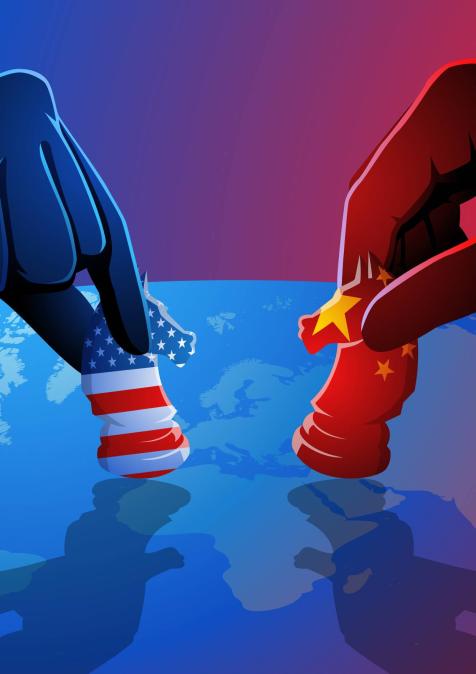
    The meeting between Donald Trump and Xi Jinping in Busan, South Korea, was more than an exercise in diplomacy. It was an emblematic performance of a world in transformation. Behind the formalities, the cameras, and the studied smiles lay an unspoken recognition: the world is no longer unipolar. The era of American supremacy, sustained for decades through its economic reach, military presence, and ideological projection, is giving way to a more diffuse, multipolar reality. ...
  • Authors
    Jorge Arbache
    October 9, 2025
    Conventional wisdom holds that the United States has undergone massive deindustrialization in recent decades, with the country's manufacturing sector supposedly withering as it lost ground to China. This narrative has fueled debates about industrial policy, economic nationalism, and the reshoring of manufacturing production. But what if this story is only partially true? What if, instead of disappearing, American industry simply changed its address?  ...
  • Authors
    September 3, 2025
    Estimates based on last year’s U.S. imports, by Maia G. Crook (from JPMorgan) indicate that the average effective U.S. tariff rate is currently 16%, and is expected to rise to 20% by the end of 2025. This represents an increase from 13% mid-year and 2.3% in 2024 (Figure 1). Effective tariff rates are a measure of the degree of protection a tariff structure offers to the value added provided by each sector to a country’s final product, taking into account both the tax on final g ...
  • Authors
    August 4, 2025
    An Executive Order issued on July 30 by President Donald Trump hiked United States tariffs on imports from Brazil by 40%, in addition to the 10% established on April 2—the so-called ‘Liberation Day’ when Trump set out ‘reciprocal tariffs’ on countries around the world.The decree came with a long list of exemptions for Brazilian exports. For a number of product lines, the 10% April 2 tariff will continue to apply. These include air transport equipment, orange juice, furniture, fuel, ...
  • June 23, 2025
    President Donald Trump's "Reciprocal Tariff" policy, announced on April 2, 2025 (dubbed "Liberation Day"), represents one of the most significant shifts in U.S. trade policy in nearly a century. Trump’s policy imposes a baseline 10% tariff on all imports and additional country-specific tariffs that range from 10% to 50% for countries designated as having "non-reciprocal trading practices" with the U.S. These specific tariffs are determined based on each country’s bilateral trade bal ...