Podcasts

Back

La réforme des Opérations de Maintien de la Paix : une nécessité impérieuse

18
June 2018
Hugo Sada

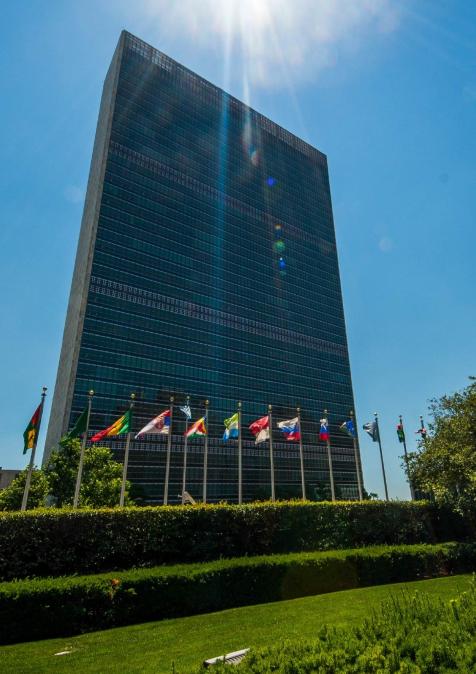
Dans ce Podcast, Hugo Sada aborde la question de la réforme des Opérations de Maintien de la Paix de l’ONU, qu’il considère ‘’nécessaire’’. Il y explique, aussi, les raisons qui retardent la concrétisation des recommandations formulées à cette fin dans des rapports successifs, émanant notamment d’anciens Secrétaires généraux de l’Organisation internationale.
RELATED CONTENT

  • Authors
    February 20, 2025
    The United Nations was built on a promise: to create a world in which justice, equality, and human dignity prevail. Arising from the ashes of the Second World War, the UN’s charter is filled with lofty ideals—social progress, human rights, and “better standards of life in larger freedom.” Decades later, the rhetoric remains intact, but the reality tells a different story. The UN has played a critical role in shaping global conversations around poverty, human rights, and inequality, ...
  • Authors
    February 12, 2025
    يستكشف هذا العرض الحاجة الملحة إلى إحداث تحول في النموذج المعتمد حاليّا في عملية تقديم المساعدات الإنسانية، في سياق حالات النزاع وما بعد النزاع، في منطقة الشرق الأوسط وشمال إفريقيا. ويدعو هذا العرض إلى تبني مقاربة ذات "بعد تنموي للمساعدات الإنسانية"، تجمع بين الإغاثة الفورية والأهداف التنموية على المدى الطويل. كما يدعو هذا المقال، من خلال تركيزه على محدودية المساعدات الإنسانية التقليدية، لا سيما في سياق الأزمات الطويلة، مثل: العراق، اليمن، لبنان وغزة، لضرورة تبني آليات تمو ...
  • Authors
    February 6, 2025
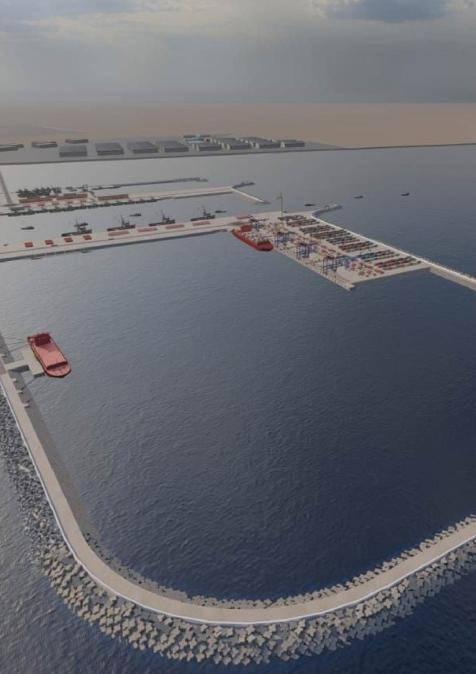
    Once upon a time, there was the G5 Sahel...In 2014, five Sahel countries - Mauritania, Mali, Burkina Faso, Niger and Chad - decided, with the support of a European power, to form a group of states called the G5 Sahel. The five countries shared a number of characteristics, chief among them the desert-like nature of their territory, with consequent vulnerability to climate change, the vastness of their territorial areas (with the exception of Burkina Faso), low population density, lan ...
  • Authors
    February 6, 2025
    Il était une fois le G5 Sahel… En 2014, cinq pays du Sahel que sont la Mauritanie, le Mali, le Burkina Faso, le Niger et le Tchad décidèrent avec l’appui d’une puissance européenne de se constituer en un groupe d’États appelé G5 Sahel. Les cinq pays se partageaient plusieurs caractéristiques dont principalement l’aspect désertique du territoire avec une vulnérabilité conséquente aux changements climatiques, l’immensité des superficies territoriales (à l’exception du Burkina Faso), ...
  • January 30, 2025
    Depuis le 1er janvier 2024, l'Algérie occupe un siège non-permanent au Conseil de sécurité des Nations Unies, une occasion pour ce pays de s’assurer une certaine visibilité dans un contexte international dominé par les conflits en Ukraine et à Gaza. Dès l’entame de son mandat, ce pays a été, par la force des choses, le porte-parole à la fois du groupe arabe et du groupe africain  En sa qualité de représentant de l’Afrique, l'Algérie s’est attachée à promouvoir une coordin ...
  • January 30, 2025
    Since January 1, 2024, Algeria has held a non-permanent seat on the United Nations Security Council, an opportunity for the country to raise its profile in an international context dominated by the conflicts in Ukraine and Gaza. From the outset of its mandate, Algeria has been, by necessity, the spokesperson for both the Arab and African groups.In its capacity as representative of Africa, Algeria has endeavored to promote coordination among the African members of the Council in an a ...
  • January 24, 2025
    Le 28 mai 2025, la CEDEAO (Communauté Économique des États de l’Afrique de l’Ouest) soufflera sa 50ème bougie, occasion propice pour revenir sur les réalisations et les échecs de cette Organisation régionale. Si l’on s’accorde à reconnaitre la CEDEAO comme une structure d’intégration réussie en Afrique, il n’en demeure pas moins que lui sont reprochés quelques défaillances et échecs. ...
  • Authors
    January 21, 2025
    According to the 2024 Secretary-General Report on Sahara (2024 Report), the biggest challenge may be the absence of progress in reaching a political solution to the Sahara Issue. Why has this conflict continued for half a century? In the 2024 Report, the Secretary-General has not attempted to give a stinging report on the resolution failure. The outline of the 2024 Report is largely as usual. Generally, to resolve a conflict, the proper parties should first be exactly identified. O ...
  • Authors
    December 24, 2024
    Over the past 50 years, international law relevant to the Sahara Issue has evolved significantly. Yet, even recent developments, such as a decision by the EU court and a proposal by the Secretary-General’s Personal Envoy to partition the Saharan provinces, have not adequately accounted for these advancements. Actions by a state that may not have been scrutinized in 1975 could now face condemnation under contemporary legal standards. Notably, the right to self-determination must not ...