Webinar : Political Economy in the North-South relations amid COVID-19

May 22, 2020

The COVID-19 pandemic poses unprecedented challenges to the international community and is due to heavily impact the global economy in the short and long run. The virus has infected over 4 million people and caused almost 300.000 casualties globally. During its spreading, mass production hastily witnessed shutdowns and supply chain disruptions, causing worldwide undulation effects encompassing all economic sectors. A steep contraction in household consumption, rising inflation and unemployment rates, and an abrupt halt in global tourism are some of its most visible consequences. Resilience of national economies vis-à-vis the current situation varies widely depending on many factors, including containment measures’ efficiency and effectiveness as well as the economic support governments consider deploying. Yet, the highly interconnectedness of the world means that fighting the virus – and navigating its economic consequences – must include both national measures and global ones. In this webinar, we reflect on alternative options for economic recovery. Trade agreements, debt relief measures, impact investments, green strategies – these are just some of the instruments available in the toolbox. The panel will address ways in which existing and new channels for cooperation between the global north and south can be leveraged to achieve the best possible way out of the crisis, with a long-term outlook on what kind of global economy we want to rebuild.

Speakers
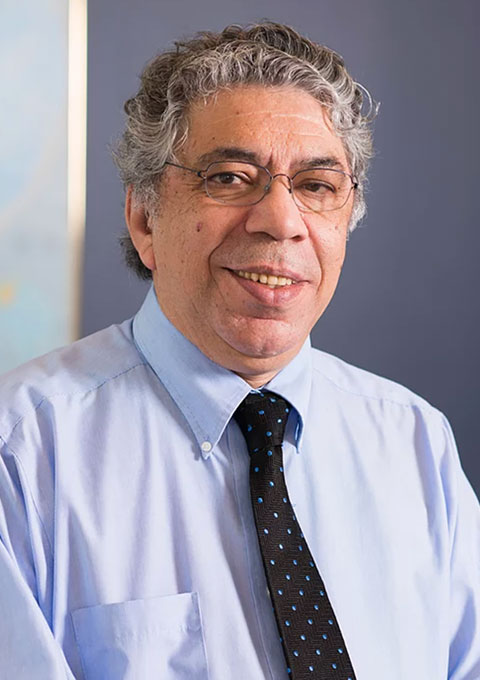
Otaviano Canuto
Senior Fellow
Senior Fellow at the Policy Center for the New South, Affiliate Professor at Mohammed VI Polytechnic University and Non-Resident Senior Fellow at Brookings Institute. Former Vice President and Executive Director at the World Bank, Executive Director at the International Monetary Fund (IMF) and Vice President at the Inter-American Development Bank. ...
Rym Ayadi
Founder and Scientific Director, Euro-Mediterranean Economists Association
Rym Ayadi is the Founder and President of the Euro – Mediterranean Economists Association (EMEA). She is Founder and Director of the Euro-Mediterranean and African Network for Economic Studies (EMANES). She is Senior Advisor at the Centre for European Policy Studies (CEPS); Professor at the Bayes Business School, City University of London and Member of the Centre for Banking Research (CBR); Chair of the European Banking Authority – Banking Stakeholders Group (EBA- BSG). She is also Associated Scholar at the Centre for Relationship Banking and Economics (CERBE) at LUMSA University in Rome. ...
Len Ishmael
Senior Fellow
Ambassador Dr. Len Ishmael is an affiliate Professor at Mohammed VI Polytechnic University teaching the MSc course New South Dynamics, as well as Geopolitics and Geo-economics in the Joint HEC Paris/Public Policy School Executive Program. She is a Senior Fellow of the Policy Center for the New South, Distinguished Visiting Scholar of the German Marshall Fund of the United States of America and a Senior Fellow of the European Centre for Development Policy Management. Dr. Ishmael is the Global Affairs Advisor and Head of the Expert Groups of the Brussels Diplomatic Academy of the Vrije Universiteit Brussel (VUB). She is the former Ambassador of the Eastern Caribbean States to the Kingdom of Belgium and European Union, past President of the 79-member African, Caribbean & ...
Ian Lesser
Vice President; Executive Director, Transatlantic Center, The German Marshall Fund of the United States, Brussels
Staff Expert Ian Lesser Vice President, Foreign Policy; Executive Director, Transatlantic Center Brussels Expertise: Policy, NATO / Mediterranean & Middle Eastern Affairs / North-South Relations / Terrorism / Proliferation / International Security & Geopolitics / Energy Related Topics: Security and Defense, European Union, Wider Atlantic, Mediterranean , Mediterranean Strategy Group, Turkey, Grexit, NATO, NATO and the Mediterranean, Understanding America Ian Lesser is vice president for Foreign Policy at The German Marshall Fund of the United States (GMF) and a member of GMF’s executive team, managing programs across the organization. He also serves as executive director of the Transatlantic Center, the Brussels office of GMF, and leads GMF’s work on the Mediterranean ...
Megan Richards
Visiting Senior Fellow, German Marshall Fund of the United States
...

RELATED CONTENT

  • Authors
    Diogo Ramos Coelho
    Bruno Saraiva
    June 22, 2026
    Global imbalances are back—and this time the risks look different. The 2008 financial crisis showed how persistent current-account deficits and surpluses between major economies can fuel financial instability and trigger sudden, severe reversals of capital flows. After almost two decades, many thought that episode had been resolved. It had not. New imbalances have built up, with a familiar cast: China, Germany, Japan, and oil exporters running large surpluses, and the United States ...
  • Authors
    June 12, 2026
    This essay argues that the current debate about the future of the international monetary system is not really about Gulf currencies, oil pricing, or de-dollarization in the narrow technical sense. It is about something deeper and more important: whether institutional trust can survive when geopolitical certainty is eroding.The Gulf monarchies—Saudi Arabia, the United Arab Emirates, Qatar, Kuwait, Bahrain, and Oman—increasingly exist in a world where the United States no longer looks ...
  • June 5, 2026
    Driven by its mission to reflect on and analyze the major geopolitical, economic, and societal transformations shaping the contemporary world, and with a view to contributing to knowledge-sharing and disseminating the main outcomes of its research program, the Policy Center for the New South regularly publishes collective volumes addressing issues of particular importance to Morocco, Africa, and the broader Global/New South. In this spirit, the Center has recently released two volum ...
  • Authors
    April 1, 2026
    We are now in the fifth week since the U.S. airstrike that killed top leaders of the Iranian regime, initiating a war involving the United States and Israel against the country. More than a month of mutual bombardments between Iran and Israel has ensued, extending to other Persian Gulf nations, U.S. military installations—and even Cyprus. From a global perspective, the impact has stemmed primarily from disruptions to regional production of goods and the blockade of the Strait of Hor ...
  • March 27, 2026
    This interview analyzes how tariff wars are transforming global power dynamics, disrupting trade systems, and redefining trade policy as a geopolitical tool, while examining the risks and opportunities for emerging economies and the Global South, the repositioning of regions like Latin ...
  • Authors
    Sofia Formigli
    February 13, 2026
    There is a story told by Václav Havel, the Czech dissident writer who later became president after the fall of communism. In his essay The Power of the Powerless, Havel describes a shopkeeper who, every morning, places a sign in his window reading: “Workers of the world, unite!” He does not believe in it. Nor do the people around him. Yet the sign remains. ...
  • Authors
    February 12, 2026
    Divergent regulatory regimes for data, driven by different motivations, ranging from privacy protection in the European Union to information control in China, could eventually produce distinctively different, and possibly contradictory, bodies of data. Artificial-intelligence models trained on those datasets could produce differing and possibly even conflicting outputs. To the extent that AI outputs start to shape human perception and to influence decisions, in governments and ...
  • Authors
    February 11, 2026
    The U.S.–China technological rivalry has become a central axis of global economic and geopolitical competition. While the United States continues to lead in frontier innovation—most notably in advanced semiconductors and artificial intelligence (AI)—China has consolidated strengths in large-scale implementation, manufacturing capacity, and control over critical segments of global supply chains. These advantages are especially visible in clean energy technologies and in the processin ...
  • February 4, 2026
    This article examines the quiet but profound implications of the erosion of U.S.-led hegemony for small and vulnerable states of the New South. While the post-1945 international order was never egalitarian, it offered predictability: power was organized through law, and sovereignty for weaker states rested less on justice than on procedural stability. Davos 2026 marked a turning point in the public acknowledgment of that system’s unraveling. Statements by leading Western figures rev ...