Trump, le Groenland et le devenir des relations transatlantiques

January 30, 2026

En 2019, Donald Trump a proposé d’acheter le Groenland, déclenchant un refus catégorique du Danemark et une tension diplomatique transatlantique. Cette initiative reflétait l’intérêt stratégique et économique des États-Unis pour l’Arctique et ses ressources. L’épisode a mis en lumière la fragilité des alliances traditionnelles et la montée de l’imprévisibilité américaine. Il souligne la nécessité pour l’Europe de renforcer son autonomie stratégique face à un partenaire parfois transactionnel.

Speakers
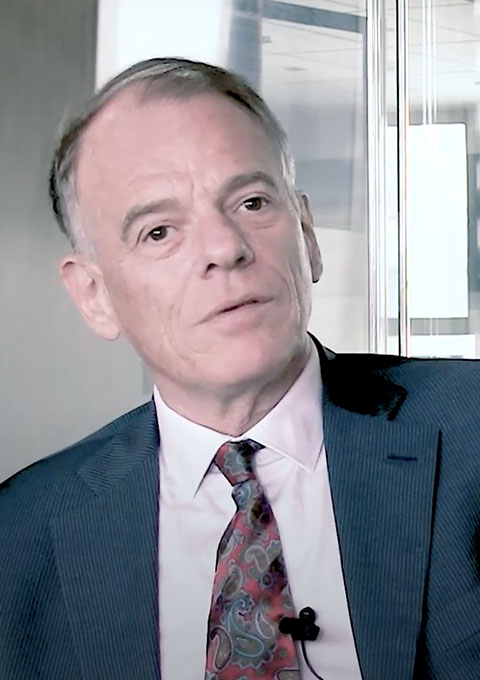
Dominique Bocquet
Senior Fellow
Dominique Bocquet is a graduate of Sciences-Po, a graduate of history and a former student of ENA. He is a member of the Editorial Board of the French Review Commentaire and Knight of the Legion of Honor. He lectures at Sciences Po and the ENA and is active in several European think tanks.  He is the author of several books and reports, including "Génération Europe" (Editions François Bourin, 1989), in collaboration with Philippe Delleur; "France and Germany, a couple running out of ideas" (Notes from the Saint-Simon Foundation, 1996); What economic efficiency for Lomé? "(Report for the Minister of Economy, Finance and Industry, June 1998)" Bringing the EDF into the EU’s Budget, a step forward in modernizing aid "(Report for the Minister for the ...

Ahmed Ouhnini
Economist, Policy Center for the New South
Ahmed Ouhnini is an Economist at the Policy Center for the New South. His research area covers agricultural economics, human and social development. Previously, he has worked as a researcher at the Paris School of Economics (PSE) and has also a record of working in consulting services in Morocco. Ahmed holds an engineering Diploma in Agriculture and Rural Development from the National School of Agriculture of Meknes and a Master’s Degree in Law, Economics and Management from the Paris 1 Pantheon Sorbonne Institute of Development. ...
RELATED CONTENT

  • November 18, 2025
    The meeting between Donald Trump and Xi Jinping in Busan, South Korea, was more than an exercise in diplomacy. It was an emblematic performance of a world in transformation. Behind the formalities, the cameras, and the studied smiles lay an unspoken recognition: the world is no longer unipolar. The era of American supremacy, sustained for decades through its economic reach, military presence, and ideological projection, is giving way to a more diffuse, multipolar reality. ...
  • Authors
    November 10, 2025
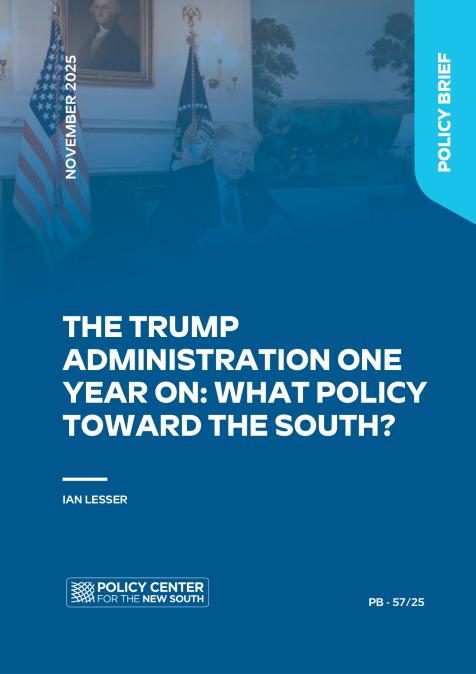
    Almost a year after President Donald Trump’s return to the White House, the United States displays little of the isolationism many of the country’s international partners anticipated, and many of Trump’s supporters desired. From economic sanctions to military intervention, Trump is proving to be something of a foreign policy president, although with distinctly unilateral instincts. This approach is particularly evident in Washington’s current approach to the ‘South’, including Latin ...
  • Authors
    Jorge Arbache
    October 9, 2025
    Conventional wisdom holds that the United States has undergone massive deindustrialization in recent decades, with the country's manufacturing sector supposedly withering as it lost ground to China. This narrative has fueled debates about industrial policy, economic nationalism, and the reshoring of manufacturing production. But what if this story is only partially true? What if, instead of disappearing, American industry simply changed its address?  ...
  • June 5, 2025
    The history of relations between the West and East Asia is deeply rooted in fear, dating back to the 13th century when Mongol hordes swept from Central Asia into the European steppes. This civilizational neurosis took root in the European imagination and has since shaped Western perceptions of the East. The derogatory racial metaphor “Yellow Peril”, which emerged in the late 19th century, was not a new invention but rather a recurring theme invoked whenever politically expedient. It ...
  • Authors
    May 20, 2025
    Le retour de Trump à la présidence des États-Unis en 2025 accélère l’effondrement de l’ordre international issu de 1945, déjà fragilisé par ses contradictions internes, ses promesses non tenues et son incapacité à intégrer le Sud global. Dans un monde traversé par une polycrise — climatique, énergétique, financière et alimentaire — Trump 2.0 incarne un tournant vers un réalisme assumé, où les alliances sont conditionnelles, les institutions multilatérales instrumentalisées, et les r ...
  • May 2, 2025
    The first hundred days of Donald Trump's presidency have again demonstrated his capacity to defy convention and polarize opinion. Far from merely repeating his earlier administration, this new chapter is best understood as part of a long-term repositioning of the United States within a rapidly shifting international system—one where American primacy is no longer assumed but increasingly contested. On the domestic front, Trump's agenda has been marked by political calculation and a ...