T20 Recommendations: Boosting GVC Resilience, Efficiency, and Policy Coordination

August 10, 2023

"GVCs, Resilience, and Efficiency: Enhancing Trade and Industrial Policy Design and Coordination" - a paper co-authored by Otaviano Canuto, Mahmoud Arbouch, Pepe Zhang, and Abdelaaziz Ait Ali. This paper, accepted by the T20 community, delves into the challenges confronting the global economy, with a focal point on the fragmentation of global value chains. It presents a set of recommendations to address this concern and strike a harmonious balance between efficiency and resilience. The paper engages in a clash of perspectives between the public and private sectors. While the private sector is driven by efficiency objectives, the public sector prioritizes national security and resilience. Notably, the current state of global value chains (GVCs) is exceptionally flourishing. The manufacturing sector has exhibited a substantial rebound following the shocks of the COVID-19 pandemic.

Speakers
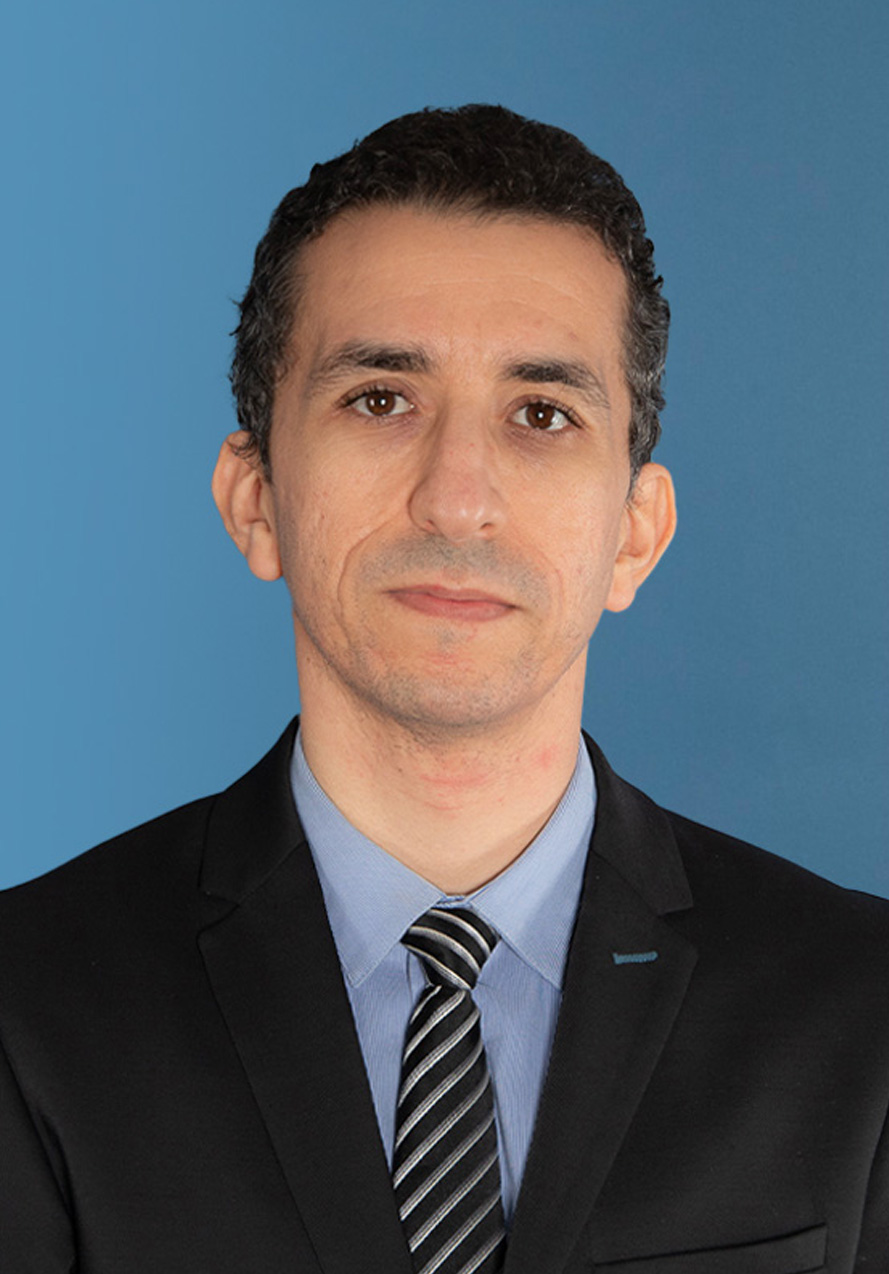
Abdelaaziz Ait Ali
Head - Research in Economics
Abdelaaziz Ait Ali is a principal Economist and head of the Research Department at the Policy Center for the New South. He joined the Center in 2014 after five years of experience at the Central Bank of Morocco. He worked as an economist in the International Studies and Relations Department and was analyzing the real estate price index and financial asset prices for monetary policy and financial stability purposes. Since then, Abdelaaziz has focused on cyclical and structural issues of the Moroccan economy, including macroeconomic management and industrial policy design. He has published articles on the reform of the exchange rate regime in the Moroccan economy and its implications for macroeconomic regulation, as well as on the evolution of the macroeconomic framework over th ...

RELATED CONTENT

  • August 3, 2026
    This policy paper explores how China’s economic development model—rooted in pragmatism, long-term planning, and civilizational renewal—has become its most compelling soft power asset, particularly in the eyes of the Global South. While critically engaging with Joseph Nye’s original conception of soft power as a primarily cultural and normative force, the paper argues that China’s ability to transform itself from an impoverished postimperial state into the world’s largest trading nat ...
  • July 29, 2026
    En un siècle, le cours de l’once d’or est passé de 20 dollars à 5 300 dollars au premier trimestre 2026. Cette étude, consacrée à l’analyse de cette envolée, comporte deux parties.La première privilégie une approche historique. Elle retrace tout d’abord le changement de statut du précieux métal jaune, monétisable jusqu’en 1971 puis démonétisé par la suite. Elle rappelle ensuite que cette évolution, loin d’être linéaire, est ponctuée de phases de forte hausse, de stagnation et d ...
  • Authors
    July 28, 2026
    The term “K-shaped recovery” was introduced to describe the economic recovery from the recession triggered by the Covid-19 pandemic. It refers to the uneven and divergent growth pattern between leading industries or sectors (the upper arm of the letter K—mainly the high-technology sector) and laggards, or the rest of the economy (the lower arm—the traditional industries). Since then the term has become popular in portraying divergent growth patterns within and between countries, esp ...
  • Authors
    July 16, 2026
    Thanks to the AI investment boom, the U.S. economy has performed well at the macroeconomic level. However, it is on an unsustainable fiscal and debt path. Mr. Trump’s fiscal policy in his second term has aggravated this trajectory. In turn, Mr. Trump’s tariff-based trade policy has failed to address what he sees as U.S. economic problems associated with the trade balance. Besides explaining why this has been the case, and what its implications are for the U.S. economy and the r ...
  • July 3, 2026
    Este Policy Paper también ha sido publicado en inglés y francés por Le Grand Continent La economía marroquí constituye un caso ilustrativo entre las economías de renta media, en un contexto marcado por una creciente fragmentación del entorno internacional, un crecimiento mundial anémico y una desaceleración de la convergencia. Desde 2022, su trayectoria se caracteriza por una relativa solidez, con un crecimiento superior a la media de las economías de la misma categoría. Superi ...
  • July 3, 2026
    Ce Policy Paper a également été publiée en anglais et en espagnol par Le Grand Continent Le Maroc offre un exemple éclairant parmi les pays à revenu intermédiaire, dans un contexte marqué par une fragmentation croissante de l’environnement international, une croissance mondiale atone et un ralentissement de la convergence. Depuis 2022, sa trajectoire se distingue par une certaine robustesse, avec un rythme d’expansion supérieur à celui des autres économies de même catégorie. Dé ...
  • July 3, 2026
    This Policy Paper has also been published in French and Spanish by Le Grand Continent Morocco offers a compelling example of how a middle-income economy can navigate a more fragmented global environment, characterized by weak growth and slower convergence. Since 2022, economic activity has remained relatively strong, with growth exceeding that of many comparable economies. Non-agricultural growth has averaged 4.4% since 2022, around 1.3 percentage points above its historical av ...
  • June 22, 2026
    History devotes considerable attention to the rise and fall of great powers. Scholars have spent centuries analyzing why empires collapse, why nations decline, and why dominant states eventually lose their position. By comparison, relatively little attention has been devoted to a different question: what happens when a country succeeds beyond its own expectations? ...
  • Authors
    June 12, 2026
    This essay argues that the current debate about the future of the international monetary system is not really about Gulf currencies, oil pricing, or de-dollarization in the narrow technical sense. It is about something deeper and more important: whether institutional trust can survive when geopolitical certainty is eroding.The Gulf monarchies—Saudi Arabia, the United Arab Emirates, Qatar, Kuwait, Bahrain, and Oman—increasingly exist in a world where the United States no longer looks ...