Special PCNS - UN75: Are Development challenges really intractable?

October 22, 2020

To commemorate the 75th anniversary of the United Nations, the Policy Center for the New South is pleased to organize a series of webinars to discuss key themes related to the role of the UN on the international scene. Moderator : Eduardo Amaral Haddad, Senior Fellow, Policy Center for the New South Speakers : Chidiogo Akunyili, Founder, She Roars (ADEL Alumna) Doreen Mashu, Development Consultant/Founder, The Good Heritage (ADEL Alumna) Mouhamadou Ly, Senior Economist, Policy Center for the New South

Speakers
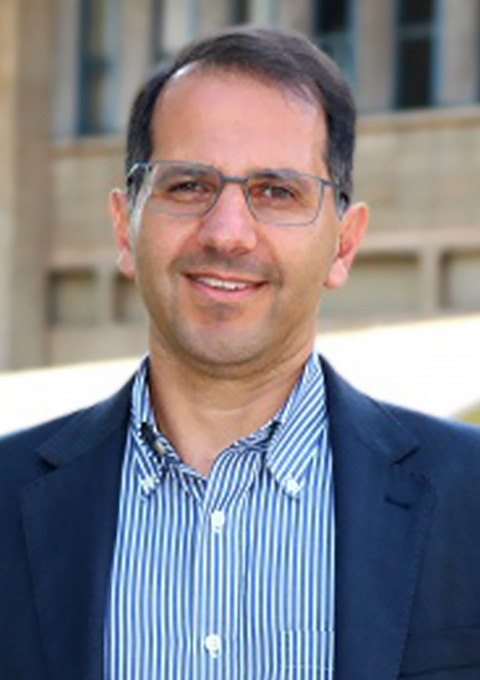
Eduardo Amaral Haddad
Senior Fellow
Eduardo A. Haddad is Full Professor at the Department of Economics at the University of São Paulo, Brazil, where he directs the Regional and Urban Economics Lab (NEREUS). He is additionally a Affiliate Professor at the Faculty of Governance, Economic and Social Sciences of the Mohammed VI University. He also holds a position as Affiliate Research Professor at the Regional Economics Applications Laboratory – REAL – at the University of Illinois at Urbana-Champaign, USA. He is a Senior Fellow at the Policy Center for the New South, Rabat, Morocco. Prof. Haddad has published widely in professional journals on regional and interregional input-output analysis, computable general equilibrium modeling, and various aspects of regional economic development in developing countries; he ...

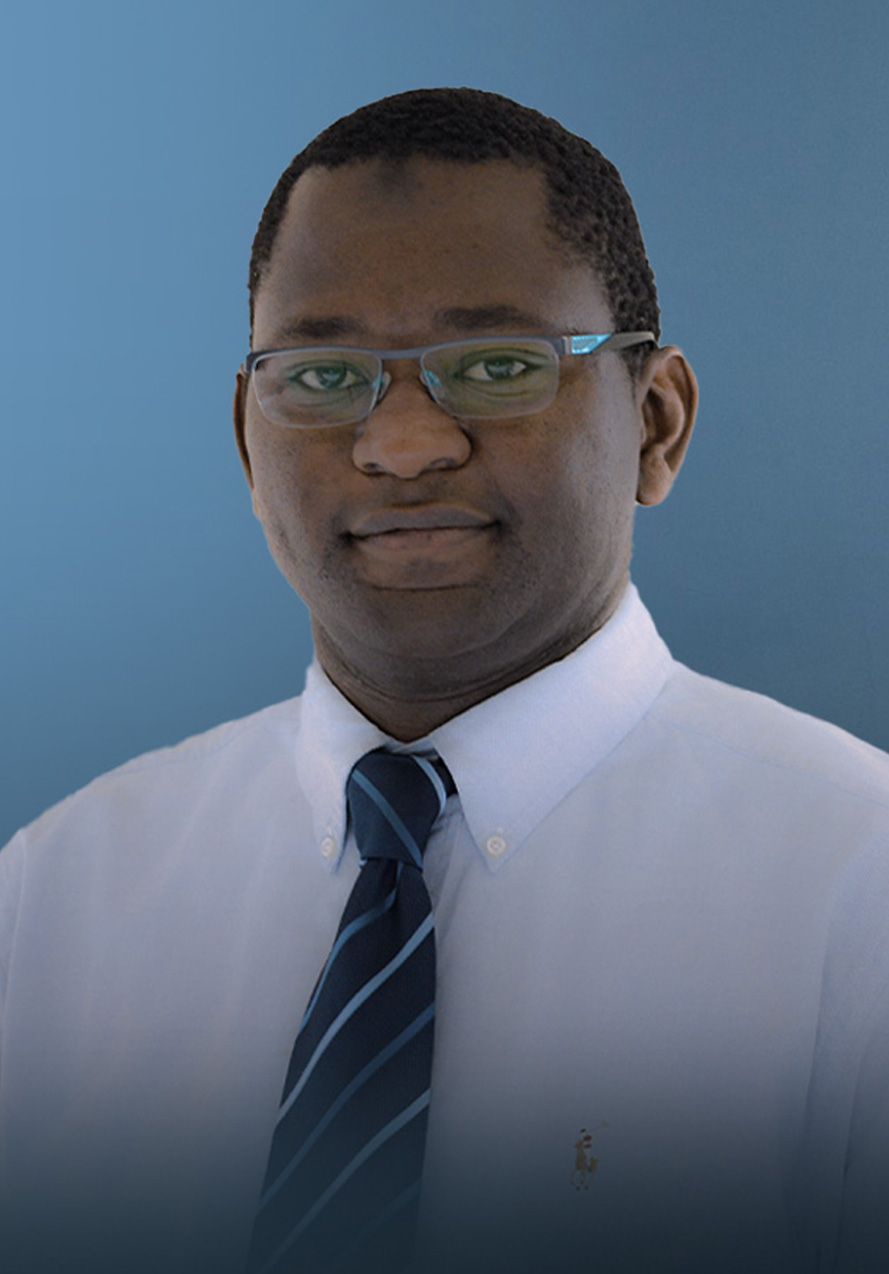
Mouhamadou Moustapha Ly
Economist, African Department of the International Monetary Fund (IMF)
Currently economist within the African Department of the International Monetary Fund in Washington DC, where he works on East African economies on various macroeconomic policy subjects and surveillance, he is also an affiliate professor of economics at Mohamed-6 Polytechnic university in Rabat (Morocco). Prior to that, Mouhamadou was senior economist at the Policy Center for the New South in Rabat (Morocco) working on development related issues and regional integration in the African continent. Mouhamadou also spent several years as assistant professor at Gaston Berger university in Saint-Louis (Senegal) and a lecturer at Auvergne university (France) and City university (London). He also worked as research fellow at the African Center for Statistics in the United Nations Econo ...
RELATED CONTENT

  • Authors
    Georges Ali Benyahia
    November 20, 2026
    This paper was originaly published on sciencedirect.com Ammonia and methanol feature in a growing share of announced low-emissions hydrogen projects; evidence on their progression to a final investment decision (FID) remains aggregate. We follow 2098 pre-FID projects, classified by output product, across six releases (2021–2026) of the International Energy Agency hydrogen projects database and estimate discrete-time cause-specific hazard models of progression to FID and ex ...
  • Authors
    Abla Zidani
    November 19, 2026
    La Guinée détient plus d’un tiers des réserves mondiales de bauxite et, en 2023, elle en est devenue le premier producteur mondial, devant l’Australie. La bauxite, ressource indispensable à la production d’aluminium, est jugée stratégique par la Chine, les États-Unis et l’Union européenne. Après une phase d’ouverture aux investisseurs sous Alpha Condé, la politique minière du pays a changé de logique avec Mamadi Doumbouya : il ne s’agit plus seulement d’attirer les capitaux, mais au ...
  • Authors
    November 16, 2026
    How can international arbitration preserve its core principles of neutrality, party autonomy and enforceability while adapting to a world increasingly characterized by geopolitical fragmentation, technological disruption and competing regulatory interests? Meeting this challenge demands a collective effort, bringing together arbitral institutions, national courts, governments, international organizations, academics and practitioners. It requires openness to institutional innovation, ...
  • Authors
    Bambang Brodjonegoro
    November 12, 2026
    This Opinion was originally published in asiapathways-adbi.org When G20 leaders meet in Miami next month, the discussions are expected to focus on how to sustain growth in a world marked by economic fragmentation, supply chain disruptions, fiscal pressures, and geopolitical uncertainty. Yet the global economy’s success depends not only on G20 members, but also on the many developing countries outside the group. Strengthening regional cooperation is a practical way to bridge thi ...
  • Authors
    Patrick Kabanda
    November 10, 2026
    Cultural trade is a dynamic engine for economic diversification in the New South. Despite decades of diversification rhetoric, however, this sector remains underrealized. Thus, many countries across Africa, Latin America and the Caribbean, Asia, and the Middle East are still commodity-dependent, even though the global creative economy has grown roughly eightfold since 2002, to surpass $2 trillion—that figure, moreover, does not even account for the nonmonetary benefits that merit co ...
  • November 9, 2026
    Cette interview examine les perspectives d’une éventuelle adhésion du Maroc à l’OCDE à l’horizon 2040, en revenant sur les conditions économiques, institutionnelles et réglementaires qu’un tel processus pourrait impliquer. Elle met en perspective les réformes engagées par le Royaume, le...
  • Authors
    Bambang Brodjonegoro
    November 2, 2026
    This policy note was published as part of the T20 U.S. 2026 Workstreams, under the workstream “Fostering Trade and People-Centered Economic Growth,” which brings together policy experts to develop recommendations for G20 policymakers. The Group of Twenty (G20) accounts for most of the world’s output, yet its decisions shape the prospects of 174 United Nations Member States without G20 membership, among them the great majority of least developed countries and small states. Many ...
  • Authors
    October 29, 2026
    Wars are decided by those who hold military power, but their costs are increasingly borne by those who have little or no voice in the decisions that start them. The US–Iran war shows this imbalance very clearly. Its economic consequences have gone far beyond the battlefield and have disrupted energy markets, trade routes, food supplies, public finances and investment in the Gulf, Europe, Africa and Asia. The most striking feature of the conflict, however, is not only the size of the ...