Small States & Great Power Relations: How do Caribbean SIDs Secure their Interests?

June 17, 2021

The Policy Center for the New South, in partnership with the Brussels Diplomatic Academy, will host a webinar under the theme “Small States & Great Power Relations: How do Caribbean SIDs Secure their Interests?”, scheduled on Thursday, June 17th, 2021 at 2pm Rabat time/ 3pm Brussels time. These are extraordinary and highly uncertain times. Great power rivalry and competition between the USA and China are at an all-time high; the world is still in the grips of an on-going pandemic. Post COVID-19 recovery will be a long drawn out process. In the midst of tensions between East and West there are some who argue that a bifurcation of global systems will take place as the World Order continues to evolve and global value chains experience some degree of uncoupling as a result of both the effects of the pandemic and existing geopolitical tensions. In an evolving international structure small states need all the friends they can find. They have few opportunities and weapons in the soft power tool kit with which to lobby for and protect their interests. Coalitions and alliances matter. In this era of heightened tensions during which the economic and social effects of the pandemic will be long lasting, small states such as the SIDS of the Caribbean need to tread wearily, not wishing to be caught in tensions between East or West. In such a world, how do they influence global policies and secure their interests? Can they?

Speakers
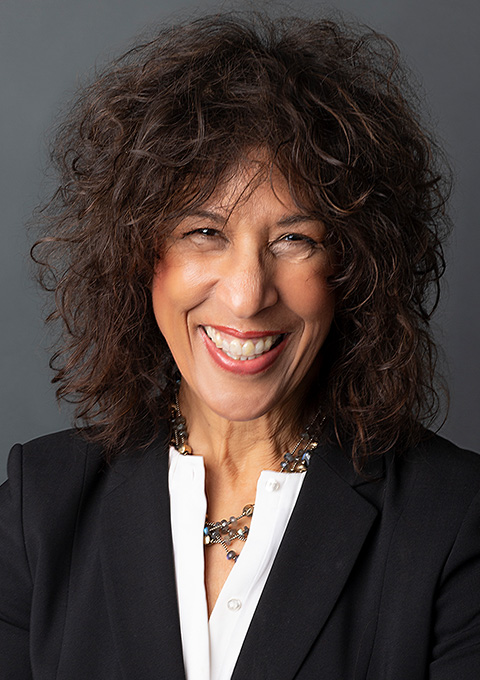
Len Ishmael
Senior Fellow
Ambassador Dr. Len Ishmael is an affiliate Professor at Mohammed VI Polytechnic University teaching the MSc course New South Dynamics, as well as Geopolitics and Geo-economics in the Joint HEC Paris/Public Policy School Executive Program. She is a Senior Fellow of the Policy Center for the New South, Distinguished Visiting Scholar of the German Marshall Fund of the United States of America and a Senior Fellow of the European Centre for Development Policy Management. Dr. Ishmael is the Global Affairs Advisor and Head of the Expert Groups of the Brussels Diplomatic Academy of the Vrije Universiteit Brussel (VUB). She is the former Ambassador of the Eastern Caribbean States to the Kingdom of Belgium and European Union, past President of the 79-member African, Caribbean & ...
Eustace Wallace
Counsellor Political & Economic Affairs St Kitts & Nevis High Commission. Ottawa.
...

  • Authors
    Stephan Klingebiel
    Andy Sumner
    January 9, 2026
    Global cooperation is under stress. It hardly requires detailed analysis: the international system is in a profound crisis, when seen from many Northern vantage points. What if we see the same turbulence but from a different vantage point? For many in the Global South the current period signals risk, but also opportunity. That the same events could spark a sense of crisis in one group but opportunity in another is nothing new. However, the sheer scale, speed, and scope of recen ...
  • January 09, 2026
    This episode explores the Trump administration’s confrontational stance toward Venezuela, including sanctions and military posturing and evaluates their effectiveness in undermining Madur ...
  • January 6, 2026
    La création de l’Alliance des États du Sahel (AES) symbolise une rupture politique et géostratégique majeure, appuyée sur un discours souverainiste et anti-occidental. Deux ans après, Mali, Burkina Faso et Niger peinent à assurer leur intégrité territoriale, à stabiliser leur sécurité intérieure et à bâtir une gouvernance solide. L’intégrité territoriale est un problème commun aux trois États, car dans ces pays, la cohésion de l’État et le contrôle du territoire sont directement men ...
  • January 2, 2026
    Ce Policy Paper analyse les enjeux politiques, économiques et opérationnels du Fonds pour les pertes et dommages, créé pour répondre aux impacts climatiques irréversibles subis par les pays les plus vulnérables. Il clarifie d’abord la notion de pertes et dommages, qui mêle effets économiques et non économiques, et souligne les défis d’attribution liés à la superposition entre chocs climatiques et fragilités structurelles. L’analyse met ensuite en lumière les tensions d’économie poli ...
  • Authors
    Niccola Milnes
    December 30, 2025
    Fuel access has become a strategic pressure point across Mali and its neighbors. In 2025, Jama’t Nusrat al Islam wal- Muslimeen (JNIM) shifted from sporadic interdictions to a deliberate fuel-blockade strategy intended to pressure Bamako without holding territory. By selectively constraining movement along the Sikasso–Kayes–Bamako corridor, the group turned fuel scarcity into a tool of coercion, governance, and narrative control—shaping behavior in the capital while remaining largel ...
  • Authors
    December 29, 2025
    The candidate could not have been more controversial—or more celebrated. Born in Kampala, the capital of Uganda, once ruled by Idi Amin, who famously declared himself “Conqueror of the British Empire” and “King of Scotland,” Zohran Kwama Mamdani, 34, is of Indian descent. His father is an academic, a professor of anthropology at Columbia University, his mother, Mira Nair, is an influential filmmaker. Zohran arrived in the USA on a visa at age seven. No doubt the agents of the feared ...
  • Authors
    Nizar Messari
    December 19, 2025
    The U.S. military buildup in the Caribbean—the most significant since the Cuban Missile Crisis—comes at a moment when a new world order is taking shape, its contours still unclear, and in which the U.S. seeks to be more assertive in the Western Hemisphere. This disposition toward South America and the Caribbean was underscored by the recent publication of the new U.S. National Security Strategy, in which the Monroe Doctrine is explicitly invoked. This Policy Brief situates the devel ...
  • Authors
    December 18, 2025
    The return of President Donald Trump to the White House at the start of 2025 was expected to signal an American retreat from international engagement, especially in regions of traditional security interest, such as southern Europe, North Africa, and the Middle East. To the surprise of many observers around the Mediterranean, and perhaps to the dismay of some in the Trump administration’s ideological orbit, this has not happened. If anything, the second half of 2025 has seen a high d ...