
Président
- Fathallah Oualalou, Senior Fellow, Policy Center for the New South (PCNS)
Introduction
- Kevin Cleaver, ancien vice-président associé, Fonds international de développement agricole (FIDA)
Intervenants
- Jennifer Blanke, Vice-présidente, Fondation Syngenta pour l'agriculture durable (SFSA)
- Bambang Brodjonegoro, président du conseil des commissaires, Bukalapak et PT Telkom
- Nguyen Minh Hang, vice-ministre des affaires étrangères, Vietnam
- Megumi Muto, vice-président de l'Agence japonaise de coopération internationale (JICA)
- Cecilia Nahón, directrice exécutive suppléante, Groupe de la Banque mondiale, Argentine
RELATED CONTENT
-
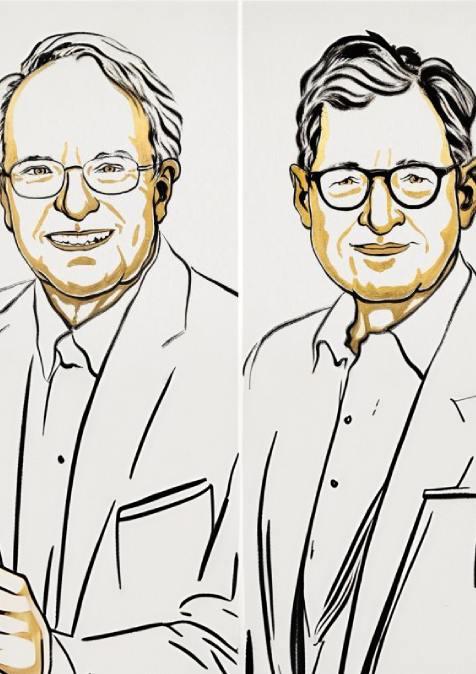 October 26, 2026Depuis que l’économie a été reconnue par les Nobel en 1969, il revient à cette discipline de clore les cérémonies annuelles d’attribution des Prix aux lauréats. C’est le 12 octobre 2026 que le jury du prix de la Banque de Suède, en sciences économiques en mémoire d’Alfred Nobel, a consacré deux Américains Prix Nobel de l’économie : Robert E. Hall et MichaelWoodford, pour leur contribution aux « fondements microéconomiques de la stabilisation macroéconomique de la stab ...
 -
 October 23, 2026In this episode, Mehran Haghirian explores the global economic consequences of disruptions in the Strait of Hormuz, beyond oil and gas. He examines their impact on trade, fertilizer suppl ...
 -
 October 22, 2026Strategic hedging is rational when it preserves a worthwhile choice at a tolerable cost while respecting existing commitments. Drawing on the literature on hedging and Latin American autonomy, this Policy Brief examines contrasting illustrations of that proposition. It distinguishes ambiguity about future alignment from uncertainty about existing obligations and explains how clearly bounded commitments can reconcile autonomy with credibility. The cases reveal different vulnerabiliti ...
 -
 October 22, 2026تتناول هذه الحلقة من «حديث الثلاثاء» تأثير تقلبات أسعار النفط والغاز في الأسواق العالمية على الاقتصاد المغربي، وانعكاساتها على القدرة الشرائية للأسر وتنافسية المقاولات. ونناقش مع ضيفنا السيد أمين سامي كيف تنتقل هذه التقلبات إلى أسعار السلع والخدمات، ولماذا لا تنخفض الأسعار دائمًا مع ترا...
 -
 October 20, 2026In October 2026, Brazil will elect its president. It will also renew the entire lower legislative chamber and two-thirds of the upper chamber, elect governors in all states, and renew state legislatures. What will be the impact of these elections nationally, regionally, and internationally? Who are the main presidential candidates, and what are their agendas? What are the main challenges facing Brazil over the coming years? These are the questions that this Policy Brief seeks to ans ...
 -
October 16, 2026Pourquoi l’or continue-t-il d’inspirer confiance, même lorsque son cours vacille ? Dans cet épisode, Henri-Louis Védie, Senior Fellow au Policy Center for the New South, décrypte les ress ...
-
October 15, 2026The Policy Center for the New South, in partnership with The Asian Network, is organizing a webinar titled “Emerging Powers and the Remaking of Global Order” to examine the growing role of emerging powers and the Global South at a time of profound transformation in the international sys...
-
October 14, 2026في ظل التوترات الجيوسياسية المتصاعدة، تتغير طرق التجارة العالمية وتتبدل معها موازين الممرات الاستراتيجية. تفتح هذه الحلقة من «حديث الثلاثاء» النقاش حول التقاء المسارات البحرية والبرية داخل هذه الممرات، والعوامل التي تتحكم في طبيعة السلع التي تعبرها. وتبحث كذلك في ما يمكن للمغرب أن يجنيه...
-
 October 13, 2026“Every gun that is made, every warship launched, every rocket fired signifies in the final sense, a theft from those who hunger and are not fed, those who are cold and are not clothed.”President Dwight Eisenhower, April 16, 1953 This paper examines the economic and human impacts of the first six months of the Iran war—from February to the end of August 2026—on Iran’s Arab neighbors and compares these impacts with those on the three countries directly involved—Iran, Israel and t ...
 -
 October 12, 2026Cet article soutient que le Chief Geopolitical Officer (CGO) doit être repensé à partir de l’expérience des entreprises africaines. Dans un environnement multipolaire et fragmenté, leur principal défi n’est pas seulement la gestion des risques, mais la préservation de plusieurs options stratégiques simultanément selon une logique de hedging. Trois modèles de CGO sont à distinguer : l’intermédiation (Office chérifien des Phosphates (OCP), Tanger Med), l’intégration régionale (Ethiopi ...

