
Président
- Fathallah Oualalou, Senior Fellow, Policy Center for the New South (PCNS)
Introduction
- Kevin Cleaver, ancien vice-président associé, Fonds international de développement agricole (FIDA)
Intervenants
- Jennifer Blanke, Vice-présidente, Fondation Syngenta pour l'agriculture durable (SFSA)
- Bambang Brodjonegoro, président du conseil des commissaires, Bukalapak et PT Telkom
- Nguyen Minh Hang, vice-ministre des affaires étrangères, Vietnam
- Megumi Muto, vice-président de l'Agence japonaise de coopération internationale (JICA)
- Cecilia Nahón, directrice exécutive suppléante, Groupe de la Banque mondiale, Argentine
RELATED CONTENT
-
 June 30, 2026This episode explores Morocco’s green transition, examining the country’s progress in renewable energy alongside the challenges of reducing dependence on fossil fuels. It discusses the economic and social impacts of climate change, particularly on water, agriculture, and health, while h...
 -
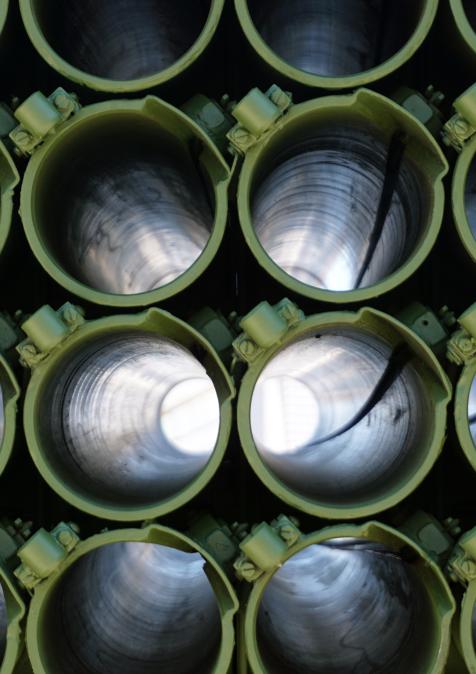 June 30, 2026The inventory is worrisomely low The US military has fired off more than 1000 Tomahawk cruise missiles, roughly ten times the number it currently buys each year. The Pentagon used more than 1200 Patriot interceptor missiles, "more than three million dollars a pop", and more than 1000 precision strike, ground based missiles, "leaving the inventories worrisomely low." US commanders were forced to ration interceptors by letting unguided or less destructive missiles hit empty or no ...
 -
June 29, 2026Africa’s tech ecosystem has experienced remarkable growth over the past decade, drawing increasing global interest while facing persistent structural challenges. In this episode, Maria Rotilu, Founding Partner at Openseed VC, shares insights on how venture capital can be better aligned ...
-
 June 26, 2026Au Maroc, la problématique des jeunes NEETs (Ni en emploi, ni en études, ni en formation) constitue une urgence nationale, alimentée par 300 000 abandons scolaires annuels. Face à ce défi, le modèle de l'École de la Deuxième chance nouvelle génération (E2C-NG) a démontré sa pertinence en affichant un taux d'insertion exceptionnel de 81 %.Cependant, ce succès institutionnel repose intégralement sur un tissu associatif local aujourd'hui fragilisé. L'analyse inédite des donné ...
 -
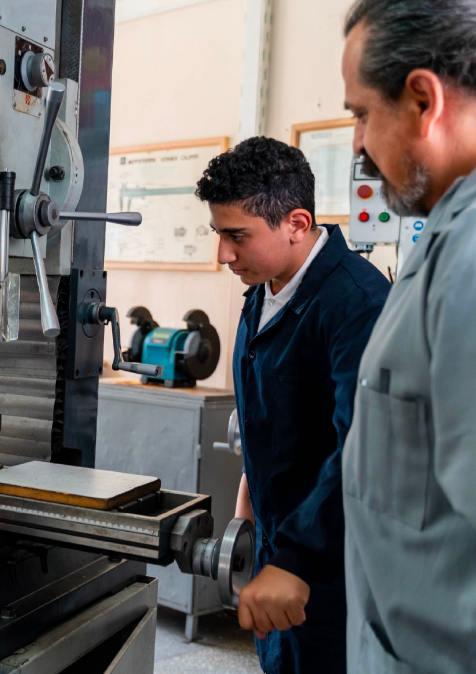 June 26, 2026In Morocco, the issue of young NEETs (Not in Employment, Education, or Training) is a national emergency, fueled by 300,000 students dropping out of school each year. In response to this challenge, the “New Generation Second Chance School” (E2C-NG) model has proven its effectiveness by achieving an exceptional employment rate of 81%.However, this institutional success rests entirely on a local network of organizations that is now under strain. A previously unpublished analysis of da ...
 -
June 25, 2026Les politiques économiques influencent directement le quotidien des citoyens, mais leur complexité alimente souvent distance, incompréhension et méfiance. Face à la désinformation et au manque de transparence, il devient essentiel de renouveler les formes de dialogue entre experts, déci...
-
June 24, 2026Africa, Latin America, and the Caribbean have both the potential and the desire to transform their people's lives through Green Industrial Policy. Yet they have long been constrained by structural obstacles embedded in the international system. The current rupture in that system, which ...
-
June 22, 2026Dans cet épisode, Imane Dahou revient sur la cybersécurité et la protection des données comme enjeux centraux de souveraineté numérique. L’entretien aborde les avancées, les défis et les priorités pour sécuriser les infrastructures, renforcer la confiance des citoyens et accompagner la ...
-
 June 22, 2026History devotes considerable attention to the rise and fall of great powers. Scholars have spent centuries analyzing why empires collapse, why nations decline, and why dominant states eventually lose their position. By comparison, relatively little attention has been devoted to a different question: what happens when a country succeeds beyond its own expectations? ...
 -
 June 22, 2026Global imbalances are back—and this time the risks look different. The 2008 financial crisis showed how persistent current-account deficits and surpluses between major economies can fuel financial instability and trigger sudden, severe reversals of capital flows. After almost two decades, many thought that episode had been resolved. It had not. New imbalances have built up, with a familiar cast: China, Germany, Japan, and oil exporters running large surpluses, and the United States ...

