Le Monde en période de crises multiples - Interview avec Hubert Vedrine

December 16, 2022

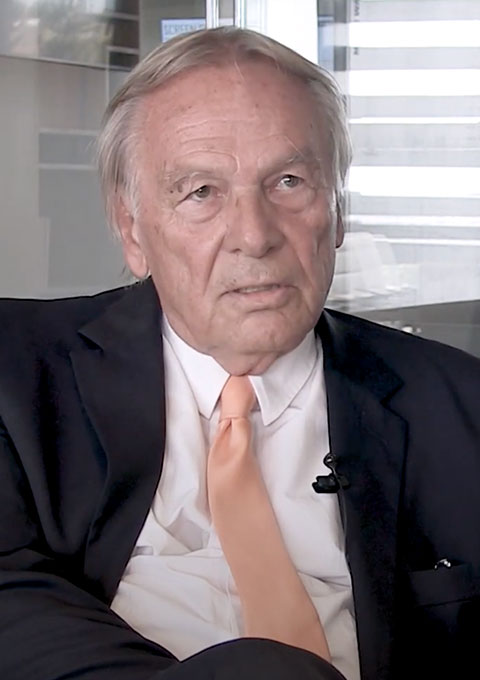
Dans cette interview tournée au cours des Atlantic Dialogues, Monsieur Helmut Sorge interroge le Ministre Hubert Védrine sur ses impressions sur un monde aussi troublé qu’aujourd’hui suite à la guerre Russo-Ukrainienne. Monsieur Védrine nous fait part de son analyse ainsi que son étude des scénarios possibles en passant par l’Ukraine, la Russie mais aussi la Chine et le Taiwan.

Speakers
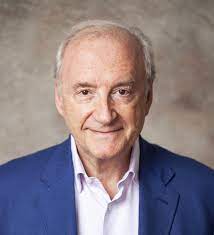
Helmut Sorge
Columnist
Helmut Sorge is a columnist at the Policy Center for the New South, where he publishes opinion pieces in the format of international press reviews of current events related to the Middle East and European affairs, and conducts interviews with high level policy makers and PCNS researchers. He is also a lecturer on journalism and the media. For over 40 years, Helmut Sorge served as a writer, former Foreign correspondent, Foreign editor, and Middle East expert for Germany's leading newsmagazine "Der Spiegel" to Washington, London, Paris and Los Angeles. He reported from Vietnam, the Middle East, wrote about safaris, nuclear accidents, visited prisoners on death row in the United States. The German weekly “Gala” summarized in 2011, when his latest book, a collection of biographies ...
RELATED CONTENT

  • Authors
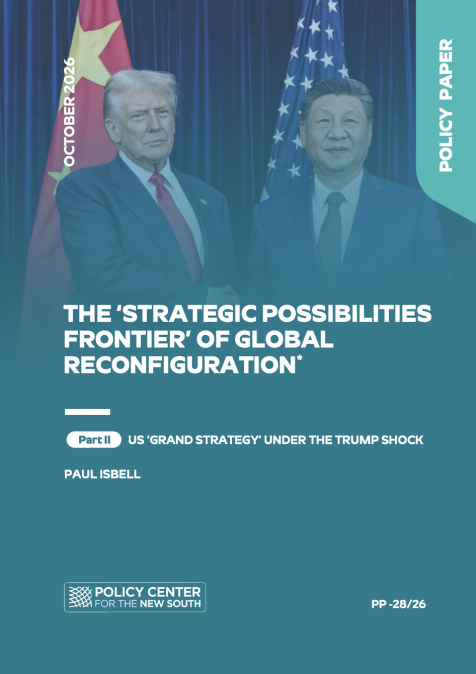
    Paul Isbell
    October 9, 2026
    In the first seven Policy Briefs of this ongoing series of analysis on Pan-Atlanticism: The Atlantic Basin in a Multipolar-Transnational World, we developed the argument that the strategic significance of the Atlantic Basin is on the rise for a range of international actors (states, regions and non-state agents) and from distinct political or ideological perspectives. In addition, in the most recently published Policy Brief -- “The U.S. and the Current International Reconfiguration: ...
  • Authors
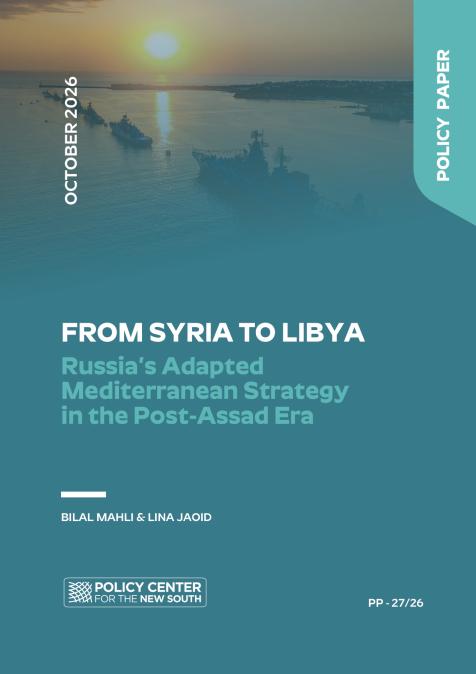
    Lina Jaoid
    October 8, 2026
    In the two years since the fall of Bashar al-Assad in Syria, Russia has restructured its Mediterranean presence. Although Russia’s limited and increasingly conditional access to the Khmeimim and Tartus facilities in Syria has been preserved, its presence in the country has morphed from Assad’s ‘patron-client’ configuration to a more negotiated engagement. Simultaneously, Russia has upgraded its force-projection and logistical infrastructure in eastern Libya, giving it an access path ...
  • September 25, 2026
    In this episode, Senior Fellow Ian Lesser examines the United States’ longstanding ties with the Mediterranean as the country marks its 250th anniversary. He discusses how a possible shif ...
  • Authors
    Marianna Albuquerque
    September 23, 2026
    The author of this opinion, Marianna Albuquerque, is a 2022 alumna of the Atlantic Dialogues Emerging Leaders Program.As world leaders gather in New York for the 81st United Nations General Assembly, climate change returns to the center of multilateral diplomacy under markedly different circumstances. The debate is no longer confined to whether the world must decarbonize, but increasingly centers on how the transition will happen, who will bear its costs, who will capture ...
  • Authors
    Meryam Amarir
    August 13, 2026
    Recent crises in the Middle East, particularly attacks targeting commercial vessels in the Red Sea and tensions surrounding the Strait of Hormuz, have highlighted the vulnerability of the main strategic corridors of global trade. Rather than fundamentally disrupting the organization of trade flows, these crises are accelerating an ongoing transformation driven by the search for more resilient connectivity chains, the diversification of trade routes, and the development of logistics ...
  • Authors
    Meryam Amarir
    August 13, 2026
    Les crises récentes au Moyen-Orient, notamment les attaques ciblant les navires commerciaux en mer Rouge et les tensions autour du détroit d'Ormuz, ont mis en évidence la vulnérabilité des principaux corridors stratégiques du commerce mondial. Plus qu'un bouleversement de l'organisation des échanges, elles accélèrent une transformation déjà engagée, fondée sur la recherche de chaînes de connectivité plus résilientes, la diversification des itinéraires commerciaux et le développement ...
  • Authors
    Sous la direction de
    June 23, 2026
    L’Afrique atlantique émerge aujourd’hui comme un espace de réflexion stratégique majeur. Longtemps envisagée sous l’angle de sa fragmentation ou de sa marginalité relative dans les grands récits géopolitiques, cette façade maritime tend désormais à être appréhendée comme un ensemble en devenir, structuré par des dynamiques géopolitiques, économiques et sécuritaires de plus en plus intenses. C’est dans cette perspective qu’a été initié le Africa Maritime Symposium (AMS), dont la ...
  • Authors
    Paul Isbell
    April 2, 2026
    PrefaceThis series of policy briefs, Pan-Atlanticism: The Atlantic Basin in a Multipolar-Transnational World, assesses the strategic significance—and potential—of the Atlantic Basin, when viewed and engaged with as a distinct and coherent region for international cooperation or governance, and as a potential arena of strategic competition, within a shifting structure of international power that is now moving from unipolarity to a new multipolar reality.The series began by tracing th ...
  • Authors
    Sofia Formigli
    February 13, 2026
    There is a story told by Václav Havel, the Czech dissident writer who later became president after the fall of communism. In his essay The Power of the Powerless, Havel describes a shopkeeper who, every morning, places a sign in his window reading: “Workers of the world, unite!” He does not believe in it. Nor do the people around him. Yet the sign remains. ...