L’aéronautique au Maroc : les secrets d’une ascension industrielle (Partie 1)

July 7, 2026

Cet épisode revient sur les origines du développement de l'industrie aéronautique au Maroc et les choix stratégiques qui ont permis au Royaume de s'imposer comme un  hub industriel du secteur en Afrique. Hamid Benbrahim El Andaloussi retrace les grandes étapes de cette transformation, depuis l'installation des premiers équipementiers jusqu'à la structuration d'un écosystème intégré fondé sur la compétitivité, les partenariats public-privé, la formation des talents et l'intégration progressive dans les chaînes de valeur mondiales. Il partage également les principaux facteurs de réussite qui ont fait du modèle marocain une référence internationale.


Speakers
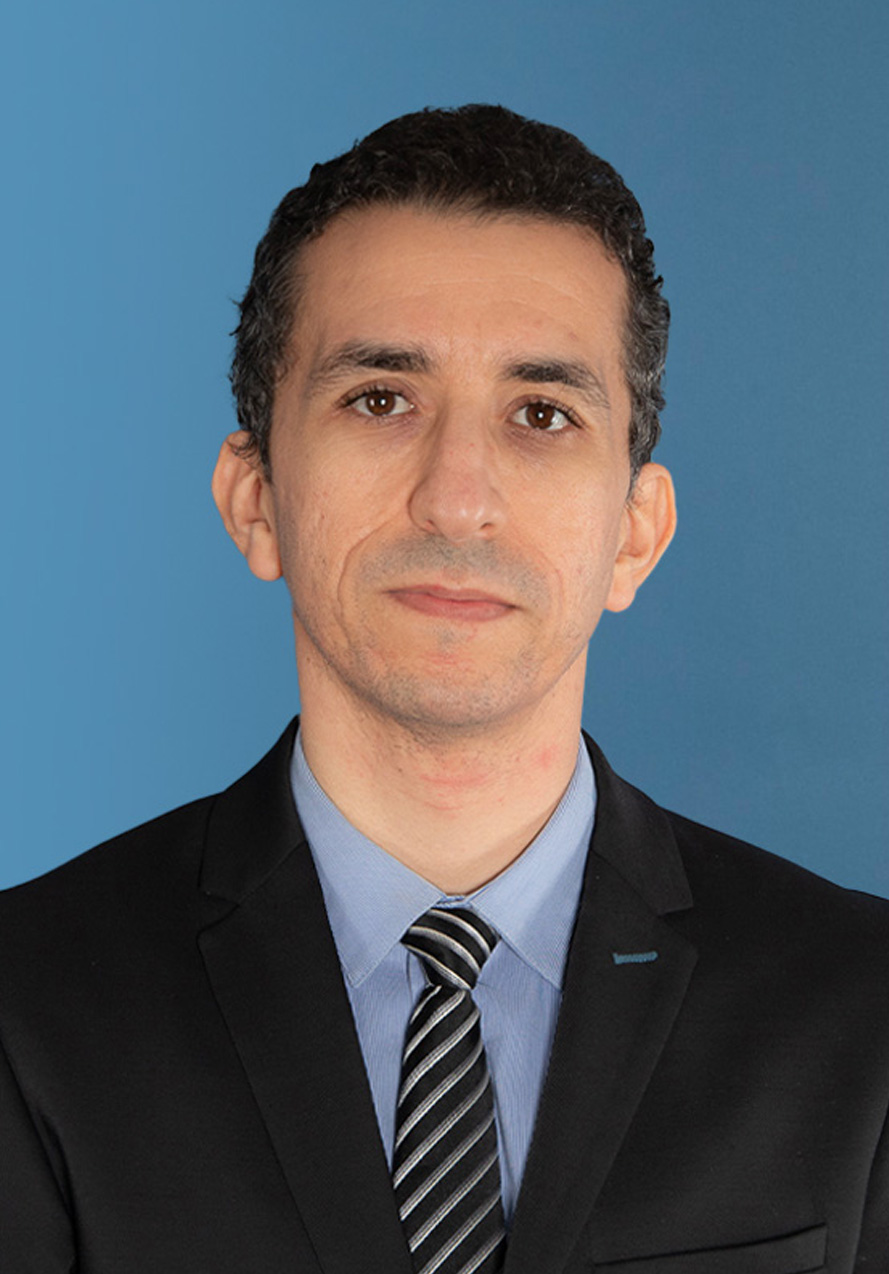
Abdelaaziz Ait Ali
Head - Research in Economics
Abdelaaziz Ait Ali is a principal Economist and head of the Research Department at the Policy Center for the New South. He joined the Center in 2014 after five years of experience at the Central Bank of Morocco. He worked as an economist in the International Studies and Relations Department and was analyzing the real estate price index and financial asset prices for monetary policy and financial stability purposes. Since then, Abdelaaziz has focused on cyclical and structural issues of the Moroccan economy, including macroeconomic management and industrial policy design. He has published articles on the reform of the exchange rate regime in the Moroccan economy and its implications for macroeconomic regulation, as well as on the evolution of the macroeconomic framework over th ...


RELATED CONTENT

  • December 14, 2017
    Moderator: Jordi Bacaria, General Director, Barcelona Centre for International Affairs - Newai Gebre-ab, Executive Director, Ethiopian Development Research Institute, former Chief Economic Adviser to the Prime Minister of Ethiopia - Paulo Neves, President, Institute for the Promotion of...
  • December 12, 2017
    Infrastructure development is a key factor for growth and an essential catalyst for sustainable and socially inclusive development. The emergence of a large middle-class on the African continent is driving the demand for socio-economic infrastructure including access to water and sanita...
  • Authors
    Yassine Msadfa
    September 21, 2017
    Les chaînes de valeur mondiales offrent de nouvelles opportunités de transformation structurelle pour les pays en développement. Aujourd’hui la vision des chaînes de valeur mondiales se limitant à l’analyse des flux commerciaux et des IDE à l’échelle globale n’est plus suffisante pour répondre aux questions clés du positionnement et de la remontée dans ces chaînes de valeur, de la dynamique de la capture de la valeur et de sa pérennisation. La réponse à ces questions appelle un écla ...
  • Authors
    August 9, 2017
    This paper reports on the recent developments in the construction of an interregional input-output matrix for Morocco (IIOM-MOR). As part of an ongoing project that aims to specify and calibrate an interregional CGE (ICGE) model for the country, a fully specified interregional input-output database was developed under conditions of limited information. Such database is needed for future calibration of the ICGE model. We conduct an analysis of the intraregional and interregional shar ...
  • Authors
    Taoufik Abbad
    July 5, 2017
    The continuous and reinforced process of accumulating physical capital, in which Morocco has embarked since the early 2000s, has helped to preserve the stability of the fundamental equilibrium and cushion the economy from various external and exogenous shocks. However, these accumulation efforts have not led to a significant increase in productivity gains or to an accelerated transformation of the productive base. This Policy Brief aims to describe the underpinnings of the capital a ...
  • Authors
    Taoufik Abbad
    July 5, 2017
    Le processus continu et renforcé de l’accumulation du capital physique, dans lequel s’est engagé le Maroc depuis le début des années 2000, a permis de préserver la stabilité des équilibres fondamentaux et d’amortir les différents chocs exogènes, aussi bien internes qu’externes. Cependant, cet effort d’accumulation n’a pas permis d’insuffler un accroissement significatif des gains de productivité et d’accélérer la transformation de la base productive. Ce Policy Brief propose de décri ...
  • June 21, 2017
    Ce podcast est présenté par Moubarack Lo. Il y analyse l’apport de l’adhésion marocaine à la CEDEAO suite à l’accord de principe donné par ses membres au 51e sommet de Monrovia le 4 juin ...
  • Authors
    Eliot Pence
    May 19, 2017
    U.S. Africa policy has tended to shift over time and has lacked a clear overarching strategic vision. The Trump administration’s approach in Africa should articulate a limited set of principles that clarifies and solidifies a more sustainable framework that is better suited to address fundamental drivers of Africa’s future. These principles include prioritizing key countries and rationalizing resources, creating an “Investment- First” policy in Africa, and more clearly communicating ...
  • Authors
    Onasis Tharcisse A. Guedegbe
    December 23, 2016
    L'intégration commerciale est une condition de réussite de tout projet d’intégration économique. Les facteurs entravant cette intégration commerciale sont donc un goulot d’étranglement au projet d’intégration économique des pays de la Communauté Economique des Etats de l’Afrique de l’Ouest (CEDEAO), projet qui constitue un moyen efficace de faire face à la forte expansion de la demande alimentaire sous régionale. Cet article vise à mettre en lumière les facteurs contraignant la flui ...