
RELATED CONTENT
-
 October 29, 2019L’ Afrique de l’Est a le potentiel de connaître un boom gazier et d’ exportation de gaz naturel liquéfié (GNL) ces prochaines années grâce à plusieurs projets qui viennent d’être débloqués. Le Mozambique a ainsi sanctionné deux projets totalisant plus de 15 millions de tonnes par an (Mt/an) de gaz liquéfié et un troisième devrait être lancé d’ici la fin 2019. Un premier Floating Liquefied Natual Gas plant (FLNG) d’ ENI arrivera sur le marché en 2021-2022 et quatre autres trains de l ...
 -
 September 27, 2019This paper is about the basic principles which should guide fertilizer policy for smallholder agriculture in sub-Saharan Africa It is not about detailed country-specific prescriptions on the “how” of policy. This important task should constitute the substance of detailed country studies. The overarching goal here is to use fertilizer to spearhead and sustain an African Green Revolution (GR). In this paper, fertilizer use is not considered as an end in itself, but as a necessary mean ...
 -
 September 26, 2019Interviewée par Helmut Sorge, chroniqueur au PCNS, Rim Berahab, économiste spécialiste de l’énergie décortique dans son papier, les liens existant entre les énergies renouvelables en Afrique et les opportunités de croissance économique. “ Le modèle marocain de l’énergie solaire pourrait profiter à d’autres pays africains” Dans votre Policy Paper intitulé « Energies renouvelables en Afrique : Enjeux, défis et opportunités » vous expliquez l'importance de ces éne ...
 -
 August 22, 2019This note approaches the relationship between natural wealth and economic growth, using the case of Sub-Sahara African economies as an illustration. Delving into recent World Bank reports, it highlights how a sustained positive correlation between natural capital and GDP growth happens through the transformation of the former into other forms of assets: produced capital, human capital and other intangible assets. Governance features and the quality of macroeconomic policies are of t ...
 -
May 17, 2019Sur quelles contraintes faut-il anticiper lorsqu’on évoque la croissance de l’Afrique? Comment guider les décideurs politiques dans les priorités à définir pour piloter l’économie et arriver à bon port dans le monde qui vient? Le séminaire organisé le 11 avril à Paris par le PCNS et le Centre de développement de l’OCDE a apporté des éléments de réponse. La discussion s’est ouverte en prenant appui sur le rapport de référence publié en 2018 par l’Union africaine et l’OCDE ...
-
 May 14, 2019Les pays du continent africain ont connu une croissance sans précédent au cours des deux dernières décennies. L’énergie, pilier fondamental du développement économique, politique et social, demeure toutefois un des principaux défis auxquels ils sont confrontés. En effet, la majorité des pays d’Afrique se heurte à un manque important d’accès à l’énergie. Alors que les combustibles fossiles continuent de dominer leurs mix énergétiques, ces pays sont dotés d’abondantes ressources en én ...
 -
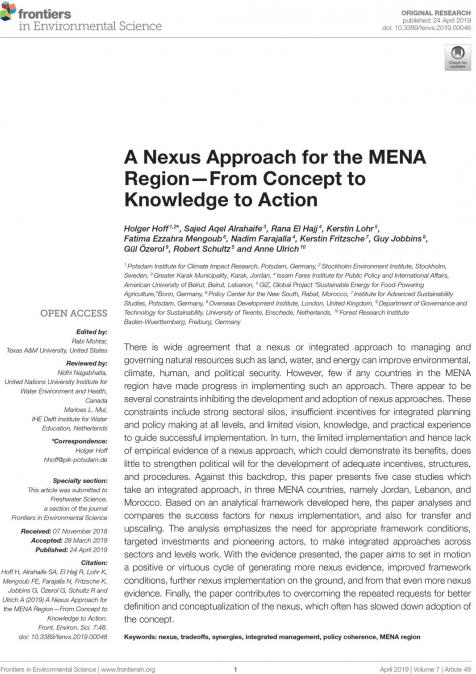 May 13, 2019Adopting an integrated approach to the management and governance of natural resources including land, water and energy is seen as an effective way to improve the sphere of production while respecting the environment. Fatima Ezzahra Mengoub, economist at the Policy Center for the New South, was invited by Stockholm Environment Institute, alongside other prestigious research centers with expertise in environmental studies, to co-author this research paper and share her analysis of th ...
 -
April 16, 2019Le rapport Arcadia a été présenté le 9 avril à Paris par le Policy Center for the New South (PCNS) et le Cercle CyclOpe. Ce document de référence fait chaque année le point sur la conjoncture des matières premières africaines. “Elles restent essentielles, avec une forte dépendance pour nombre de pays et une gestion de la rente relativement problématique”, a affirmé en introduction Philippe Chalmin, président du Cercle CyclOpe. Fortement exposées aux chocs extérieurs, les écono ...
-
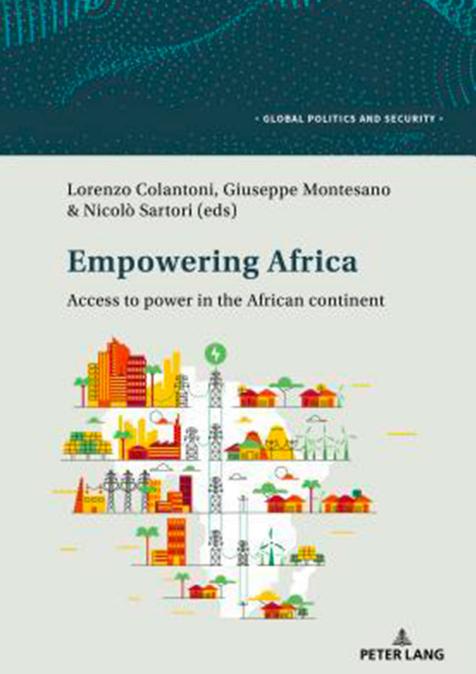 April 12, 2019Access to electricity is a key factor for the future of the African continent. Energy poverty and lack of universal access to electricity services are, in fact, remarkably hurting human progress in Africa. Today, sub-Saharan Africa hosts 14 percent of the world’s population but 60 percent of the world’s people without access to electricity: of the more than 1 billion people globally who had no access to electricity, around 600 million lived in the region. In these conditions, many A ...
 -
April 9, 2019The author is an alumnus of the 2018 Atlantic Dialogues Emerging Leaders program On a Saturday evening in March at an upscale gallery in Johannesburg’s CBD, the lights went out. A child in the crowd yelped in shock, but most of the adults let out a gentle sigh of resignation. An attendant came by soon after to assure that it wasn’t load shedding and that the power would be reconnected shortly, but we had become inured to the darkness and the idea that electricity wasn’t somet ...

