Investment in Green Infrastructure: Paving the Way to the Private Sector

June 16, 2021

It is now an established fact that investment in infrastructure is considered as a driver for economic growth. It acts through different channels. In the short run, the construction phase of any projects often implies the direct creation of new jobs and an indirect creation of on peripheral sectors, as a result of a rise in the sectoral activity. In the long run, sound infrastructure drives up potential growth by reducing input costs, facilitates regional integration and the efficiency of trade in goods. According to the latest estimates by the Global Infrastructure Hub, global investment in infrastructure is around $79 trillion while the investment needs are around $94 trillion. In the current state of affairs, the public sector remains the major investor in infrastructure and while the private sector involvement has been increasing, it is still far from the desired level that would close the $15 trillion funding gap. On the African continent, this gap is estimated at $68 to $108 billion dollars according to estimates by the African Development Bank. Energy, Water and Sanitation, and Transport are the main sectors where the resilient infrastructure are most needed, in order to provide high quality basic services such as electricity and water distribution. Furthermore, the current crisis related to COVID-19 as well as to the climate risks that the world is facing are calling for an approach to infrastructure based on objectives of sustainability. According to the C40, which regroups the main megacities around the world, urban centers account for 70% of the world’s Greenhouse Gases (GHG) emissions, with none less than 21% related to infrastructure and construction. The world is facing a momentum to act a shift in the paradigm of infrastructure building towards resilient green infrastructure. However, reaching these objectives requires diversifying the structure of financing by enhancing the participation of the private sector. The generalization of green infrastructure as an asset class will depend on reforming the general framework of implementation of PPP projects by including the appropriate risk mitigation tools and the buffers that ensure a steady and sustainable return on investment. Moreover, the governance of these institutional designs matters also to ensure the credibility of the partnerships between both sectors. With an increasing trend towards decentralization, implementation will also need to be decentralized to act at the local level and target the specific needs of urban centers.


Speakers
Shamshad Akhtar
Former Minister of Finance and Governor of the Central Bank of Pakistan
...
Rim Berahab
Senior Economist
Rim Berahab is Senior Economist at the Policy Center for the New South, which she joined in 2014. She is currently working on themes related to energy issues and their impacts on economic growth and long-term development. Her research areas also cover trade and regional integration challenges in Africa. Previously, she has also worked on questions related to gender inequalities in the labor market of North African countries. Rim spent three months at the International Monetary Fund (IMF), in 2016, in the Commodities Unit of the Research Department. She holds a State Engineering degree from the National Institute of Statistics and Applied Economics (INSEA). ...
Otaviano Canuto
Senior Fellow
Senior Fellow at the Policy Center for the New South, Affiliate Professor at Mohammed VI Polytechnic University and Non-Resident Senior Fellow at Brookings Institute. Former Vice President and Executive Director at the World Bank, Executive Director at the International Monetary Fund (IMF) and Vice President at the Inter-American Development Bank. ...

RELATED CONTENT

  • Authors
    Mehran Haghirian
    June 15, 2026
    This article draws in part on perspectives shared by members of the Rihla Initiative for Green Economic Growth, whose regional insights helped inform the sections on how the costs of the war are being felt across the Global South. The war on Iran and in the Gulf has made it impossible to treat the Strait of Hormuz as a regional issue. The disruption around the Strait has moved through the world economy in concrete ways, from higher fuel bills and pressure on food and fertilizer ...
  • June 11, 2026
    The global energy system has entered a period of acute structural stress following the strikes by the United States and Israel on Iran in late February 2026, and the subsequent disruption of flows through the Strait of Hormuz. According to the International Energy Agency, the resulting shock marks the most severe disruption to global energy markets since the 1970s oil crises, with systemic characteristics comparable to the combined effects of those crises and the 2022 Russia-Ukraine ...
  • Authors
    June 8, 2026
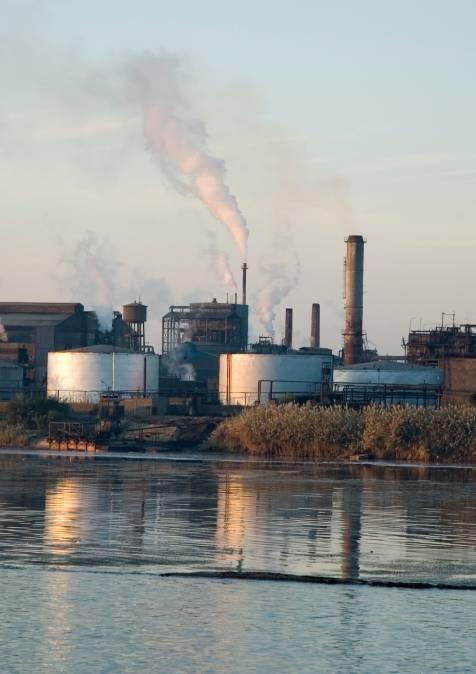
    The energy shock caused by the war between the United States and Israel and Iran has highlighted the need for Africa to refine more of its own crude oil. Africa is a net hydrocarbon exporter, but remains stuck in the old colonial economic model: it mostly exports raw materials and imports refined products. Africa exports about 2.6 billion barrels of crude oil every year, and imports about 1.4 billion barrels of refined products. This is a problem for two reasons. First, Africa ...
  • June 5, 2026
    Driven by its mission to reflect on and analyze the major geopolitical, economic, and societal transformations shaping the contemporary world, and with a view to contributing to knowledge-sharing and disseminating the main outcomes of its research program, the Policy Center for the New South regularly publishes collective volumes addressing issues of particular importance to Morocco, Africa, and the broader Global/New South. In this spirit, the Center has recently released two volum ...
  • March 30, 2026
    L’épisode explore les mutations profondes du secteur énergétique mondial, marqué par une transition complexe entre crise des prix et crise des systèmes. Après une période de tensions extrêmes sur les coûts de l’énergie (pétrole, charbon, gaz), 2025-2026 marque un tournant : les prix se ...
  • Authors
    January 20, 2026
    This policy brief examines what the 2025–2026 period reveals about the future of global energy risk and the energy transition. After the shocks of 2021–2023, 2025 brought broad price easing: oil and coal prices declined as supply growth outpaced demand, and the World Bank projects further declines in the global energy price index in 2026, offering short-term relief for energy-importing economies. The brief argues, however, that the macroeconomic relevance of energy entering 202 ...