حديث الثلاثاء: اشكالية المديونية في الجنوب : الواقع والافاق

December 19, 2023

يخصص مركز السياسات من أجل الجنوب الجديد حلقة خاصة من برنامجه الأسبوعي "حديث الثلاثاء" لمناقشة اشكالية المديونية في الجنوب : الواقع والافاق.

حلقة خاصة في اطار النسخة الثانية عشر لمؤتمر الحوارات الأطلسية الدي ينظمه مركز السياسات من أجل الجنوب الجديد كل سنة، والتي اقيمت بمراكش بعد شهرين من اجتماعات السنوية لمنظمات المالية الدولية والتي شكلت عودة اللقاءات إلى دولة افريقية من دول الجنوب بعد  خمسون سنة من أول نسخة لها. لعل اهم المحاور التي كانت على الواجهة بالنسبة للدول النامية ولدول الجنوب، كانت قضية المديونية وسبل التنمية، التقارير التي صدرت عن المؤسسات المالية تتحدث عن أزمة المديونية.

 ماهو التشخيص الحالي للازمة الراهنة كيف تطور حجم ديون دول الجنوب ؟ لماذا هدا الارتفاع في حجم المديونية في دول الجنوب؟ ماهي الأسباب التي ساهمت في ذلك؟ ما الآثار المترتبة عن تزايد حجم المديونية الخارجية؟ ماهي أبرز الحلول والسيناريوهات المحتملة؟ أسئلة واخرى نناقشها مع ضيفينيا في هذه الحلقة الدكتور حافظ غانم،  باحث بارز بمركز السياسات من أجل الجنوب الجديد والدكتورة عبلى عبد اللطيف، مديرة البحوث بالمركز المصري للدراسات الاقتصادية.

Speakers
Redouan Najah
Senior International Relations Specialist
Redouan Najah is a Senior International Relations Specialist at the Policy Center for the New South (PCNS).At the PCNS, which he joined in 2019, Redouan Najah conducts research on topics spanning the cyberspace, cyber defense, cybersecurity, Central Africa, and Africa-China relations.Redouan Najah holds a master's degree in Geopolitics and International Relations from University Cadi Ayaad, Marrakech, Morocco, and a bachelor’s degree in Economics and Management, from University Sultan Moulay Slimane, Beni Mellal, Morocco.Redouan is fluent in Arabic and French and has a good knowledge of English. ...
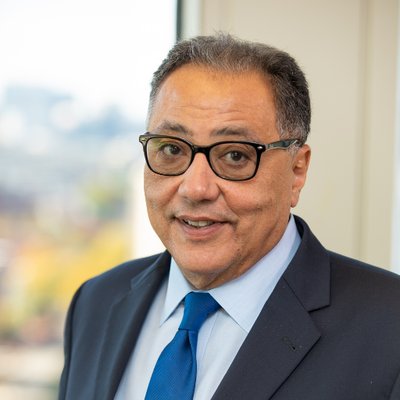
Hafez Ghanem
Senior Fellow
Hafez Ghanem – who holds a PhD in Economics from the University of California, Davis – is Senior Fellow at the Policy Center for the New South, a development expert with a large number of academic publications; and more than forty-year experience in policy analysis, project formulation and supervision, and management of multinational institutions.  He has worked in over 40 countries in Africa, Europe and Central Asia, Middle East and North Africa, and South East Asia.   Between 2015 and 2022 he was Vice President of the World Bank, initially responsible for the Middle East and North Africa, then for Sub-Saharan Africa and then East and Southern Africa.     In this latter capacity he was responsible for developing and implementing the World Bank ...

RELATED CONTENT

  • Authors
    Prakash Loungani
    November 9, 2016
    The global unemployment rate inched up to 5.7 percent this year after several years of decline. This reflects sharp increases in unemployment in the Latin America and Caribbean region and among fuel-exporting countries. Hence, while the total number of people unemployed around the globe will remain somewhat stable at about 175 million, several million people will be added to the ranks of the unemployed in these two groups of countries. Unemployment rates are expected to decline in m ...
  • Authors
    November 7, 2016
    Despite the gloomy tone of much discussion at the just-concluded IMF and World Bank annual meetings, the global economy is not in as bad shape as many think. The concerns about “secular stagnation” in advanced countries are also overplayed, and nor are developing countries directly exposed to such risks. By contrast, the pessimism about the prospects for MENA are unfortunately largely justified. Most importantly, at the global and at the MENA level the biggest concerns are not econo ...
  • Authors
    November 4, 2016
    Discussions around large current account imbalances among systemically relevant economies as a threat to the stability of the global economy faded out in the aftermath of the global financial crisis. More recently, some signs of a possible resurgence of rising imbalances have brought back attention to the issue. We argue here that, while not a threat to global financial stability, the resurgence of these imbalances reveals a sub-par performance of the global economy in terms of fore ...
  • Authors
    October 14, 2016
    Brazil’s GDP contraction since mid-2014 has multiple non-fiscal roots - Canuto (2016a; 2014) – but it has morphed into an unsustainable fiscal trajectory (Canuto, 2016b). Dealing with the latter has become a precondition for full economic recovery and the Brazilian government has submitted to Congress a constitutional amendment bill mandating a public spending cap for the next 20 years. This piece considers how the Brazilian landscape evolved toward such a precipice and wh ...
  • Authors
    October 4, 2016
    Brazil has been suffering from anemic productivity growth. This is a major challenge because in the long run, sustained productivity increases are necessary to underpin inclusive economic growth. Without them, increases in real labor earnings tend to conflict with global competitiveness; collecting taxes in order to fund government expenditures on infrastructure and social policies becomes a heavy burden; returns to private investment becomes harder to achieve; and ultimately c ...
  • Authors
    Samuel George
    September 27, 2016
    On July 15, Turkey’s tumultuous 2016 took a shocking twist as elements within the country’s military attempted a coup against the government of President Recep Tayyip Erdogan. The putsch rapidly snapped at the seams, and a night that began with soldiers blocking bridges yielded a morning with those same soldiers flogged by civilians in the street. In the days following the attempt, Erdogan declared a three-month state of emergency and began purges of depth and breadth that extended ...
  • September 07, 2016
    Ce podcast est délivré par Moubarack Lo. Cette présentation a pour objet de définir une théorie de l’émergence économique, qui constitue une étape vers la convergence avec les pays dévelo ...
  • Authors
    Aleksandr V. Gevorkyan
    August 15, 2016
    Emerging market economies (EM) as a special class of financial assets have recently been subject to two competing tales. On the one hand, there is evidence of continued financial deepening and further integration within the global financial system, while the offer of higher yields remains hard to find elsewhere. On the other hand, there are frequent bouts of fear of systemic unwinding of positions triggered by investors “exiting” EM that exhibit signs of weak or unclear macroeconomi ...
  • Authors
    July 21, 2016
    The pace of global growth has tapered off since the crisis and the ensuing rebound. The concept of ‘secular stagnation’ was first used in 1938 by Alvin Hanson in reference to the American economy during the Great Depression. It refers to a situation where growth is slow over a protracted period, underemployment prevails and inflation is low. In such situations, the propensity to save tends to increase as a result of uncertainty and pessimism, and liquidity – which depends on interba ...