حديث الثلاثاء : الجنوب ومستقبل الدراسات الاستشرافية في زمن الذكاء الاصطناعي

October 24, 2023

لقد ظلت سيناريوهات المستقبل والدراسات المستقبلية لفترة طويلة جدًا، بعيدة عن قائمة القضايا المتعلقة بأفريقيا، والآن أصبح من الواضح أكثر فأكثر أن مستقبل كوكبنا يتم صناعته في أفريقيا  بشكل متزايد، سواء كان المرء يتعامل مع إشكاليات الأزمات البيئية وتغير المناخ واللاجئين والطاقة المتجددة وما إلى ذلك، وهو ما يعني أن أفريقيا عادت لتحتل مكانة بارزة في جدول الأعمال الدولي. في حلقة هذا الأسبوع من برنامج حديث الثلاثاء، سنناقش أهمية دراسات المستقبل والتوقعات في سياق القضايا العالمية وتأثيرها على دول الجنوب. سنتناول موضوع الاهتمام بالدراسات الاستشرافية في زمن الذكاء الاصطناعي وكيف يمكن أن تساهم في فهم تحديات المنطقة واحتياجاتها المستقبلية. سنحاول كذلك فهم تأثير التكنولوجيا والخوارزميات على المجتمع والسياسات العامة، وسنناقش كيف يمكن تقليل الفوارق في التعاطي مع الإشكاليات العالمية بين دول الجنوب والشمال.
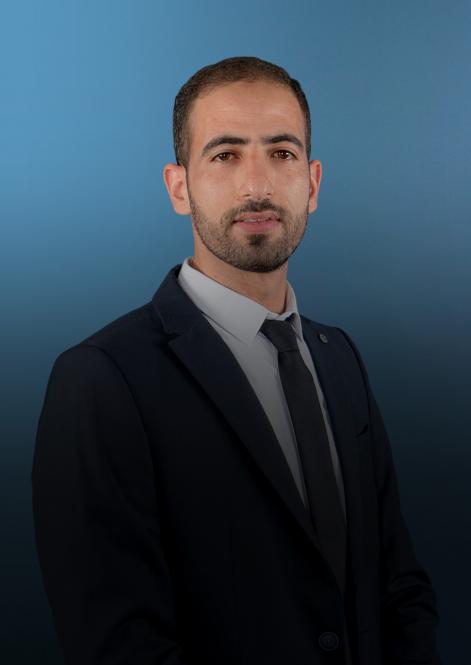
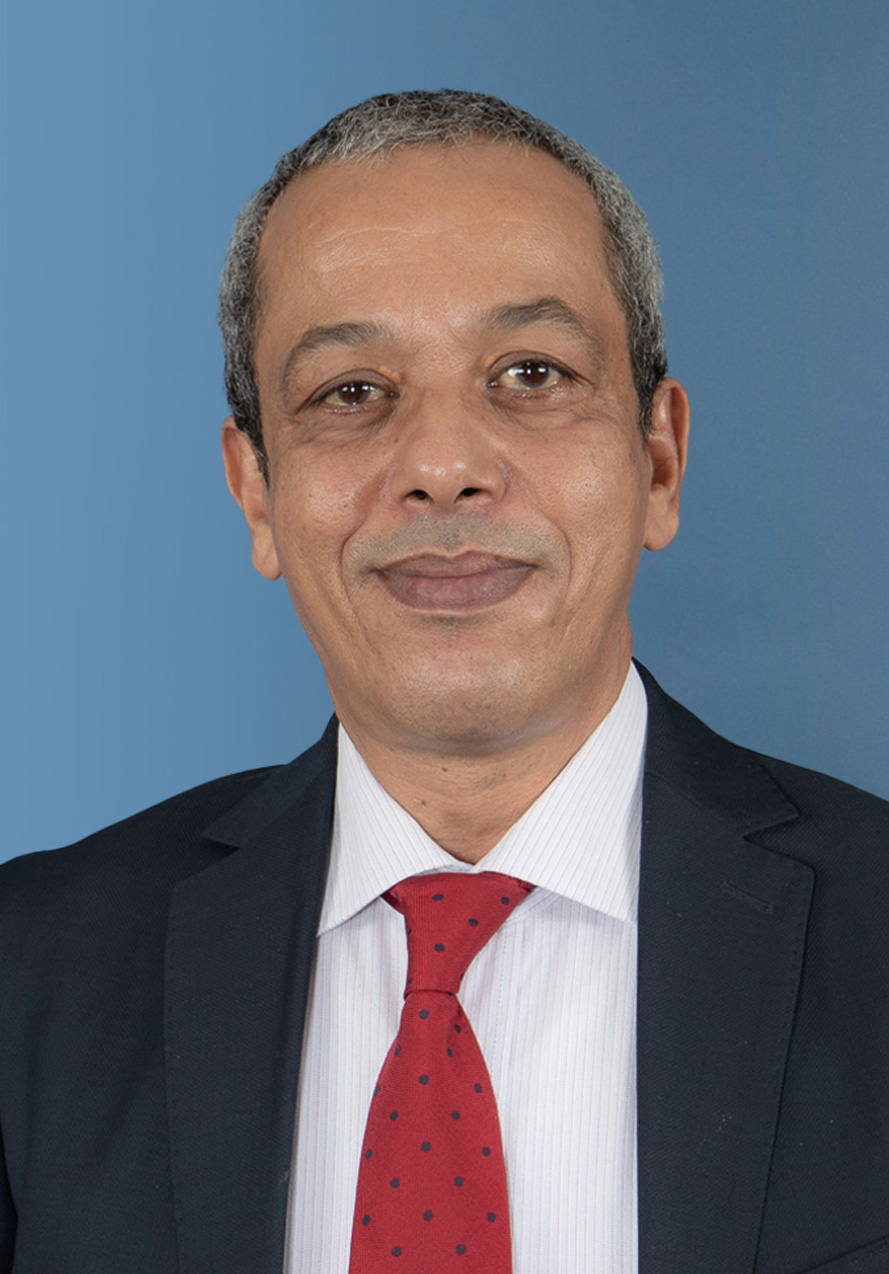
Speakers
Redouan Najah
Senior International Relations Specialist
Redouan Najah is a Senior International Relations Specialist at the Policy Center for the New South (PCNS).At the PCNS, which he joined in 2019, Redouan Najah conducts research on topics spanning the cyberspace, cyber defense, cybersecurity, Central Africa, and Africa-China relations.Redouan Najah holds a master's degree in Geopolitics and International Relations from University Cadi Ayaad, Marrakech, Morocco, and a bachelor’s degree in Economics and Management, from University Sultan Moulay Slimane, Beni Mellal, Morocco.Redouan is fluent in Arabic and French and has a good knowledge of English. ...
El Mostafa Rezrazi
Senior Fellow
Dr El Mostafa Rezrazi is a professor of Crisis Management, and Security Studies and a Senior Fellow at the Policy Center for the New South who focuses on Terrorism, Security and East Asia studies. His area of Expertise covers Afro-Asian Affairs, Strategic & Security Studies, Terrorism, Extremism and Deradicalization, mainly from the view of Criminal; Legal and Forensic Psychology.  He got his Ph.D. in Regional & International Affairs from the University of Tokyo in 1998, and later a Doctorate from the University of Mohammed V on the Psychological dynamisms of Suicide Bombers (2014). He is the executive director of the Moroccan Observatory on Extremism and Violence, Director of the African Center for Asian Studies, Rabat. Currently, he is Visiting Professor a ...

RELATED CONTENT

  • July 4, 2024
    In this episode, we explore pathways to enhance women's participation in mediation and peace processes to ensure their voices are integral to conflict resolution and peacebuilding efforts. Miss Loredana Teodorescu shares insights on strategies to overcome cultural and structural barrier...
  • Authors
    Constance Berry Newman
    July 2, 2024
    Immigration has never been without tensions. In the United States, immigration remains a contentious issue that now, more than ever, dominates election campaigns. A 727-kilometer wall has been constructed on the US-Mexico border to halt the influx of migrants from the south. In Europe, the rise of far-right parties over the past twenty years has culminated in them becoming a major political force in the European Parliament ahead of the June 2024 elections. The tension around immigr ...
  • Authors
    July 2, 2024
    The agricultural sector is responsible for 72% of global water withdrawals, and is the biggest employer of the world’s most vulnerable and poor populations. Still, close to 84% of smallholder farms in low- and middle-income economies are located in water-scarce regions, with less than one third of them having access to irrigation (UN, 2024). These small-scale farmers also bear the heavy weight of land degradation and climate crisis. It is estimated that food production will need to ...
  • Authors
    Aziz Ajbilou
    July 1, 2024
    This article aims at studying the changes in fertility rates in Morocco over time using available data from censuses and surveys conducted by High Commission for Planning (HCP), Ministry of Health, and National Observatory for Human Development (ONDH). Since 2010, fertility has shown a kind of stagnation or even a slight increase. This trend is more pronounced in urban areas, where the fertility rate for urban women was 1.8 children per woman in 2010, rose to 2.2 children per woman ...
  • June 28, 2024
    Les zones humides en Afrique sont des écosystèmes uniques et vitaux qui offrent une multitude de services écologiques, économiques et sociaux. Elles abritent une biodiversité contribuant ...
  • June 27, 2024
    Ce document explore les dynamiques de l'intermédiation sur le marché du travail marocain, en mettant en lumière les frictions, l'efficience et la distance transactionnelle. L'intermédiation, essentielle pour réduire les obstacles et améliorer l'efficacité du marché, est analysée à travers plusieurs perspectives théoriques et pratiques, y compris la courbe de Beveridge et les modèles d'appariement. Le document détaille le rôle des services publics de l'emploi, notamment ...
  • Authors
    Zineb Faidi
    June 27, 2024
    Nigeria’s cultural and creative industries (CCIs) illustrate the dynamic interplay between cultural production and economic growth. Through Nollywood and Afrobeat, Nigeria has effectively leveraged its creative capital to strengthen its economy and broaden its global cultural influence. These sectors show how local cultural elements can be blended with universal themes, achieving widespread resonance. Beyond their economic contributions, these industries play crucial roles in cultur ...
  • June 24, 2024
    - The earthquake’s overall impact on growth is estimated to be around -0.24% of GDP in 2023. - Due to the spatial concentration of the earthquake, Al-Haouz province and the Marrakesh region experienced Gross Regional Product (GRP) losses of -10.2% and -1.3%, respectively. - The 120 billion Moroccan dirhams (MAD) recovery program will have only mild positive impacts on overall macroeconomic growth from 2023 to 2028 but will significantly benefit the High Atlas region due to the rea ...
  • Authors
    June 19, 2024
    The Global South features prominently in the context of geopolitical rivalry and efforts by developing countries to change the current international economic and financial architecture. While there are questions about whether some countries—such as China or Russia—should be considered parts of the Global South (GS), it is obvious that Africa is at the center of the group. Different aspects of Africa—its potential, its reality, and its efforts to realize its potential—embody the chal ...