حديث الثلاثاء: البنوك المركزية في ظل التحديات الراهنة

February 6, 2024

يخصص برنامج "حديث الثلاثاء" حلقة هذا الأسبوع لمناقشة موضوع التحديات العالمية الكبرى التي تواجهها البنوك المركزية. إذ تقف هذه المؤسسات المالية عند مفترق طرق حيث تواجه عدة عقبات في السنوات الأخيرة، منها التضخم وارتفاع معدل الفائدة والآثار المالية الراجعة إلى تغير المناخ وكدى تأثير عدم المساواة على فعالية السياسة النقدية، فضلاً عن الابتكار المالي والرقمي.

ونظرًا للدور الحيوي الذي تلعبه البنوك المركزية داخل المجتمعات، فإن القرارات التي تتخذها اليوم ستنعكس على الظروف الاقتصادية خلال السنوات القادمة، مما يطرح عدة تساؤلات: ما الدور الذي تلعبه البنوك المركزية في التصدي لهذه الأزمات، وهل يجب إعادة النظر في صلاحيات البنوك المركزية؟ تساؤلات نناقشها رفقة ضيفنا السيد سيدي محمد الذاكرأستاذ جامعي بجامعة نواكشوط ومديرعام بمعهد الدراسات الاقتصادية التابع للبنك المركزي الموريتاني

Speakers
Afaf Zarkik
Senior Economist
Afaf Zarkik is an economist at the Policy Center for the New South and a graduate in energy strategies from Ecole des Mines de Paris. Among her areas of research and reflection: energy commodities monitoring and energy transition and sustainable development policies analysis. Before joining the Policy Center, A. Zarkik was an analyst in oil and gas mergers and acquisitions, a venture capital analyst in a cleantech fund, and a senior analyst in asset management. Afaf Zarkik est économiste au Policy Center for the New South et ingénieur titulaire d'un Master en stratégies énergétiques de l'École des Mines de Paris. Parmi ses axes de recherche et de réflexion : la veille des marchés des matières premières énergétiques et l'analyse des politiques de transition éne ...
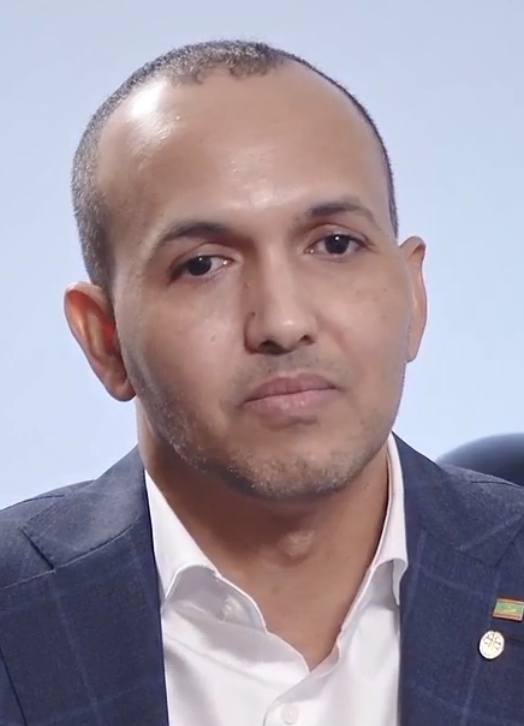
سيدي محمد الذاكر
أستاذ جامعي بجامعة نواكشوط ومديرعام بمعهد الدراسات الاقتصادية التابع للبنك المركزي الموريتاني
...

RELATED CONTENT

  • January 6, 2026
    La création de l’Alliance des États du Sahel (AES) symbolise une rupture politique et géostratégique majeure, appuyée sur un discours souverainiste et anti-occidental. Deux ans après, Mali, Burkina Faso et Niger peinent à assurer leur intégrité territoriale, à stabiliser leur sécurité intérieure et à bâtir une gouvernance solide. L’intégrité territoriale est un problème commun aux trois États, car dans ces pays, la cohésion de l’État et le contrôle du territoire sont directement men ...
  • January 2, 2026
    Ce Policy Paper analyse les enjeux politiques, économiques et opérationnels du Fonds pour les pertes et dommages, créé pour répondre aux impacts climatiques irréversibles subis par les pays les plus vulnérables. Il clarifie d’abord la notion de pertes et dommages, qui mêle effets économiques et non économiques, et souligne les défis d’attribution liés à la superposition entre chocs climatiques et fragilités structurelles. L’analyse met ensuite en lumière les tensions d’économie poli ...
  • Authors
    Nizar Messari
    December 19, 2025
    The U.S. military buildup in the Caribbean—the most significant since the Cuban Missile Crisis—comes at a moment when a new world order is taking shape, its contours still unclear, and in which the U.S. seeks to be more assertive in the Western Hemisphere. This disposition toward South America and the Caribbean was underscored by the recent publication of the new U.S. National Security Strategy, in which the Monroe Doctrine is explicitly invoked. This Policy Brief situates the devel ...
  • November 25, 2025
    This Policy Paper analyses the Fourth Industrial Revolution (4IR) through the critical lens of technological colonialism. It argues that the fusion of physical, digital, and biological technologies is not merely a technical phenomenon but a civilizational shift reshaping the foundations of global power. The article traces a historical continuum from previous industrial revolutions, demonstrating how patterns of inequality and extraction persist, now transposed into the digital realm ...
  • Authors
    September 2, 2025
    This paper argues that the Middle East has become the crucible of twenty-first-century imperial politics, exposing the collapse of legal universality and the resurgence of coercive empire. Through the archetypes of Hammurabi and Nebuchadnezzar, it analyzes how states invoke law rhetorically while practicing domination through siege, spectacle, and exclusion.The United States, China, Türkiye, Israel, Iran, the European Union, and the Gulf monarchies all oscillate between Hammurabian ...
  • August 28, 2025
    Alors que l’ordre mondial bascule vers un système multipolaire, l’Afrique se trouve face à un tournant décisif. Comment éviter la marginalisation et tirer parti de ses atouts stratégiques ? Entre partenariats concurrentiels des grandes puissances, montée du Sud global et élargissement d...
  • July 31, 2025
    This episode explores Africa's role amid a shifting global order marked by fragmentation and competing blocs. It examines whether African states are passive responders or active shapers of new strategic alignments like BRICS+ and South–South cooperation. The discussion also addresses Af...
  • Authors
    Laura Rubidge
    July 25, 2025
    This paper was originally published on The South African Institute of International Affairs (SAIIA) In the face of Africa’s development challenges and the mismatch between long-term needs and short-term pressures, ring-fencing development expenditures offers a viable solution to secure sustainable financing for growth. ...
  • Authors
    Bruno Saraiva
    July 21, 2025
    This article assesses the economic performance of the original BRICS economies, relative to the growth and currency appreciation projections presented in the papers that introduced the acronym, prior to the grouping becoming a diplomatic, political, and economic reality. It also discusses the BRICS agenda in the current challenging geopolitical context, in which economic fragmentation tends to raise costs for the global economy and presents considerable obstacles for emerging and de ...
  • Authors
    Bruno Saraiva
    July 14, 2025
    The BRICS+ group of countries met in Rio de Janeiro over the weekend of 6-7 July. The original group – Brazil, Russia, India, China and, soon after, South Africa – emerged as the materialization of a work of fiction. Jim O’Neill, then chief economist at Goldman Sachs, produced a report in 2001 drawing attention to the rise of these countries as emerging regional powers in global economic growth. ...