Gaza : Une Nouvelle Ère ? Analyse de la Résolution 2728 du Conseil de Sécurité de l’ONU

April 2, 2024

Dans cet épisode, nos experts analysent la résolution 2728 du Conseil de sécurité de l’ONU, après plus de cinq mois de conflit, exigeant un cessez-le-feu immédiat dans la bande de Gaza pendant le Ramadan et la libération inconditionnelle des détenus par le Hamas. Trois questions centrales guident notre discussion : Premièrement, quelles motivations derrière l’abstention des Etats Unis ? Deuxièmement, quelle est l'efficacité juridique des résolutions du Conseil de sécurité, en particulier quand elles sont déclarées "non contraignantes" par certains États ? Enfin, comment cette résolution peut-elle influencer le cours du conflit : est-elle une avancée vers une solution durable ou simplement un geste symbolique ? Nous analyserons également si cette initiative peut modifier les obligations des parties en conflit et si elle représente un Momentum concernant la cause palestinienne.

Speakers
Imane Lahrich
Head – Research Valorization
Imane Lahrich is the Head of Research Valorization Department, having previously served as a Partnerships & Research Support Officer at the Policy Center for the New South since 2019. She mainly worked on security-development related projects. She has experience as a Project Manager in a Strategic Intelligence firm (2017-2019) and as a research consultant in the MENA region, focusing on international development and the Rule of Law. Imane Lahrich holds a Master's in Political Studies and a Bachelor's in Political Science from Mohammed V University of Rabat. She also participated in a one-year exchange program at Masaryk University in the Czech Republic under the EMMAG MUNDUS Excellence scholarship.     ...
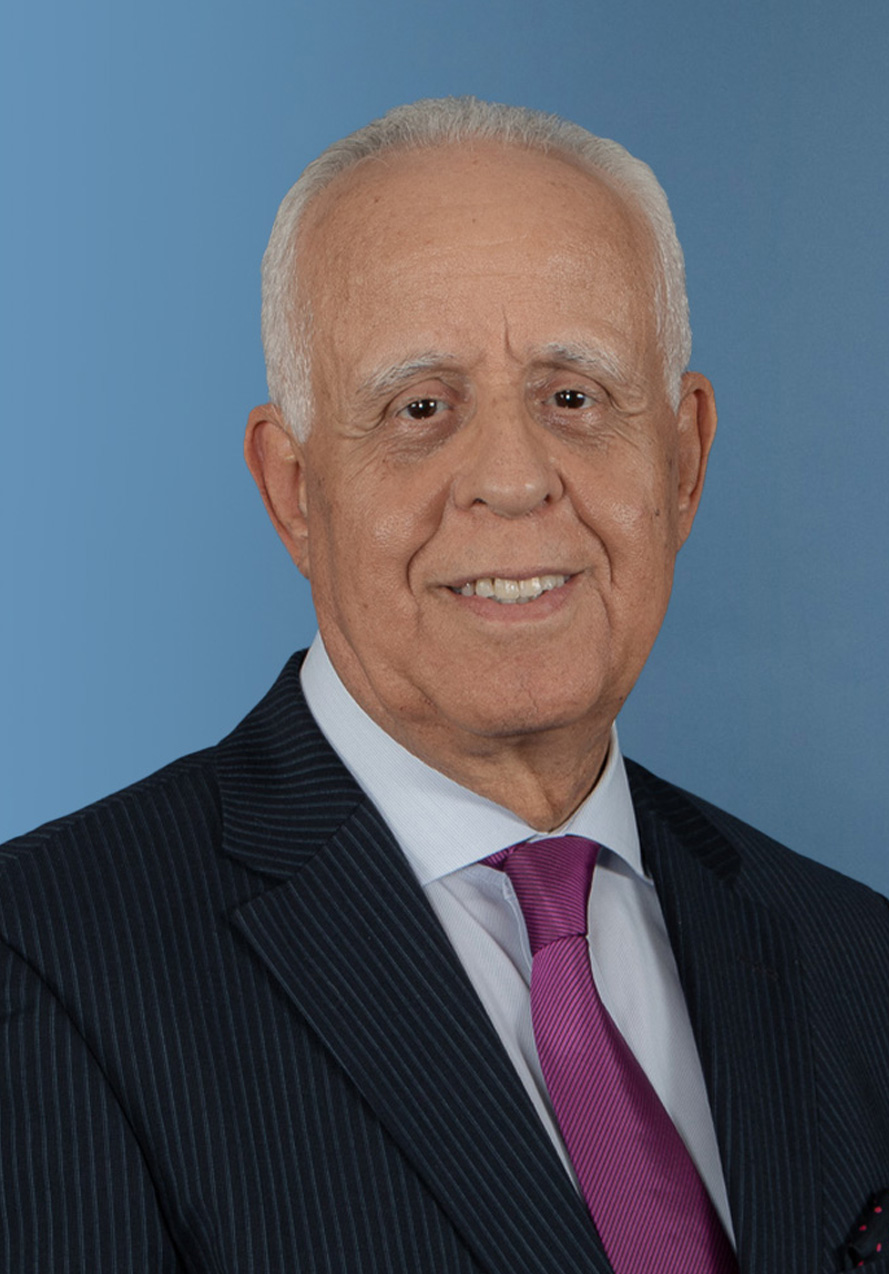
Mohammed Loulichki
Senior Fellow
Mohammed Loulichki is a Senior Fellow at the Policy Center for the New South and an Affiliate Professor at Mohammed VI Polytechnic University. He brings over 40 years of comprehensive experience in diplomacy, conflict resolution, and human rights. He has served in various roles including as a member and Deputy Head of the Moroccan delegation to the 3rd Conference on the Law of the Sea (1982-1990), Head of the Department of Legal Affairs and Treaties at the Ministry of Foreign Affairs (1988-1991), and General Director for Multilateral Affairs in the same ministry (2003-2006).   He also acted as Morocco's Ambassador to Hungary, Bosnia-Herzegovina, and Croatia (1995-1999), and was the Moroccan Government's Ambassador Coordinator with MINURSO (1999-2001). Furthermore, he se ...
Sâ Benjamin Traoré
Professor of Law, Faculty of Governance, Economics and Social Sciences, Mohammed VI Polytechnic University (FGSES-UM6P)
Professor Traoré holds a Doctorate in Law from the University of Neuchâtel (Switzerland), an LLM in International Law from the Geneva Academy of International Humanitarian Law and Human Rights and a Master in Public Law from the University from Ouagadougou (Burkina Faso). Prior to joining UM6P, Prof Traoré worked as the Project Manager for the African Coalition for Corporate Accountability (ACCA). His work and research focused on the role of law in regulating business-related human rights and environmental impacts in Africa, traditional fields of international law and international relations, peace and security in Africa, human rights, international humanitarian law as well as the law related to refugees and internally displaced persons. He has published many academic articles ...

RELATED CONTENT

  • July 3, 2026
    This Policy Paper has also been published in French and Spanish by Le Grand Continent Morocco offers a compelling example of how a middle-income economy can navigate a more fragmented global environment, characterized by weak growth and slower convergence. Since 2022, economic activity has remained relatively strong, with growth exceeding that of many comparable economies. Non-agricultural growth has averaged 4.4% since 2022, around 1.3 percentage points above its historical av ...
  • Authors
    June 19, 2026
    Fin mai 2026, des frappes israéliennes ont visé les abords du château de Beaufort (Qalaat al-Chaqif), près de Nabatiyeh, avant que l'armée israélienne n'en annonce la prise. Ce fait soulève une question centrale : pourquoi une hauteur fortifiée au Moyen Âge conserve-t-elle une valeur militaire à l'ère des satellites, des drones et des missiles de croisière ?Le présent Policy Brief tente de démontrer que la valeur de Beaufort est géographique avant d'être idéologique ou technologique ...
  • Authors
    June 19, 2026
    At the end of May 2026, Israeli airstrikes targeted the surroundings of Beaufort Castle (Qalaat al-Chaqif), near Nabatiyeh, before the Israeli army announced that it had captured the site. This development raises a fundamental question: why does a medieval fortified hilltop retain military value in the age of satellites, drones, and cruise missiles?This Policy Brief argues that Beaufort's significance is geographical before it is ideological or technological. Overlooking the Litani ...
  • Authors
    June 12, 2026
    This essay argues that the current debate about the future of the international monetary system is not really about Gulf currencies, oil pricing, or de-dollarization in the narrow technical sense. It is about something deeper and more important: whether institutional trust can survive when geopolitical certainty is eroding.The Gulf monarchies—Saudi Arabia, the United Arab Emirates, Qatar, Kuwait, Bahrain, and Oman—increasingly exist in a world where the United States no longer looks ...
  • June 5, 2026
    Driven by its mission to reflect on and analyze the major geopolitical, economic, and societal transformations shaping the contemporary world, and with a view to contributing to knowledge-sharing and disseminating the main outcomes of its research program, the Policy Center for the New South regularly publishes collective volumes addressing issues of particular importance to Morocco, Africa, and the broader Global/New South. In this spirit, the Center has recently released two volum ...
  • May 26, 2026
    تعالج هذه الحلقة تصاعد التوترات حول مضيق هرمز وانعكاساتها على استقرار أسواق الطاقة العالمية، في ظل عالم يشهد تحولات جيوسياسية متسارعة. وتناقش كيف كشفت الأزمة هشاشة نظام الطاقة الدولي واعتماده على ممرات استراتيجية حساسة، كما تتوقف عند تداعيات أي اضطراب محتمل على أسعار النفط والتضخم والنم...
  • April 29, 2026
    Cet oped a été publié initialement dans la revue afkar/ideas 77 (IEMed).  La politique étrangère du Maroc traverse une transition structurelle, sous l’effet de la polycrise mondiale, de la diversification de ses partenariats et de l’affirmation de nouveaux choix stratégiques. La centralité accordée aux notions de « hub », de « plateforme »ou de « corridor » traduit un glissement sémantique et fonctionnel dans le narratif national, accordant une priorité majeure aux considé ...
  • Authors
    April 1, 2026
    We are now in the fifth week since the U.S. airstrike that killed top leaders of the Iranian regime, initiating a war involving the United States and Israel against the country. More than a month of mutual bombardments between Iran and Israel has ensued, extending to other Persian Gulf nations, U.S. military installations—and even Cyprus. From a global perspective, the impact has stemmed primarily from disruptions to regional production of goods and the blockade of the Strait of Hor ...
  • Authors
    March 13, 2026
    While acknowledging the centrality of security tensions and potential conflict in the Gulf, this essay intentionally sets aside a detailed treatment of military and hard-power dynamics, concentrating instead on the geoeconomic logics of capital, infrastructure, energy, and connectivity, through which Gulf states now articulate power in a fragmented world order.It examines the emergence of a new tripartite or three-pillar power configuration in the Gulf, arguing that Saudi Arabi ...
  • Authors
    December 18, 2025
    The return of President Donald Trump to the White House at the start of 2025 was expected to signal an American retreat from international engagement, especially in regions of traditional security interest, such as southern Europe, North Africa, and the Middle East. To the surprise of many observers around the Mediterranean, and perhaps to the dismay of some in the Trump administration’s ideological orbit, this has not happened. If anything, the second half of 2025 has seen a high d ...