(FR) Moroccan Automotive and Aeronautics Industries

April 14, 2026

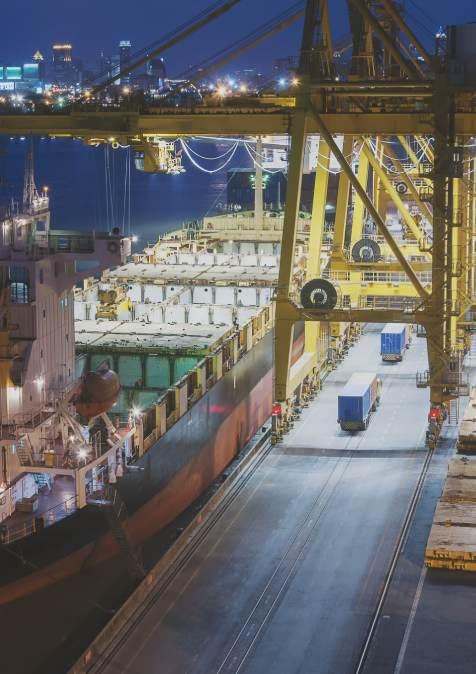
Cet épisode met en avant les industries automobile et aéronautique du Maroc en tant que moteurs de transformation industrielle, portées par le Pacte pour l’Émergence et le Plan d’Accélération Industrielle. Un écosystème solide composé de donneurs d’ordre, de fabricants internationaux et de sous-traitants a renforcé leur intégration dans les chaînes de valeur mondiales, stimulant les exportations et l’emploi qualifié. Ces résultats reposent sur la formation de la main-d’œuvre, des infrastructures de niveau international et des incitations stratégiques. Le prochain défi consiste à adopter des technologies vertes et à s’adapter à l’évolution des chaînes d’approvisionnement mondiales.

Speakers
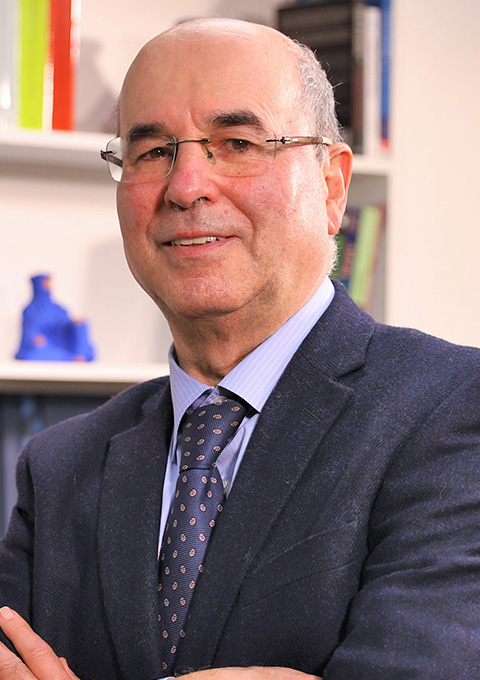
Larabi Jaïdi
Senior Fellow
Larabi Jaïdi is a Senior Fellow at the Policy Center for the New South and an Affiliate Professor at Mohammed VI Polytechnic University. His areas of expertise include international economy, economic policies, international economic relations, regional economies, social development, international relations, and Mediterranean studies. He also served on the Special Commission on the New Development Model of Morocco, a consultative body created in November 2019 to formulate the country's new developmental guidelines. Jaïdi is a former Professor at Mohamed V University in Rabat-Agdal and a founding member of both the Centre Marocain de Conjoncture and the Groupement d’Etudes et de Recherches sur la Méditerranée.   Prof. Jaïdi previously served as Advisor to the Prime Minist ...

Sabrine Emran
Senior Economist
Sabrine Emran is a Senior Economist at the Policy Center for the New South (PCNS).At the PCNS, Sabrine Emran conducts research on the Energy Transition, Climate Finance, and Critical Minerals, focusing on the energy priorities of developing countries in the context of sustainable development, just energy transition, and global climate commitments.Before joining the PCNS in 2022, Sabrine Emran worked as a Commodities Analyst and Risk Management Consultant, specializing in agricultural and energy commodities as well as foreign exchange risk. She also held a position at Lyxor Asset Management as Request for Proposal and Product Specialist, where she focused on alternative investment asset classes and collaborated closely with institutional investors.Sabrine Emran holds a master’s ...


RELATED CONTENT

  • June 13, 2023
    يعد ميثاق الاستثمار الجديد، الصادر، في دجنبر 2022، والذي تم تطبيق أول مراسيمه، في يناير المنصرم، خارطة الطريق الإستراتيجية لإعطاء نفس جديد للاستثمار بالمغرب، الذي من شأنه أن يعزز تنافسية ...
  • June 6, 2023
      يعد ميثاق الاستثمار الجديد، الصادر، في دجنبر 2022، والذي تم تطبيق أول مراسيمه، في يناير المنصرم، خارطة الطريق الإستراتيجية لإعطاء نفس جديد للاستثمار بالمغرب، الذي من شأنه أن يعزز تنافسية الاقتصاد الوطني، فضلا عن تثمين دور الفاعلين في القطاع الخاص، وكذا منظومة الإنتاج المغربية. م...
  • Authors
    Pierre Sauvé
    May 29, 2023
    Morocco has made important strides in reducing poverty in the last three decades, thanks in large part to trade and industrial policies aimed at durably inserting the country into world flows of goods, services, and cross-border investment. Since 1992, per capita incomes have tripled (in current US$), contributing to a threefold drop in the Kingdom’s poverty headcount. The country of 37 million features consistently as one of the better-performing and more stable economies in the No ...
  • Authors
    Inkyo Cheong
    Lillyana Daza Jaller
    Siwook Lee
    Jean-Christophe Maur
    Martin Molinuevo
    Sahar Sajjad Hussain
    Pierre Sauvé
    Shane Sela
    Aleksandar Stojanov
    Iryna Klytchnikova
    Edited by Pierre Sauvé and Uri Dadush
    May 23, 2023
    The broad thrust of Morocco’s trade and industrial policies over the last thirty years has been to anchor Morocco into world flows of goods, services, and cross-border investment. Despite the challenges posed by the COVID-19 pandemic, rising international prices, and a complex geopolitical environment, Moroccans continue to derive significant benefits from their economy’s openness. These include improved consumer choice and welfare, the growing insertion of Moroccan firms into cross ...
  • Authors
    Abdelmonim AMACHRAA
    May 17, 2023
    Nothing better illustrates the positive contribution of the integration of national economies into global value chains than the fact that in the 1990s, the automotive sector barely existed in Morocco. Now, it is the leading export sector, with a production and assembly capacity of 700,000 vehicles, making it an attractive and competitive hub linking Africa and Europe in the automotive value chain. However, the automotive industry is on the cusp of change, with advances in electric a ...
  • Authors
    Inácio F. Araújo
    May 5, 2023
    This paper presents a synthetic view of the socioeconomic and environmental impacts of the economic sectors and regions that make up the Moroccan economy, taking into account the current economic structure and production technologies. Therefore, the potential effects must be understood as signals to think about interventions aimed at redirecting the desired trajectories of sustainable development. The application of the tools developed to give scientific support to this analysis rev ...
  • Authors
    April 5, 2023
    The Policy Center for the New South and the Economic Research Forum held on March 20 a workshop titled ‘Stabilization and adjustment towards inclusive and sustainable policies in MENA: The Moroccan case study’. The event took place at the PCNS headquarters in Rabat, Morocco. It brought together renowned Moroccan economists and scholars to discuss the issue of public debt sustainability in the context of the Moroccan economy. It was an occasion to revisit the main features of the Mor ...
  • Authors
    Zakaria Elouaourti
    March 15, 2023
    The aims of this article were twofold. First, to tackle the issue of convergence from an analytical point of view by presenting the mathematical developments of the main economic growth models, which emphasized that the convergence of African economies is conditional to the investment level in the early stages of physical capital accumulation. As the latter increases, the convergence of African economies is determined by other factors (investment in research and development (R&D ...