(FR) The financial and banking industry in Morocco

May 21, 2026

Cette interview revient sur les enjeux du système financier marocain, son rôle dans le développement économique et les défis liés au financement des TPME. Le professeur Ben Moussa analyse également les limites du modèle bancaire actuel, l’internationalisation des banques marocaines en Afrique, ainsi que les réformes nécessaires pour renforcer le financement de l’économie et accompagner les grands projets stratégiques du Royaume
 

Speakers
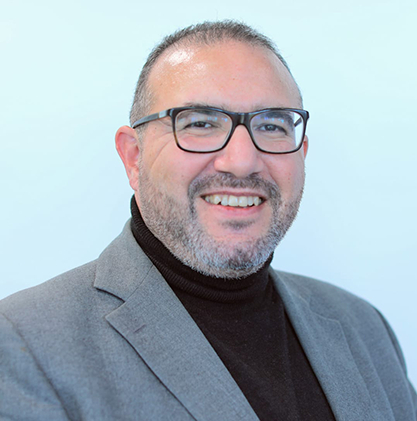
Mohammed Benmoussa
Affiliate Professor, Mohammed VI Polytechnic University, Rabat
Mohammed Benmoussa is a Moroccan economist and senior consultant in economic policy, taxation, and public finance, as well as a former banker and capital market practitioner. He is Professor of Corporate and Market Finance at Mohammed VI Polytechnic University. In December 2019, he was appointed by HM King Mohammed VI to the Special Commission on the New Development Model. He is also President of the Forum of Progressive Economists, President of the Damir Movement and the La Samir Front. He previously served as President of the Brokerage Firms Association and Vice-President of the Casablanca Stock Exchange. ...

Oumayma Bourhriba
Senior Economist
Oumayma Bourhriba is a Senior Economist at the Policy Center for the New South (PCNS).At the PCNS, which she joined in 2019, Oumayma Bourhriba conducts research focusing on macroeconomic policies and international trade, with a particular emphasis on services.She has contributed to major publications on the Moroccan economy, such as the IMF’s Morocco's Quest for Stronger and Inclusive Growth (2023) and the World Bank’s Trade Policy in Morocco: Taking Stock and Looking Ahead (2023). Beyond her research, she has coordinated the Africa Economic Symposium, one of the flagship convenings organized by the PCNS.Oumayma Bourhriba holds a master’s degree in applied economics from University Mohammed V (UM5), where she is currently a PhD candidate.She is fluent in Arabic, English, ...

RELATED CONTENT

  • Authors
    Lahcen Oulhaj
    November 19, 2025
    La modélisation classique de la croissance repose sur des outils – notamment la fonction de production agrégée et la comptabilité de la croissance – dont les incohérences logiques et les ambiguïtés épistémologiques sont connues depuis la Controverse de Cambridge et les travaux d’Anwar Shaikh. Pourtant, ces failles continuent d’alimenter des raisonnements fallacieux dans le débat économique et les discours institutionnels. Cet article montre que la nature tautologique de ces outils n ...
  • November 18, 2025
    The meeting between Donald Trump and Xi Jinping in Busan, South Korea, was more than an exercise in diplomacy. It was an emblematic performance of a world in transformation. Behind the formalities, the cameras, and the studied smiles lay an unspoken recognition: the world is no longer unipolar. The era of American supremacy, sustained for decades through its economic reach, military presence, and ideological projection, is giving way to a more diffuse, multipolar reality. ...
  • Authors
    Arkebe Oqubay
    November 17, 2025
    Morocco has emerged as one of Africa's success stories, achieving significant progress in economic transformation and the green transition over the past 25 years. Continuing and deepening this transformation is essential to reach the country’s goal of becoming a high-income economy in the coming decades. Significant challenges include managing the risk of the middle-income trap, addressing demographic pressures, promoting inclusive growth, ensuring environmental sustainability, and ...
  • Authors
    November 11, 2025
    Official Development Assistance (ODA) to developing countries has fallen in recent years to well below the UN target of 0.7% of developed countries’ gross national income. Global remittances have become the biggest inflow to poor countries, greater than ODA or foreign direct investment which has also declined. Against the backdrop of geopolitical tension between major powers, other countries including developing ones and development institutions have to do their parts in mobilizing ...
  • Authors
    October 28, 2025
    Now that a cease-fire is in place, it is time to consider Gaza’s reconstruction. This will be the fifth such effort in less than twenty years. Lessons from the previous four indicate that rebuilding houses, bridges, and roads is relatively straightforward. Far more challenging is building a thriving Gazan economy and society—one where young people live with dignity, have jobs, feel heard and included in their communities, and are hopeful about their future. Achieving this requires n ...
  • Authors
    Jorge Arbache
    October 9, 2025
    Conventional wisdom holds that the United States has undergone massive deindustrialization in recent decades, with the country's manufacturing sector supposedly withering as it lost ground to China. This narrative has fueled debates about industrial policy, economic nationalism, and the reshoring of manufacturing production. But what if this story is only partially true? What if, instead of disappearing, American industry simply changed its address?  ...
  • October 7, 2025
    Global economic growth has been more resilient than expected, as the artificial intelligence-led growth seems to be compensating for the negative impacts of trade conflicts. Overstretched asset values and slowing jobs growth may be signaling that the balanced crossing of those two paths...
  • Authors
    October 3, 2025
    Global economic growth has been more resilient than expected, as the artificial intelligence-led growth seems to be compensating for the negative impacts of trade conflicts. Overstretched asset values and slowing jobs growth may be signaling that the balanced crossing of those two paths will be challenged. ...
  • September 8, 2025
    In this episode, we explore how today’s trade regime shapes inequality through a Southern lens. The conversation sheds light on blind spots in mainstream debates, the resurgence of industrial policy in the North, and the tools Southern countries need to reclaim policy space within globa...