(FR) The financial and banking industry in Morocco

May 21, 2026

Cette interview revient sur les enjeux du système financier marocain, son rôle dans le développement économique et les défis liés au financement des TPME. Le professeur Ben Moussa analyse également les limites du modèle bancaire actuel, l’internationalisation des banques marocaines en Afrique, ainsi que les réformes nécessaires pour renforcer le financement de l’économie et accompagner les grands projets stratégiques du Royaume
 

Speakers
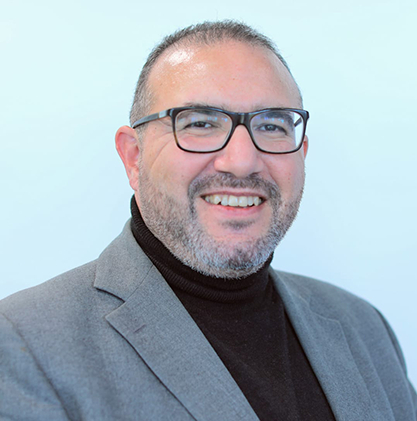
Mohammed Benmoussa
Affiliate Professor, Mohammed VI Polytechnic University, Rabat
Mohammed Benmoussa is a Moroccan economist and senior consultant in economic policy, taxation, and public finance, as well as a former banker and capital market practitioner. He is Professor of Corporate and Market Finance at Mohammed VI Polytechnic University. In December 2019, he was appointed by HM King Mohammed VI to the Special Commission on the New Development Model. He is also President of the Forum of Progressive Economists, President of the Damir Movement and the La Samir Front. He previously served as President of the Brokerage Firms Association and Vice-President of the Casablanca Stock Exchange. ...
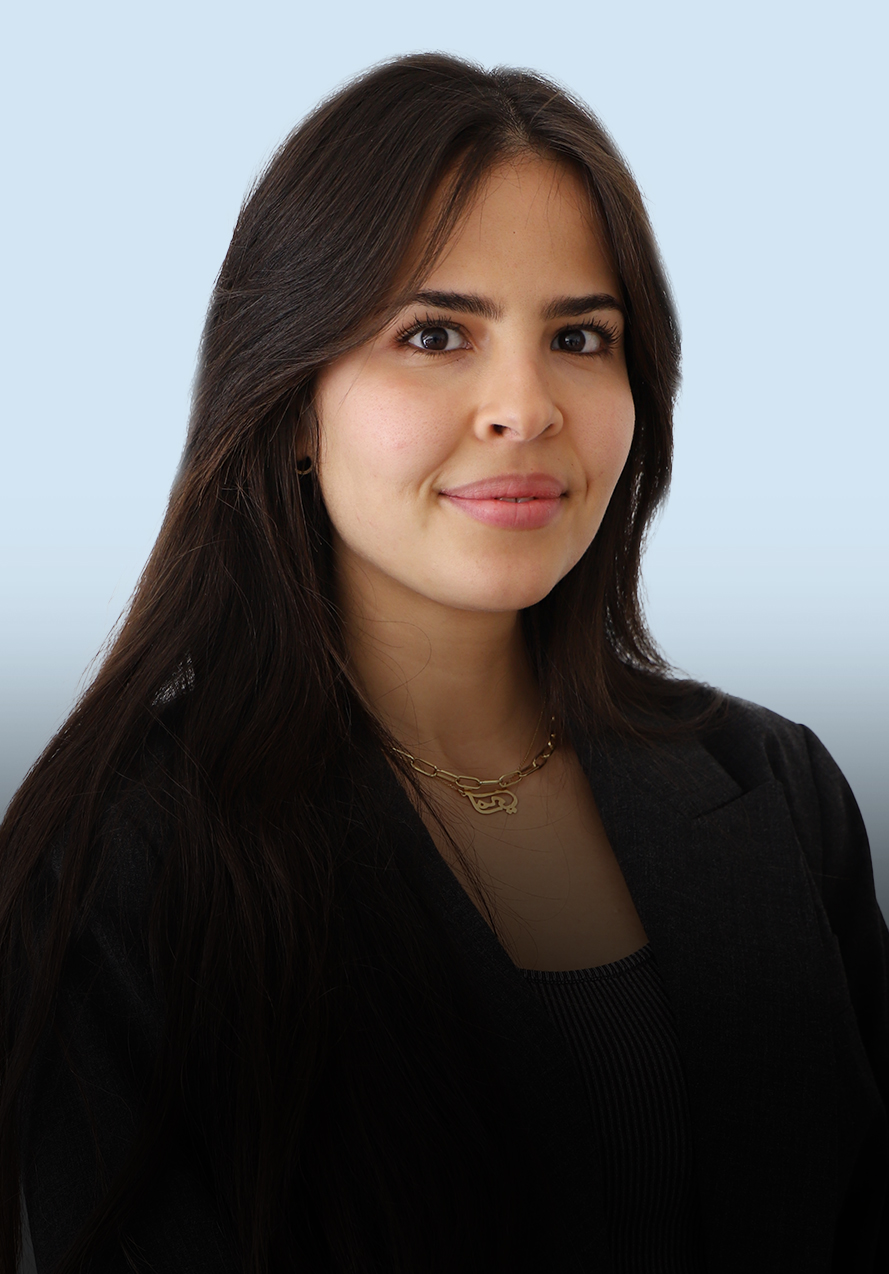
Oumayma Bourhriba
Senior Economist
Oumayma Bourhriba is a Senior Economist at the Policy Center for the New South (PCNS).At the PCNS, which she joined in 2019, Oumayma Bourhriba conducts research focusing on macroeconomic policies and international trade, with a particular emphasis on services.She has contributed to major publications on the Moroccan economy, such as the IMF’s Morocco's Quest for Stronger and Inclusive Growth (2023) and the World Bank’s Trade Policy in Morocco: Taking Stock and Looking Ahead (2023). Beyond her research, she has coordinated the Africa Economic Symposium, one of the flagship convenings organized by the PCNS.Oumayma Bourhriba holds a master’s degree in applied economics from University Mohammed V (UM5), where she is currently a PhD candidate.She is fluent in Arabic, English, ...

RELATED CONTENT

  • November 2, 2021
    Mounting inflation in the major financial centers have raised concerns about the consequences on macroeconomic stability, including the Central Bank response they might trigger. In line with official views, we argue that inflation will probably wind down. We show that core inflation remains below pre-Covid levels in most large economies. We also argue that emerging markets are now less prone to “sudden stop” phenomena, in part because many have already started the exit from accommod ...
  • September 10, 2021
    The COVID-19 pandemic caused a shock to both demand and supply, leading to the biggest collapse in world output since the Great Depression. Since late 2020, a more rapid than expected recovery has been observed. Five questions arise frequently. Here is my take on those questions. 1- Is the pandemic receding? No, but we have a vaccine to control it, and are better at managing it with selective measures, as distinct from total lockdowns, which kill the economy. The global number of ...
  • September 1, 2021
    The world woke on Monday August 23 to higher international reserves for all countries. A new allocation of US$650 billion in Special Drawing Rights (SDRs) from the International Monetary Fund (IMF) to its member countries had entered into force (SDR450 billion). SDRs are an international reserve asset created by the IMF and added to countries' other foreign reserves. It is not a currency that can be used by private agents. Governments, on the other hand, can unconditionality exchan ...
  • August 24, 2021
    تجدون أقوى لحظات حديث الثلاثاء حول المواضيع الاقتصادية لهذه السنة : رؤى استشرافية لما بعد الجائحة، الاقتصاد غير المهيكل، دور القطاع الثالث، المغرب وسلاسل القيمة الاقليمية مع خبراء وباحثين اقتصادين ...
  • Authors
    August 12, 2021
    Macroeconomic dynamics in the U.S. economy has increasingly become associated with asset price fluctuations in the past few decades. Financial conditions have increasingly become an influential factor shaping the cyclical pace of the macroeconomy. There has been a mismatch between rising financial wealth and the pace of creation and incorporation of new assets. Several secular stagnation hypotheses offer explanations for the insufficient creation of new assets. Public debt—and its p ...
  • August 9, 2021
    The International Monetary Fund’s tenth annual External Sector Report (ESR, August 2021) shows how current account deficits in the global economy widened in 2020 during the pandemic. On the other hand, the ESR also argues that overall, the misalignment between fundamentals and current account balances has not been exacerbated. The pandemic widened current account imbalances… The sum of absolute values of current account deficits and surpluses went from 2.8% of global GDP in 2019 t ...
  • July 28, 2021
    On July 21, the Official Monetary and Financial Institutions Forum (OMFIF) published its eighth annual report on Global Public Investors (GPI). It included a survey the asset allocation plans of reserve managers of central banks, sovereign wealth funds, and public pension funds. Together, the 102 investors who responded to the survey manage $42.7 trillion in assets (Figure 1). Source: OMFIF analysis (GPI 2021).   The survey highlighted notable changes in the composition of p ...
  • July 14, 2021
    This book aims to address job creation in Morocco in the context of a new export-driven growth model. Prior to the COVID-19 pandemic, the unemployment situation in Morocco was serious, particularly among young people. Morocco’s competitive edge in the global market had been eroding, especially in labor-intensive, low-wage industries that typically create large numbers of jobs. The COVID-19 pandemic has created further setbacks to the economy in 2020 and beyond, including a collapse ...
  • June 23, 2021
    There remains tremendous uncertainty and prospects of a post-pandemic recovery vary greatly across countries, as it is bound to happen at different paces. And the divergence of per capita incomes in the world is rising as an aftermath of the pandemic. The pandemic will leave scars in la...
  • June 17, 2021
    Africafé reviens ce jeudi 17 juin à 17h30 avec un nouvel épisode. Présenté par Youssef Tobi, spécialiste en relations internationales, Africafé décrypte l'actualité des organisations africaines et du continent avec des experts africains. Dans cet épisode, Youssef El Jai donne une vision...