Globalization - yesterday and tomorrow?

February 27, 2023

In this interview recorded during the Atlantic Dialogues, Mr. Helmut Sorge, Columnist at the PCNS interviews Mr. Masood Ahmed, President of the Center for Global Development about his insights on Globalization between yesterday and tomorrow. In fact, although the process of linking countries together through Trade and Financial Flows has resulted in an improvement of living standards around the World, as it is the case of many countries in Asia, Latin America and Africa who have profited from being part of a Global Economy, but it has also brought with it some vulnerabilities. What are the strengths and the challenges of Globalization nowadays?

Speakers
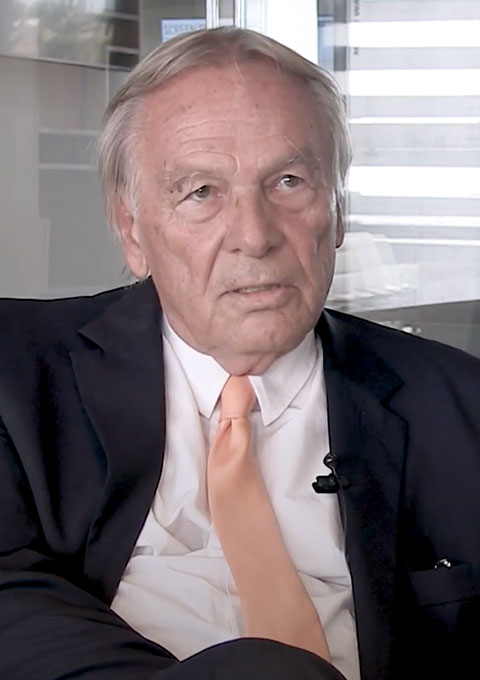
Helmut Sorge
Columnist
Helmut Sorge is a columnist at the Policy Center for the New South, where he publishes opinion pieces in the format of international press reviews of current events related to the Middle East and European affairs, and conducts interviews with high level policy makers and PCNS researchers. He is also a lecturer on journalism and the media. For over 40 years, Helmut Sorge served as a writer, former Foreign correspondent, Foreign editor, and Middle East expert for Germany's leading newsmagazine "Der Spiegel" to Washington, London, Paris and Los Angeles. He reported from Vietnam, the Middle East, wrote about safaris, nuclear accidents, visited prisoners on death row in the United States. The German weekly “Gala” summarized in 2011, when his latest book, a collection of biographies ...
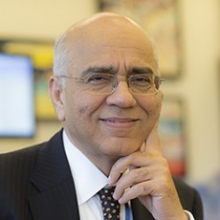
Masood Ahmed
President of the Center for Global Development
...

RELATED CONTENT

  • Authors
    November 16, 2026
    How can international arbitration preserve its core principles of neutrality, party autonomy and enforceability while adapting to a world increasingly characterized by geopolitical fragmentation, technological disruption and competing regulatory interests? Meeting this challenge demands a collective effort, bringing together arbitral institutions, national courts, governments, international organizations, academics and practitioners. It requires openness to institutional innovation, ...
  • Authors
    Bambang Brodjonegoro
    November 2, 2026
    This policy note was published as part of the T20 U.S. 2026 Workstreams, under the workstream “Fostering Trade and People-Centered Economic Growth,” which brings together policy experts to develop recommendations for G20 policymakers. The Group of Twenty (G20) accounts for most of the world’s output, yet its decisions shape the prospects of 174 United Nations Member States without G20 membership, among them the great majority of least developed countries and small states. Many ...
  • October 15, 2026
    The Policy Center for the New South, in partnership with The Asian Network, is organizing a webinar titled “Emerging Powers and the Remaking of Global Order” to examine the growing role of emerging powers and the Global South at a time of profound transformation in the international sys...
  • Authors
    September 17, 2026
    Various competing cross-border payment networks have become vehicles for geopolitical competition. As tensions have risen, many countries want to secure access to cross-border payment systems by joining with like-minded countries to form interoperable networks, either via tokenization or Instant Payment Systems (IPSs). Three major projects are under development, serving the strategic interests of the US, China and the Rest of the World—corresponding to the three trading spheres taki ...
  • Authors
    September 9, 2026
    This paper was originally published as a chapter in the ISPI report The Pursuit of Smart Mobility in Urban Nodes: Trends and Innovation for Citizens and Freight. Agglomeration economies have historically supported industrialisation and global integration by concentrating firms, labour and infrastructure in dynamic urban cores. However, these same forces have also generated persistent patterns of territorial polarisation. Drawing on New Economic Geography, this chapter interpret ...
  • August 25, 2026
    Predictions of American decline have become increasingly prevalent. The United States has run persistent trade deficits for decades, but its public debt now exceeds its annual economic output. Meanwhile, and new centers of industrial and technological power continue to emerge across Asia. Yet despite these developments, no country has so far replaced the United States as the main organizing power of the international economy. Conventional explanations explain this in terms of U.S. m ...
  • Authors
    August 5, 2026
    This paper addresses the persistent challenge of resource dependence in the world's poorest countries, focusing on the ten poorest African nations where natural- resource rents average 14% of income. It argues that four decades of conventional policy advice, which treated resource dependence primarily as a revenue management problem, have failed to help these countries. While stabilization funds and permanent-income frameworks aim to smooth consumption, they do not answer the fundam ...
  • August 3, 2026
    This policy paper explores how China’s economic development model—rooted in pragmatism, long-term planning, and civilizational renewal—has become its most compelling soft power asset, particularly in the eyes of the Global South. While critically engaging with Joseph Nye’s original conception of soft power as a primarily cultural and normative force, the paper argues that China’s ability to transform itself from an impoverished postimperial state into the world’s largest trading nat ...
  • August 3, 2026
    This Opinion was originally published in Project Syndicate and republished by The Edge Malaysia, DT Next, and The Japan Times. Data from a period in which both China and India pursued deliberate industrial policies show that neither country's development route is accessible to other countries. At best, their experience can alert policymakers to structural limitations and coordination problems that will require their own homegrown solutions.RABAT—What is the most reliable develo ...