(FR) The external sector of the Moroccan economy

June 4, 2026

Cet épisode revient sur les principaux enseignements du chapitre consacré au secteur extérieur marocain, en mettant en lumière le paradoxe d’un déficit commercial structurel persistant combiné à une forte résilience des équilibres externes. Badr Mandry explique comment les transferts des Marocains résidant à l’étranger, les recettes touristiques et les investissements directs étrangers jouent un rôle d’amortisseurs face aux chocs externes, tout en soulignant la nécessité de diversifier les exportations et d’accélérer la transition énergétique pour renforcer durablement la soutenabilité du modèle marocain.
 

Speakers

Hamza Saoudi
Senior Economist
Hamza Saoudi is a Senior Economist at the Policy Center for the New South (PCNS).At the PCNS, Hamza Saoudi conducts research on labor market dynamics, social protection systems, and inclusive growth, with a particular focus on Morocco and Africa. He is also interested in macroeconomic stabilization policies, international trade, and long-term economic development.He has contributed to PCNS projects and publications addressing informality, social protection, and inequality in developing economies.He also served as the project coordinator of the Oxford Handbook of the Moroccan Economy, published by Oxford University Press in 2026.Before joining the PCNS in 2017, Hamza Saoudi contributed to the development of quantitative models for bank credit risk management.Hamza Saoudi holds ...
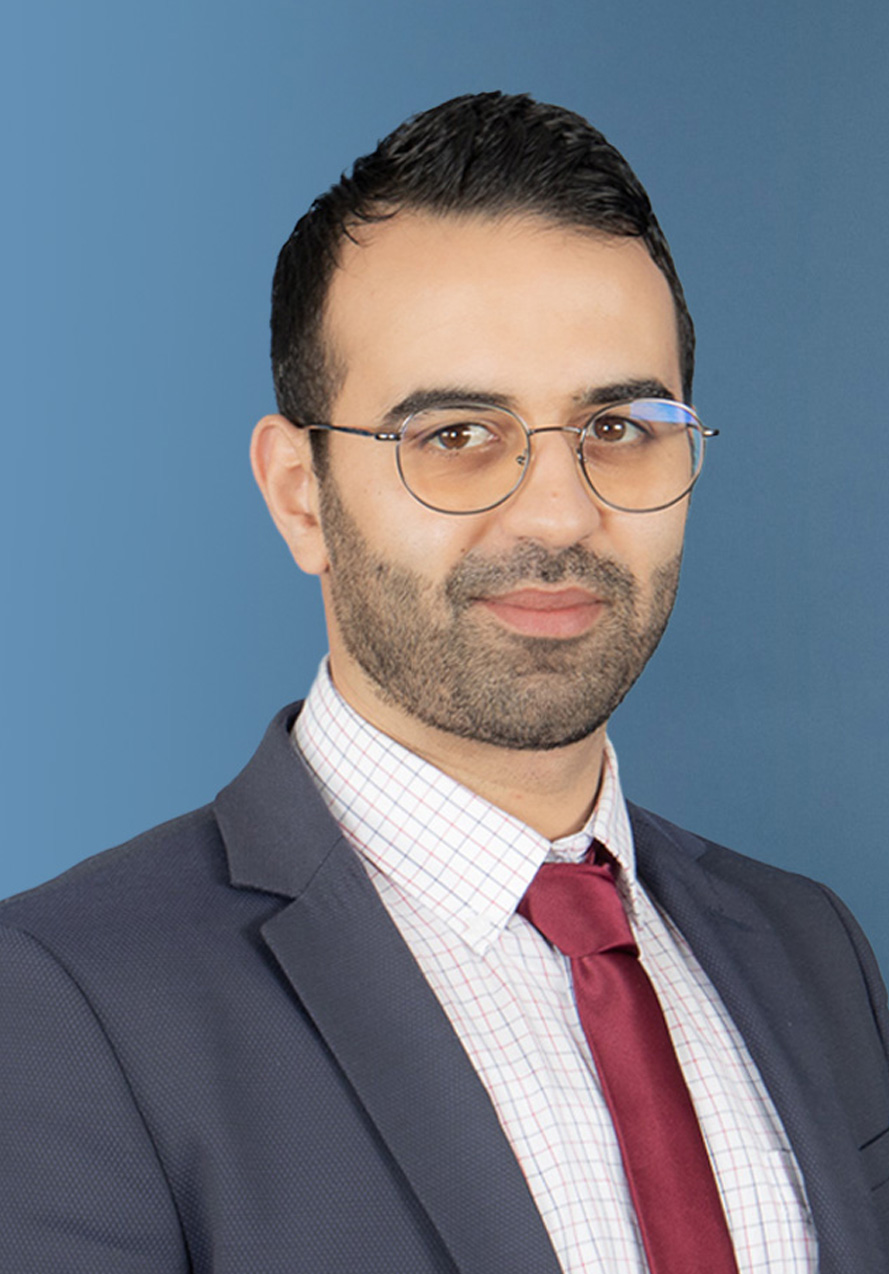
Badr Mandri
Economist
Badr Mandri is an Economist who joined Policy Center for the New South after two years’ experience at the Moroccan national statistics office (HCP, High Commission for Planning). His research activities focus on development macroeconomics especially on fiscal policy and development financing. Badr Mandri holds a master’s degree in applied economics, and is currently a PhD student at Mohamed V University in Rabat; ...

RELATED CONTENT

  • February 8, 2024
    Depuis 2016, on assiste à une dynamique de création de fonds souverains africains. En 2023, on recense 21 pays et 24 fonds souverains. Sur la seule période 2016-23, celle de la deuxième vague, huit pays vont se doter d’un premier fonds souverain, et d’un deuxième, dans le cas du Maroc, en 2022. Cette étude rappelle tout d’abord l’historique d’une création qui commence, dès 1994, au Botswana, avec le Pula Fund, précisant pour chacun des 24 fonds leur date de création, leur ...
  • Authors
    Elhoussaine Wahyana
    January 12, 2024
    The debate on global value chains (GVCs) has emphasized countries’ contributions to value-added creation. From an intercountry perspective, a new body of research is addingto this debate by studying how subnational regions contribute to the indicators in specific countries. Proper assessment of economic contributions is essential for designing incentive policies. This paper analyzes the role played by the main trading partners of Moroccan regi ...
  • December 26, 2023
    في ختام هذا العام، يُخصص مركز السياسات من أجل الجنوب الجديد حلقة خاصة من برنامجه الأسبوعي"حديث الثلاثاء"، لاستعراض أبرز تطورات الاقتصادية خلال عام 2023. هذا العام شهد تحولات عديدة وتحديات غير اعتيادية ، فكيف أثرت هذه التغيرات على الاقتصادات العالمية؟ وما هو الدور الذي أضافته الجغرافيا ا...
  • December 5, 2023
    في حلقة هذا الأسبوع سنحاول مناقشة موضوع القطاع غير المُهيكَل في المغرب، أبرز التحديات وأفاق المستقبل. حيث أن ظاهرة العمالة غير الرسمية أصبحت تأخذ حيزا كبيرا في مختلف النقاشات العالمية الدائرة حول مسألة التنمية، والمغرب يعد من بين الدول التي تبقى فيها الظاهرة عند مستويات مرتفعة كون منظو...
  • November 30, 2023
    This Chapter was originally published on Cape Town Chronicles   The history of debt in Africa is a long and painful one. It began in the 1980s, when the public finances of most developing countries deteriorated following two episodes of oil shocks, leading to a "lost decade" of low growth, increased poverty, and political instability. The recovery from the debt crisis only became possible following initiatives in favour of heavily indebted poor countries (HIPC) and ...
  • Authors
    Ali Elguellab
    Elhadj Ezzahid
    November 1, 2023
    The role of the production network in shock propagation has been an issue of considerable interest since the Great Recession. However, the empirical literature has only focused on advanced and emerging countries. This paper aims to contribute to filling this gap by examining the case of Morocco, a developing country belonging to the lower-middle-income group. The question is whether its production network is a factor in amplifying idiosyncratic industry-level shocks or, conversely, ...
  • October 06, 2023
    The confluence of Covid 19 and the ongoing war between Russia and Ukraine has resulted in a troublesome surge of inflation not seen for decades. Developing nations, particularly in Africa ...
  • Authors
    Sous la direction de
    September 21, 2023
    Cette édition du Rapport économique de l’Afrique est construite autour d’une thématique d’une grande actualité : les conséquences des incertitudes et des risques aussi bien sanitaires que climatiques et sécuritaires sur les économies du continent. L’exercice est d’autant plus légitime que la recomposition de l’ordre mondial questionne la place du continent à l’échelle planétaire, sur les plans économique, social et environnemental. L’économie mondiale est confrontée à des défis glo ...
  • August 29, 2023
    Base erosion and profit shifting (BEPS) involving multinational companies is a complex, multi-dimensional problem resulting from loopholes and inconsistencies between countries’ tax systems. Addressing it requires coordinated action at the international level. Several organizations have taken initiatives in this direction, including the Organization for Economic Co-operation and Development (OECD), which, with the support of the G20, launched an ambitious project to combat BEPS in 2 ...
  • June 20, 2023
    This policy brief was originally published on T20 India website   A decade of poor growth, increased poverty, and political instability followed the serious debt difficulties that emerged worldwide in the 1980s. There are concerns that the looming debt crisis could create similar challenges and result in even more severe consequences. However, the current economic climate differs in many ways from that of the 1980s, when international banks and Paris Club credi ...