
RELATED CONTENT
-
 October 8, 2026This paper was originaly published on Higher Education Policy Journal This article critically assesses the alignment between Morocco’s public guidance schemes for international students and its national development goals. Specifically, it investigates the capacity of these mechanisms to transform student mobility from a potential ‘brain drain’ into a tangible ‘brain gain’. Employing a qualitative case study approach, we conducted a systematic content analysis of 204 mobili ...
 -
 October 6, 2026The author of this opinion, Marie-Noelle Nwokolo, is a 2024 alumna of the Atlantic Dialogues Emerging Leaders Program.In September 1978, delegations from 138 countries gathered in Buenos Aires, Argentina, around a powerful idea: developing countries had knowledge, experience and capabilities worth sharing with one another. The Buenos Aires Plan of Action gave institutional form to what we now call South-South Cooperation, part of a wider post-colonial effort by developing ...
 -
 October 5, 2026This paper was originaly published on International Journal of Educational Research Open University dropout remains a major challenge in higher education due to its academic, social, and economic consequences. This study examines the role of academic and career orientation in shaping dropout in Morocco and improving student retention. A sequential mixed-methods design is applied. The quantitative component uses APOGEE administrative data covering 55,674 students and logist ...
 -
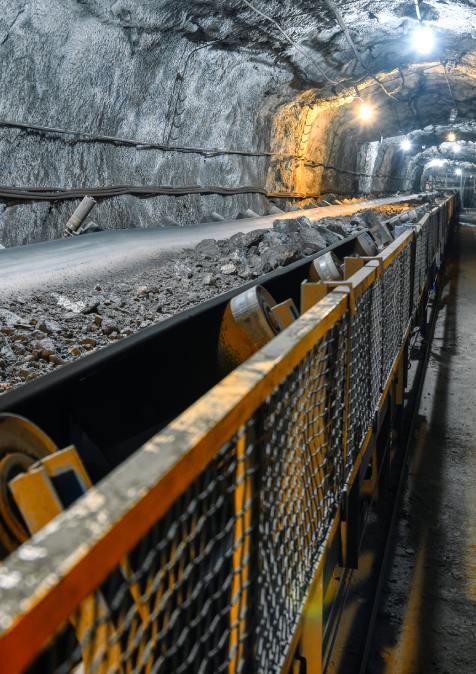 October 2, 2026Le Cameroun dispose d'importants gisements de minerais, notamment de fer, de la bauxite, d'or, de cobalt, de nickel, de manganèse, de calcaire, de marbre, de diamants, entre autres. L'industrie minière du pays est restée dominée par l'exploitation artisanale et à petite échelle, en particulier l'orpaillage, tandis que les hydrocarbures ont représenté l'essentiel des recettes issues des industries extractives. Le pays cristallise ainsi le paradoxe africain : malgré l’ampleur et la di ...
 -
 October 02, 2026Building on his Policy Brief "Latin America, World Politics and the Great Powers", Nizar Messari examines how recent developments are reshaping U.S. influence in the region and affecting ...
 -
 September 30, 2026You can imagine how often I've been asked to comment on where the Brazilian economy is headed after the election. With polls pointing to a runoff on October 25 and currently showing a statistical tie between Luiz Inácio Lula da Silva and Flávio Bolsonaro in vote simulations, I'm naturally asked about their economic programs and about the country's relations with the United States. ...
 -
 September 28, 2026This paper was initially published in French on the website of the Fondation Jean-Jaurès. There was a historic decline in Official Development Assistance (ODA) in 2025. Foreign aid to developing countries from members of the OECD-DAC fell by some 23%, the largest decline on record and the second consecutive annual decline. Aid to Africa fell by more than 25%. The International Monetary Fund (IMF) described this decline in ODA to Africa as “a shock like no other.” It differ ...
 -
 September 25, 2026Dans cet épisode d’Africafé, Amadou Diop analyse les défis de sécurité maritime auxquels font face les pays de l’Afrique atlantique, de la piraterie aux trafics transfrontaliers. Il souligne la nécessité de mutualiser les moyens et de partager l’information entre États. L’échange aborde...
 -
 September 23, 2026Depuis 2010, environ, on sait que la Méditerranée orientale est une nouvelle province gazière. Des ressources gazières ont en effet été découvertes au large de quatre pays ou territoires, l’Égypte, Israël, Chypre et Gaza. Deux d’entre eux sont devenus producteurs et exportateurs de gaz naturel, l’Égypte et Israël. Au large de Gaza, le champ gazier de Gaza Marine n’a jamais été développé et il est très peu probable qu’il le soit prochainement en raison des très fortes tensions entre ...
 -
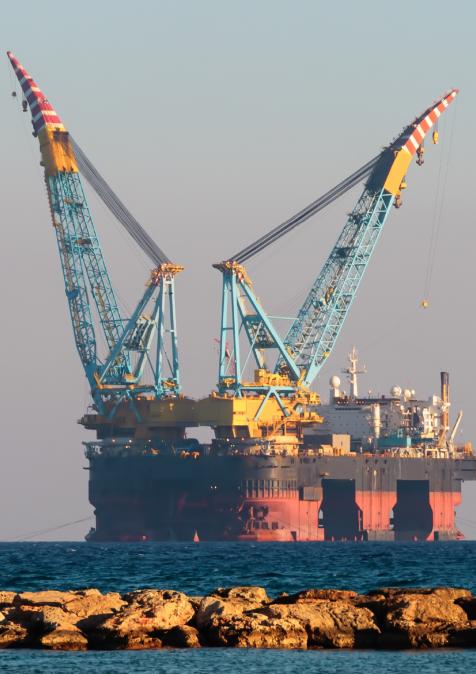 September 23, 2026Since around 2010, it has been known that the Eastern Mediterranean is a new gas province. Gas resources have indeed been discovered offshore four countries or territories: Egypt, Israel, Cyprus and Gaza. Two of them have become producers and exporters of natural gas, Egypt and Israel. Off the coast of Gaza, the Gaza Marine gas field has never been developed, and it is highly unlikely to be developed anytime soon given the very high tensions between the State of Israel and Hamas. By ...

