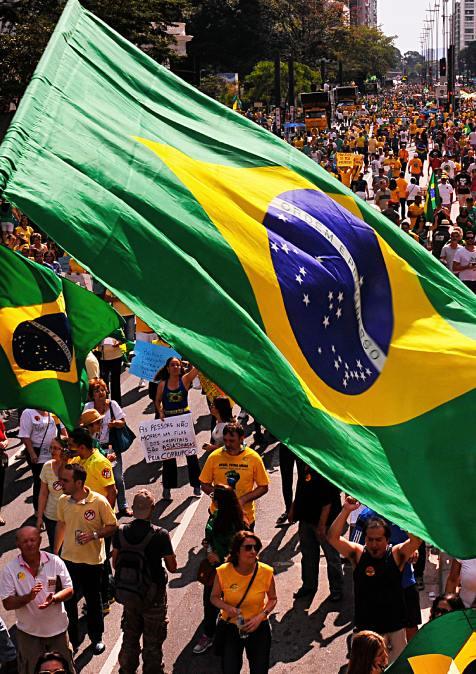
Des émergents au défi du "retour de la géopolitique": Russie, Chine, Turquie, Maroc
February 6, 2015
Speakers

Thomas Gomart
Directeur de l’Institut Français des Relations Internationales
Directeur de l’Institut Français des Relations Internationales, Thomas Gomart était aussi Marie Curie Fellow au Department of War Studies du King’s College (2003-2004), Visiting Fellow à l’Institut d’études de sécurité de l’Union européenne (2003), chercheur associé à l’Ifri (2002-2003), Lavoisier Fellow à l’Institut d’Etat des relations internationales de Moscou (2001).
Thomas Gomart est docteur en histoire des relations internationales (Paris I Panthéon-Sorbonne) et diplômé EMBA (HEC Paris). Il a été directeur du développement stratégique de l'Ifri de septembre 2010 à mars 2015 et a créé le Centre Russie/NEI dont il a été le directeur de 2004 à 2013.
...
Françoise Nicolas
Director, Center for Asian Studies, Ifri
Françoise Nicolas has been with Ifri since 1990. She is also an assistant Professor in international economics at the University of Paris-Est (Marne-la-Vallée), and teaches at Langues' O, Sciences Po (Paris) and Sciences Po (Lyon).
In the past she has taught at the Graduate Institute of International Studies (GIIS, Geneva – 1987-90), at the Ecole Nationale des Ponts et Chaussées (1991-95), as well as at the HEC School of Management (2000-02). She has also worked as a consultant to the Directorate for Financial, Fiscal and Enterprise Affairs of the OECD (1997-99 and 2010-11).
Françoise Nicolas holds a PhD in international economics (1991) and a MA in political science (1985) from the Graduate Institute of International Studies (Geneva, Switzerland). She has also studied at the ...
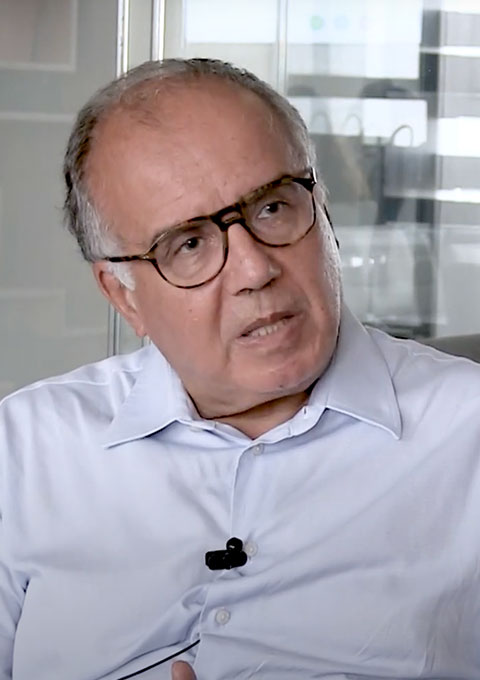
Uri Dadush
Non-Resident Senior Fellow
Uri Dadush was a Senior Fellow at the Policy Center for the New South, where he served as Senior Fellow from its founding in 2014 until 2022. He is Research Professor at the School of Public Policy, University of Maryland and a non-resident scholar at Bruegel. He is based in Washington, DC, and is Principal of Economic Policy International, LLC, providing consulting services to the World Bank and to other international organizations as well as corporations. Previously, he served as Director of the International Economics Program at the Carnegie Endowment for International Peace and, at the World Bank, was Director of the International Trade, Economic Policy, and Development Prospects Departments. In the private sector before that he was President of the Economist Intelligence ...
Tatiana Kastouéva-Jean
Director, Russia/NIS Center, Ifri
Tatiana Kastouéva-Jean holds a degree from the State University of Ekaterinbourg, a Franco-Russian Master in International Relations from the University of Sciences Po/MGIMO in Moscow, and a DEA (Diplôme d'études approfondies) in International Relations. Among her research areas: evolution of Russian domestic and foreign policies, soft power, Ukraine, education and human capital. She directs the Russie.Nei.Visions. Recent publications include: « Pourquoi la société russe soutient-elle la politique actuelle du Kremlin ? », Les Études du CERI, Sciences Po, n° 228-229, Regards sur l'Eurasie, février 2017 ; « La Russie après les crises ukrainienne et syrienne », RAMSES 2017, Ifri/Dunod, 2016 ; « Le système Poutine : bâti pour durer ? », Politique étrangère, n°2, 2015 and « R ...
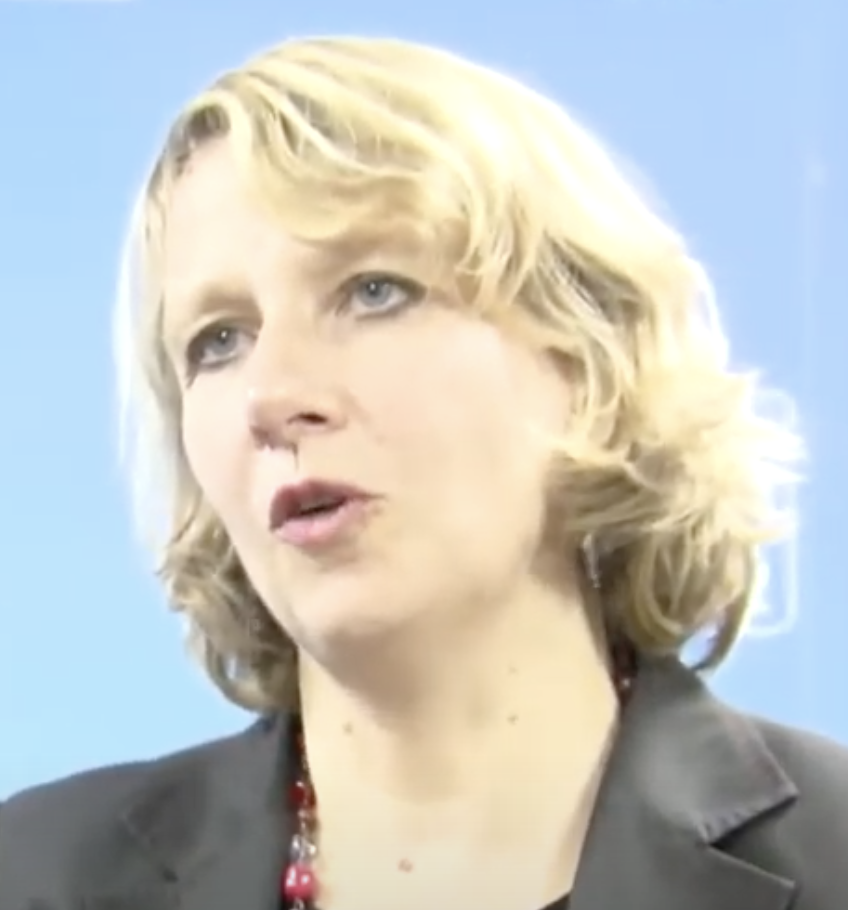
Tania SOLLOGOUB
Economiste senior, Crédit Agricole
Tania Sollogoub est économiste pour la banque française Crédit Agricole. Elle est aussi enseignante dans des écoles de commerce et est maître de conférence en macro-économie à l'IEP de Paris.
...
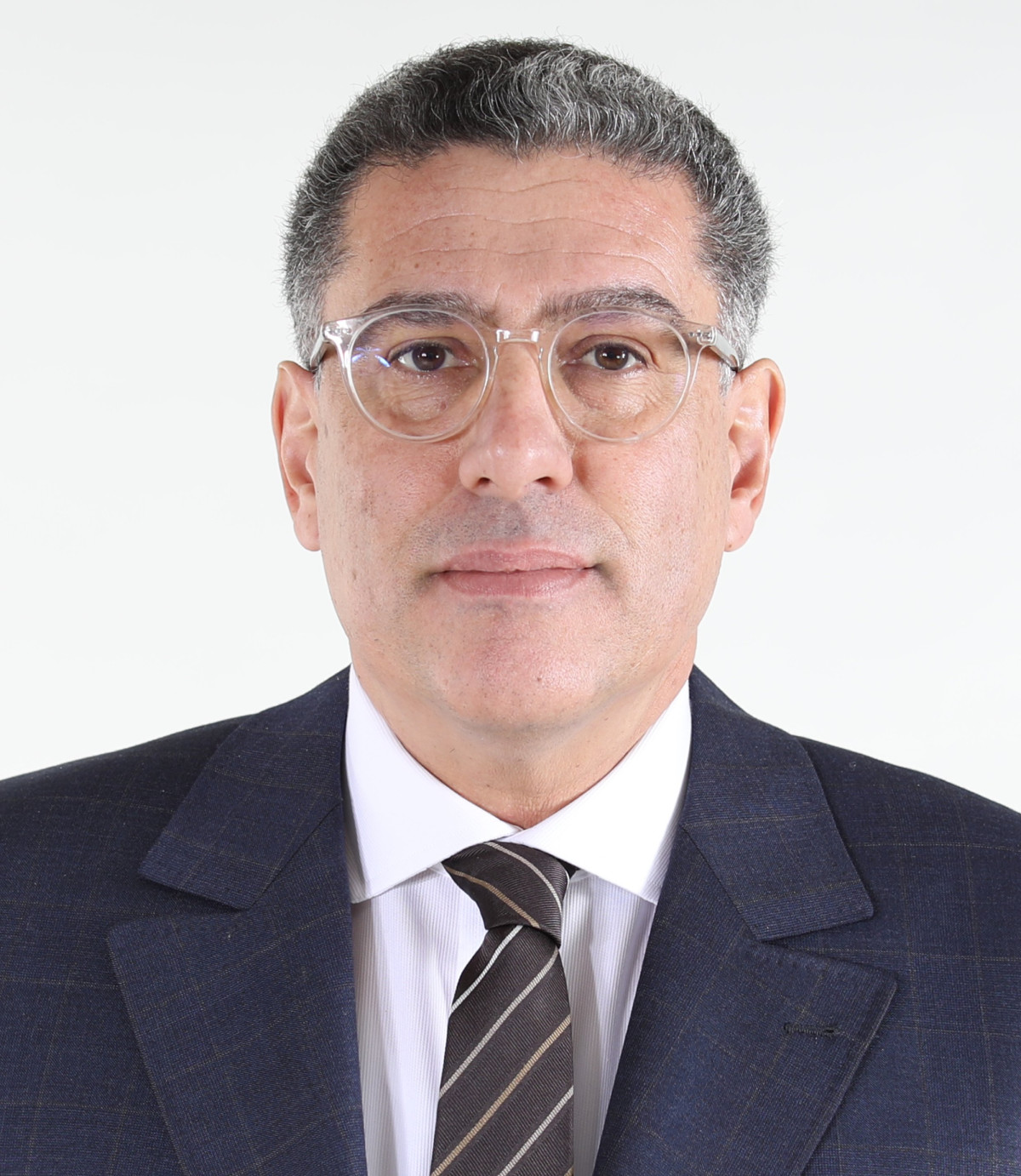
Karim El Aynaoui
Executive President
Karim El Aynaoui is Executive President of the Policy Center for the New South. He is also Executive Vice-President of Mohammed VI Polytechnic University and Dean of its Humanities, Economics and Social Sciences Cluster. From 2005 to 2012, he worked at the Central Bank of Morocco (Bank Al-Maghrib) as Director of Economics, Statistics, and International Relations. He also created and headed the Research Department and served as a member of the Governor’s Cabinet. Previously, he worked for eight years at the World Bank as an economist for its regional units of the Middle East and North Africa and Africa. Karim El Aynaoui has published books and journal articles on macroeconomic and structural issues in developing countries. Recently, he co-edited a book entitled ...
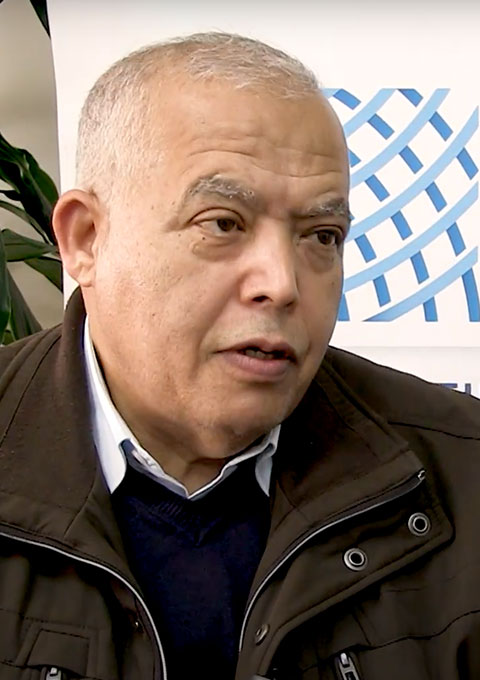
Abdallah Saaf
Senior Fellow
Professor Abdallah Saaf is Senior Fellow at the Policy Center for the New South, Affiliate Professor at the Faculty of Governance, Economic and Social Sciences (FGSES) of the Mohammed VI Polytechnic University (UM6P), Professor Emeritus of Political Science at Mohammed V University in Rabat, and Director of the Center for Studies in Social Sciences Research (CERSS), as well as founder of the Moroccan Association of Political Science. His research focuses on political science, international relations, policies and development strategies as well as public policies. Professor Saaf was a member of the commission in charge of revising the Constitution in July 2011, and member of the Scientific Committee at the Global Forum for Humans rights. Professor Saaf was formerly Minister of ...