Commodity Markets Outlook, Urbanization & Commodity Demand In partnership with the World Bank

February 24, 2022

Rising commodities prices are a common concern whether at the consumer level, or large industrials and fortune 500s. While the evolution of consumer prices was close to 2% in the USA and stuck below 1.5% in Europe pre-COVID, with oil prices and the direction of industrial metals and agricultural raw materials prices in decline, the current situation is just the opposite. Since economies bottomed out in June 2020, energy prices and non-energy commodities including agriculture and metals have soared even begging the question of whether we are entering a commodity super-cycle.

Originally, this movement was initiated by constraints on the supply side: ramifications of weather events on crops, reduced supplies as a result of sanitary measures, tight oil production quotas etc. Logistical operations were not spared by a global trade chaos: insufficient containers; the explosion of marine freight costs etc. Overall, tariffs soared at each step of products value chain which directly transmitted to production factors and prices.

Since then, commodity markets were buoyed by a strong global demand recovery, fueled by a large urbanization movement that had been building up for decades, along with population growth, with the sharpest increase coming from emerging market and developing economies.

In this framework, the Policy Center for the New South in collaboration with the World Bank, organizes a panel to discuss the main findings of the report; featuring both institutions experts.

Speakers
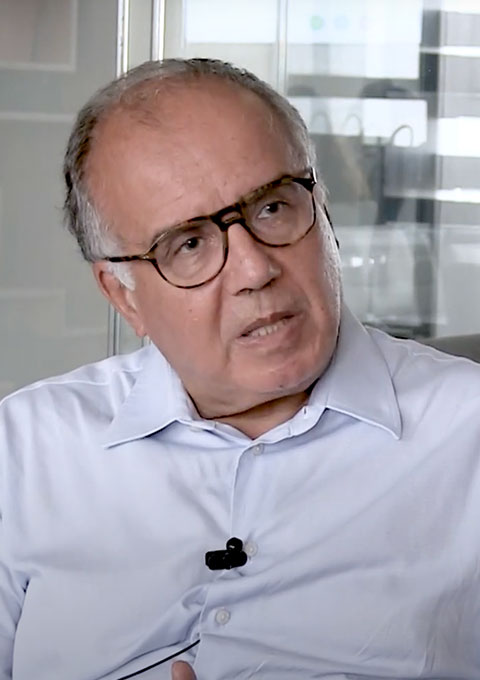
John Baffes
Senior Economist, The World Bank
John Baffes is a Senior Agricultural Economist with the World Bank’s Prospects Group. He heads the Commodities Unit and is in charge of the Commodity Markets Outlook, a World Bank publication focusing on commodity market analysis and price forecasts. John’s experience spans several regions and units, including Latin America, South Asia, East Africa, Evaluation, and Research. John specializes in the areas of commodity markets analysis and resource economics. Prior to entering graduate school, John managed a commodity trading company. He holds a degree in Economics from the University of Athens, Greece (BS), University of Georgia, U.S. (MS), and University of Maryland, U.S. (PhD) ...
Otaviano Canuto
Senior Fellow
Senior Fellow at the Policy Center for the New South, Affiliate Professor at Mohammed VI Polytechnic University and Non-Resident Senior Fellow at Brookings Institute. Former Vice President and Executive Director at the World Bank, Executive Director at the International Monetary Fund (IMF) and Vice President at the Inter-American Development Bank. ...
Uri Dadush
Non-Resident Senior Fellow
Uri Dadush was a Senior Fellow at the Policy Center for the New South, where he served as Senior Fellow from its founding in 2014 until 2022. He is Research Professor at the School of Public Policy, University of Maryland and a non-resident scholar at Bruegel. He is based in Washington, DC, and is Principal of Economic Policy International, LLC, providing consulting services to the World Bank and to other international organizations as well as corporations. Previously, he served as Director of the International Economics Program at the Carnegie Endowment for International Peace and, at the World Bank, was Director of the International Trade, Economic Policy, and Development Prospects Departments. In the private sector before that he was President of the Economist Intelligence ...
Marie-Louise Djigbenou-Kre
Economist, Central Bank of West African States (BCEAO)
Marie-Louise Djigbenou-Kre is an economist-researcher at BCEAO and a professor at the Centre Ouest Africain of Training and Banking Studies (COFEB) and at Cheikh-Anta-DIOP University in Dakar. She was previously an economist at the Bank of France, where she worked specifically on issues related to global liquidity and its effects on financial markets and emerging economies. During the same period, she was a professor at Sciences-Po. In 2015, she joined the BCEAO, where she actively participated in the elaboration of growth forecasts and the main aggregates necessary for the economic policy decisions of the eight member states of the West African Economic and Monetary Union (WAEMU). ...
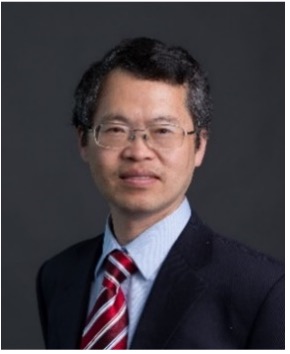
Jian Yang
Research Director, J. P. Morgan Center of Commodities
Jian Yang is J.P. Morgan endowed chair and Research Director at J.P. Morgan Center for Commodities, discipline director/department chair of finance, and founding director of Center for China Financial Research at the University of Colorado Denver. He is also a Research Fellow of the National Institute of Financial Research at Tsinghua University in China, and previously held positions of visiting fellow at People’s Bank of China and visiting scholar at St. Louis Fed. Prior to his joining CU Denver, he worked as an assistant professor/associate professor at Prairie View A&M University in Texas. ...

RELATED CONTENT

  • Authors
    Nadia Makara
    June 3, 2021
    In an effort to spur economic growth, industrial parks were created to combine industrial activities with infrastructure, service, and commercial activities. These parks involve a collection of businesses, utilizing a combination of heavy and light manufacturing, that are located in a dedicated zone for industrial use to boost efficiency, minimize operational costs, and maximize output. Though industrial parks can contribute to economic growth and social development in a region, the ...
  • Authors
    February 17, 2020
    - There are three possible justifications for central banks to engage with climate change issues: financial risks, macroeconomic impacts, and mitigation/adaptation policies. - Regardless of the extent to which individual central banks take action in each of the three areas, they can no longer ignore climate change. Last year, extreme weather events associated with climate change – floods, violent storms, droughts, and forest fires –occurred on all inhabited continents. In at least ...
  • Authors
    Sabine Cessou
    May 17, 2019
    Sur quelles contraintes faut-il anticiper lorsqu’on évoque la croissance de l’Afrique? Comment guider les décideurs politiques dans les priorités à définir pour piloter l’économie et arriver à bon port dans le monde qui vient? Le séminaire organisé le 11 avril à Paris par le PCNS et le Centre de développement de l’OCDE a apporté des éléments de réponse. La discussion s’est ouverte en prenant appui sur le rapport de référence publié en 2018 par l’Union africaine et l’OCDE ...
  • Authors
    Lorenzo Colantoni
    Giuseppe Montesano
    Nicolò Sartori
    April 12, 2019
    Access to electricity is a key factor for the future of the African continent. Energy poverty and lack of universal access to electricity services are, in fact, remarkably hurting human progress in Africa. Today, sub-Saharan Africa hosts 14 percent of the world’s population but 60 percent of the world’s people without access to electricity: of the more than 1 billion people globally who had no access to electricity, around 600 million lived in the region. In these conditions, many A ...
  • Authors
    Manfred Hafner
    Simone Tagliapietra
    Lucia de Strasser
    October 4, 2018
    This blog post summarizes the key findings of the new book Energy in Africa: Challenges and Opportunities, co-authored by Manfred Hafner, Simone Tagliapietra and Lucia de Strasser of the Italian think-tank, Fondazione Eni Enrico Mattei. The book, published by Springer, is freely available online. The book presents a picture of the current energy challenges on the African continent- the Sub-Saharan region in particular- and proposes pathways to an accelerated energy t ...
  • Authors
    September 5, 2018
    As the world is shifting away from conventional fossil fuels towards renewable energy sources, the power industry is starting to invest more in sustainable clean energy installations rather than the traditional large-scale infrastructures, which rely mainly on oil and coal.  Besides its environmental benefits, this shift to renewables is very likely to benefit economic growth as well. A recent study of the International Renewable Energy Agency shows that, indeed, dou ...
  • Authors
    Edité par
    Idriss El Abbassi
    Lahcen Oulhaj
    Aziz Ragbi
    November 28, 2016
    Le présent ouvrage se propose d’apporter quelques éléments d’appui supplémentaires aux policy-makers pour une meilleure identification des défaillances des marchés au Maroc et une mise en place d’une stratégie de diversification et une politique industrielle efficientes, sans toutefois tomber dans la situation inverse où une stratégie mal définie et des outils mal choisis peuvent se traduire par une défaillance des politiques publiques. L’appréhension des difficultés qu’éprouve l’é ...