Commodity Markets Outlook, Urbanization & Commodity Demand In partnership with the World Bank

February 24, 2022

Rising commodities prices are a common concern whether at the consumer level, or large industrials and fortune 500s. While the evolution of consumer prices was close to 2% in the USA and stuck below 1.5% in Europe pre-COVID, with oil prices and the direction of industrial metals and agricultural raw materials prices in decline, the current situation is just the opposite. Since economies bottomed out in June 2020, energy prices and non-energy commodities including agriculture and metals have soared even begging the question of whether we are entering a commodity super-cycle.

Originally, this movement was initiated by constraints on the supply side: ramifications of weather events on crops, reduced supplies as a result of sanitary measures, tight oil production quotas etc. Logistical operations were not spared by a global trade chaos: insufficient containers; the explosion of marine freight costs etc. Overall, tariffs soared at each step of products value chain which directly transmitted to production factors and prices.

Since then, commodity markets were buoyed by a strong global demand recovery, fueled by a large urbanization movement that had been building up for decades, along with population growth, with the sharpest increase coming from emerging market and developing economies.

In this framework, the Policy Center for the New South in collaboration with the World Bank, organizes a panel to discuss the main findings of the report; featuring both institutions experts.


Speakers
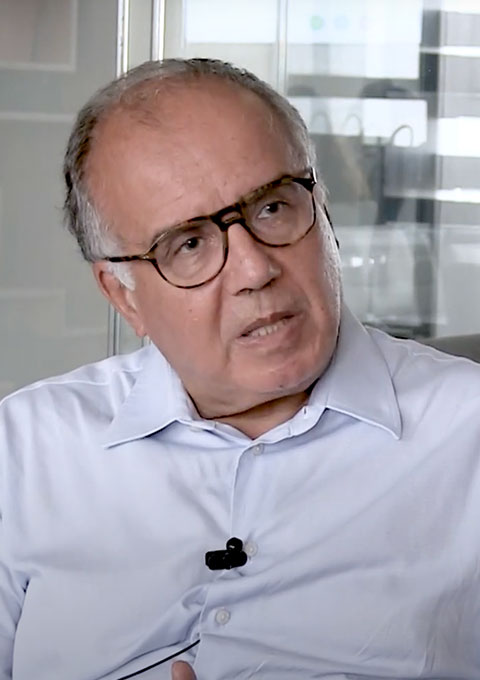
John Baffes
Senior Economist, The World Bank
John Baffes is a Senior Agricultural Economist with the World Bank’s Prospects Group. He heads the Commodities Unit and is in charge of the Commodity Markets Outlook, a World Bank publication focusing on commodity market analysis and price forecasts. John’s experience spans several regions and units, including Latin America, South Asia, East Africa, Evaluation, and Research. John specializes in the areas of commodity markets analysis and resource economics. Prior to entering graduate school, John managed a commodity trading company. He holds a degree in Economics from the University of Athens, Greece (BS), University of Georgia, U.S. (MS), and University of Maryland, U.S. (PhD) ...
Otaviano Canuto
Senior Fellow
Senior Fellow at the Policy Center for the New South, Affiliate Professor at Mohammed VI Polytechnic University and Non-Resident Senior Fellow at Brookings Institute. Former Vice President and Executive Director at the World Bank, Executive Director at the International Monetary Fund (IMF) and Vice President at the Inter-American Development Bank. ...
Uri Dadush
Non-Resident Senior Fellow
Uri Dadush is non-resident Senior Fellow at the Policy Center for the New South, where he served as Senior Fellow from its founding in 2014 until 2022. He is Research Professor at the School of Public Policy, University of Maryland and a non-resident scholar at Bruegel. He is based in Washington, DC, and is Principal of Economic Policy International, LLC, providing consulting services to the World Bank and to other international organizations as well as corporations. Previously, he served as Director of the International Economics Program at the Carnegie Endowment for International Peace and, at the World Bank, was Director of the International Trade, Economic Policy, and Development Prospects Departments. In the private sector before that he was President of the Economist Int ...
Marie-Louise Djigbenou-Kre
Economist, Central Bank of West African States (BCEAO)
Marie-Louise Djigbenou-Kre is an economist-researcher at BCEAO and a professor at the Centre Ouest Africain of Training and Banking Studies (COFEB) and at Cheikh-Anta-DIOP University in Dakar. She was previously an economist at the Bank of France, where she worked specifically on issues related to global liquidity and its effects on financial markets and emerging economies. During the same period, she was a professor at Sciences-Po. In 2015, she joined the BCEAO, where she actively participated in the elaboration of growth forecasts and the main aggregates necessary for the economic policy decisions of the eight member states of the West African Economic and Monetary Union (WAEMU). ...
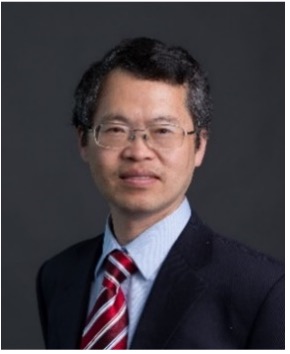
Jian Yang
Research Director, J. P. Morgan Center of Commodities
Jian Yang is J.P. Morgan endowed chair and Research Director at J.P. Morgan Center for Commodities, discipline director/department chair of finance, and founding director of Center for China Financial Research at the University of Colorado Denver. He is also a Research Fellow of the National Institute of Financial Research at Tsinghua University in China, and previously held positions of visiting fellow at People’s Bank of China and visiting scholar at St. Louis Fed. Prior to his joining CU Denver, he worked as an assistant professor/associate professor at Prairie View A&M University in Texas. ...

RELATED CONTENT

  • July 3, 2026
    This Policy Paper has also been published in French and Spanish by Le Grand Continent Morocco offers a compelling example of how a middle-income economy can navigate a more fragmented global environment, characterized by weak growth and slower convergence. Since 2022, economic activity has remained relatively strong, with growth exceeding that of many comparable economies. Non-agricultural growth has averaged 4.4% since 2022, around 1.3 percentage points above its historical av ...
  • Authors
    July 2, 2026
    Africa is facing a massive electricity deficit that is impacting its economic and social development, and its ability to catch up with the rest of the world. It is imperative that the continent increase its electricity production to connect the 600 million people who are currently without access and to improve the quality of service for the millions who are suffering from frequent blackouts and load-shedding. Economic development in the 21st century will crucially depend on the digi ...
  • Authors
    June 9, 2026
    In 2017, eight scientists from the Google research team published in the journal Advances in Neural Info Processing Systems the remarkable article “Attention is all you need,” which introduced a Transformer neural network architecture. The paper has been cited over 173,000 times and ranks among the top 100 most cited papers of the 21st century. It builds on the attention principle introduced in 2014 by Bahdanau, Cho and Turing Award winner Bengio, who proposed neural machine transla ...
  • Authors
    June 8, 2026
    The energy shock caused by the war between the United States and Israel and Iran has highlighted the need for Africa to refine more of its own crude oil. Africa is a net hydrocarbon exporter, but remains stuck in the old colonial economic model: it mostly exports raw materials and imports refined products. Africa exports about 2.6 billion barrels of crude oil every year, and imports about 1.4 billion barrels of refined products. This is a problem for two reasons. First, Africa ...
  • June 3, 2026
    Cet épisode met en lumière les défis et perspectives du secteur halieutique marocain à travers l’analyse du Pr. Abdelkabir Kamili. Il souligne que la durabilité des ressources marines n’est pas un frein à la croissance économique, mais une condition essentielle pour garantir la performa...
  • May 29, 2026
    This Paper was originally published on tandfonline.com This paper examines how reductions in transportation costs reshape regional economic and environmental outcomes in Morocco. We simulate a reduction in delivered (purchasers’) costs via a transport-margin efficiency improvement – implemented as a margin-saving technical change in the transport sector – within a province-level Spatial Computable General Equilibrium (SCGE) framework. Simulating a 1% decline in transport costs, ...
  • Authors
    Jorge Arbache
    May 14, 2026
    Decarbonization is reconfiguring global relative prices. As clean energy, natural capital, and location-specific assets become dominant industrial inputs, the relative cost of producing low-carbon goods is increasingly determined by geography. Two systematic distortions explain why the expected reallocation of investment toward renewable-rich economies remains incomplete. First, industrial policy interventions, including subsidies, trade barriers, and certification systems, disconne ...
  • July 2, 2025
    Dans un contexte devenu plus incertain et plus compliqué à la suite des décisions de la nouvelle administration américaine, les impératifs de la lutte contre le changement climatique et de la transition énergétique et écologique demeurent.Les banques centrales peuvent et doivent apporter leur contribution à cette transition, en « verdissant », dans une proportion à définir, la politique monétaire qu’elles mènent. Concrètement, cela veut dire compléter la palette des object ...
  • Authors
    March 21, 2025
    MENA faces a severe water crisis, with 12 of the world’s 17 most water-stressed countries. Climate change, population growth, inefficient water management, and weak governance drive this challenge. Water production, treatment, and distribution require high energy inputs, while energy generation depends on water for cooling and refining. The region must integrate renewable energy, especially solar power, into water solutions like desalination. Inaction could shrink GDP by up to 14% ...
  • Authors
    Antonio Jorge Martins
    October 9, 2024
    The road to decarbonizing the planet runs through the energy transition, which includes the shift from fossil-fueled cars to renewable energy vehicles. This automotive transition is unfolding as a true revolution in the industry. The evolution toward electric and hybrid vehicles has come in tandem with the ascent of Chinese producers. In the current context of geopolitical and technological rivalries, the automotive transition has been marked by an intense trade war, with implicati ...